OpenAI Cuts GPT-5.6 Sol Prices Amid Copilot Breach
How Bluesky draws its logo on screenshots
Bluesky recently revealed the technical details behind how it overlays its logo on user screenshots. Surprisingly, the platform achieves this watermarking effect by utilizing a standard iOS UI component called UITextField instead of complex custom rendering. This clever technique demonstrates a highly resourceful approach to implementing visual features using foundational development tools.
CommentsQuake Shareware, a CD-ROM just a little too full
Readers reflect on the legacy of the original Quake shareware CD-ROM, debating whether its easily crackable nature was a deliberate marketing strategy. They also praise the unique physical packaging of the shareware release compared to the later retail version. The conversation expands into a broader nostalgia for the 1990s CD-ROM era, recalling the novelty of massive storage capacities, early FMV games, and the rapid pace of software cracking.
CommentsGPT-5.6 Sol Pricing Cut by 50%
OpenAI has reduced the pricing of its flagship GPT-5.6 Sol model by 50%, bringing costs down to $2.50 per million input tokens and $15 per million output tokens. The model also features a massive 1.05 million token context window and improved system uptime across three providers.
CommentsA Preview of DuckDB v2.0

DuckDB v2.0 is scheduled for release this fall, introducing major architectural upgrades to the popular database engine. Headline features include the ability to run DuckDB as a server and support for asynchronous I/O. The update also adds new capabilities like triggers, a VARIANT data type, a revamped SQL parser, and a completely new storage format.
CommentsFairphone 6 and PostmarketOS working main camera

A developer has successfully implemented a working driver for the Fairphone 6's main camera on PostmarketOS, building upon previous efforts for the wide-angle lens. The new driver supports autofocus and color correction, although the color tuning remains a work in progress.
CommentsShattered skeleton is first confirmed death from trebuchet

Researchers have identified the first confirmed case of a death caused by a medieval trebuchet after examining a skeleton from the fourteenth century. The remains exhibit catastrophic trauma consistent with being struck by a massive boulder launched from the siege engine. This discovery provides rare physical evidence of the lethal impact of early artillery on medieval warriors.
CommentsGPU Offload in Rust: Portable, Safe, and Fast

Researchers have published a new paper detailing a Rust-based framework for GPU offloading that promises high computational performance alongside memory safety and cross-platform portability. This development underscores Rust's expanding role in high-performance computing and hardware acceleration.
CommentsAI-Generated GitHub Copilot “Autofix” Allowed Compromise of Snowflake's Jira

Wiz's Red Agent successfully compromised Snowflake's internal Jira platform by exploiting a security flaw in a pull request assisted by GitHub Copilot. The incident highlights the potential vulnerabilities introduced when developers rely on AI-generated code autofixes without adequate manual oversight.
CommentsOlo (Color)

Readers are discussing the perception of chimerical or impossible colors, which can be experienced through specific optical illusions that temporarily saturate the eye's color cones. The thread highlights several interactive demonstrations and a new visualization tool that lets users explore the gamut of these imaginary colors to generate unique contrast-sensitive palettes for web and software design.
CommentsThe Road to MS-DOS 2.0
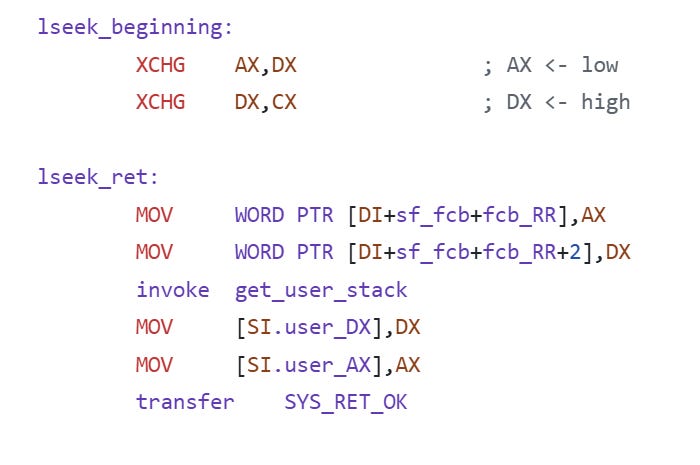
This article explores the development of MS-DOS 2.0, highlighting its major architectural shift toward a UNIX-inspired hierarchical file system. The update moved the software beyond its original CP/M roots to support larger hard drives and subdirectories. Ultimately, this release laid the foundational directory structure that would influence future PC operating systems for decades.
CommentsAI;DR (AI; Didn't Read)

Even strong proponents of artificial intelligence are growing frustrated with the overwhelming amount of low-quality AI-generated text flooding the internet. In response, users are adopting a new acronym called AI;DR, a play on the traditional TL;DR, to quickly dismiss and ignore these automated walls of slop.
CommentsRepair Cafe – Fix Your Broken Items
Repair Cafe is a global initiative that promotes a sustainable culture of repair by encouraging communities to fix broken items together. This collaborative movement helps reduce waste and empowers individuals to actively contribute to a more environmentally friendly future.
CommentsGPT 5.6 Sol is the best "vision" model OpenAI ever released

OpenAI has released GPT-5.6 Sol, its most powerful vision model to date, outperforming previous iterations like Terra and Luna in tasks such as OCR, counting, and extraction. Comprehensive testing shows that Sol delivers superior accuracy while maintaining highly competitive speed and cost efficiency when benchmarked against other leading vision language models.
CommentsAn update on leaving Gmail for Fastmail

The author shares a follow-up on their highly discussed transition from Gmail to Fastmail after several months of using the alternative service. This update details their ongoing experience and the practical realities of making the switch.
CommentsGum Wrappers World
A new augmented reality mobile app called Gum Wrappers World allows users to scan their discarded candy wrappers and transform them into interactive digital assets. The platform gamifies physical sustainability by letting players build and manage a virtual economy using these digitized items.
CommentsJudge sets framework for Nine PBS to retrieve archival data
A judge has established a framework for Nine PBS to retrieve its archival data, prompting readers to compare the dispute to the recent Synapse bankruptcy where a middleman's failure left end-users without regulatory protection. The discussion underscores the critical need for clearer regulations to prevent tech and fintech companies from bypassing established legal frameworks under the guise of business innovation.
CommentsLos Puesteros, solitary men who look after ranches and livestock in Patagonia

Dutch photographer Pie Aerts has captured the isolated lives of the puesteros, solitary ranch workers in Chilean Patagonia who tend to livestock for minimal pay. Writer Ana Karina Zatarain highlights these striking images, which showcase the extreme solitude of these men who often go months without human interaction.
CommentsIndia has paved the way for charging merchants a fee on UPI transactions

India has paved the way to introduce merchant fees for UPI transactions, marking a significant shift in its digital payments ecosystem. This development raises critical questions about who will ultimately bear the costs and whether consumers will resist the new charges.
CommentsSun Clock
Sun Clock is a new location-based 24-hour clock application that tracks daily solar and lunar events. The app provides detailed schedules for sunrise, sunset, golden hour, and twilight times based on your current location. It also displays real-time data on the moon's phase, position, and rising and setting times.
CommentsHow do functions like alloca allocate memory from the stack?

This technical overview explores the mechanics of stack memory allocation, detailing how functions like alloca dynamically adjust the stack pointer. It also covers the concept of stack probing, explaining how operating systems use guard pages to safely handle memory access and prevent segmentation faults.
CommentsIsrael creates fake think tank in likely attempt to dupe AI chatbots

Israel has created a fake think tank named the Hanover Institute in an apparent attempt to manipulate AI chatbots. Within just a week, the organization published over 100 articles specifically tailored to influence the responses of these language models. This operation aims to shape AI-generated information by flooding the internet with targeted content.
CommentsHow to disable or avoid intrusive AI
A new guide provides practical steps for everyday users to disable or avoid unwanted artificial intelligence features in their personal tech environments. The tutorial addresses growing consumer frustration by offering actionable advice to minimize intrusive AI integrations and reclaim control over daily digital tools.
CommentsLaunch HN: Speko (YC S26) – OpenRouter for Voice AI
YC S26 startup Speko has launched as an OpenRouter for Voice AI that dynamically routes user sessions to the best-performing models. The platform addresses the industry's reliance on English-centric benchmarks by evaluating 61 speech and language models across 10 different languages. This ensures that non-English speakers consistently receive the highest quality voice AI experience.
CommentsscScript for Linux
scScript is a new C-like scripting language for Linux that generates bytecode and introduces dual variadic parameter lists for streamlined pass-by-value and pass-by-reference arguments. Although it shares conceptual similarities with executing C through LLVM, scScript is specifically tailored for scripting workflows and developer convenience rather than raw execution speed. The project has garnered positive feedback from readers for its clean website design and practical approach to handling function returns.
CommentsCalifornia's new tire efficiency rules could save drivers $1B a year

California has implemented the nation's first tire efficiency standards to address an often overlooked factor in overall fuel economy. These new regulations are projected to save drivers approximately one billion dollars annually at the gas pump.
CommentsAsk HN: Alternatives to GitHub
Developers discussing GitHub alternatives on Hacker News praised self-hosting GitLab for providing greater control over upgrades, incident response, and CI/CD caching despite the added maintenance overhead. Many users expressed regret over migrating to GitHub, noting that self-hosted instances deliver better uptime and more granular access controls. The conversation also highlighted a newly launched service aimed at simplifying the complex process of provisioning and managing custom GitLab runners.
CommentsA particle made of force: physicists say they've found mysterious 'glueball'
After nearly two decades of searching, physicists in China have found strong evidence of a glueball, a mysterious particle composed entirely of force-carrying gluons. This discovery confirms a key prediction of quantum chromodynamics by providing direct evidence that gluons can interact with themselves.
CommentsGitHub degradation affects Cursor Origin, its new Git platform

A recent GitHub service degradation is causing disruptions for Cursor Origin, the newly launched Git platform from Cursor. This ongoing outage is currently affecting several key Cursor services, specifically Automations, Cloud Agents, and Codebase. Users are advised to monitor the Cursor status page for real-time updates on the resolution.
CommentsA digestion of the proof of Sendov's conjecture

A recent mathematical digest provides a detailed breakdown of the proof for Sendov's conjecture, a complex problem regarding the roots of polynomials and their derivatives, alongside a strengthened variation proposed by Phelps and Rodriguez. This overview offers valuable insights for readers interested in theoretical mathematics and its foundational applications in computer science.
CommentsA simple fix for LLM tail latency
A newly proposed technique addresses large language model tail latency by simply sending every request twice and returning the faster response. This redundant execution strategy effectively bypasses slow outlier requests to significantly improve overall system responsiveness. Ultimately, it provides developers with a highly practical and low-complexity solution for optimizing LLM performance.
Comments