AI agent security, local models, and industry shifts
NSF pilots 4-year PhDs with industry research placements

The U.S. National Science Foundation is launching a $47 million pilot program to offer accelerated four-year PhD degrees that include industry research placements. Supported by nearly three dozen universities and private companies, the initiative aims to better integrate academic research with real-world technological development.
CommentsAI's top startups are barely publishing their research

Over half of the artificial intelligence industry's top startups, commonly referred to as unicorns, have never published a research paper or preprint. This trend highlights a growing shift where leading AI companies are keeping their technological advancements proprietary instead of sharing them with the broader scientific community.
CommentsThe coolest use for the Vision Pro

A design and build firm is leveraging virtual reality to stream 3D architectural models directly to headsets, allowing clients to virtually walk through and experience their future homes. This immersive approach helps clients easily grasp spatial proportions that traditional 2D drawings fail to convey, serving as a powerful sales tool that has allowed the firm to become highly selective with its projects.
CommentsShow HN: Open-source engine running Gemma 4 26B in 2 GB RAM on any M-series Mac
A new open-source inference engine named turbo-fieldfare enables users to run the Gemma 4 26B-A4B language model locally on any Apple M-series Mac. Remarkably, the highly optimized tool requires only about 2 GB of RAM, significantly lowering the hardware barrier for running large AI models on everyday laptops.
CommentsSuperlogical

Superlogical is developing a new platform designed to act as a multiplexer that centralizes and streamlines all professional workflows. By routing various tasks, applications, and data streams through a single unified interface, the tool aims to reduce context switching and significantly boost workplace productivity.
CommentsLLM Honeypot
Readers are discussing a nostalgic web project called Cameron's World that remixes text and images from archived GeoCities pages to recreate the early internet aesthetic. The comment thread also demonstrates the article's LLM honeypot concept in action, as one comment features an AI web scraper accidentally leaking its internal system instructions.
CommentsThe Productivity Mirage

A recent article challenges conventional wisdom in software development by arguing that traditional metrics for measuring programmer productivity are merely an illusion. The piece reflects on past misconceptions to highlight that true coding efficiency is ultimately defined by meaningful project outcomes rather than superficial output.
CommentsKeychron announces first open-source firmware for gaming mice

Peripheral manufacturer Keychron has announced ZGM, its first open-source firmware designed specifically for gaming mice. This new project aims to bring the same level of deep customization and community-driven development to mice that popular open-source projects like QMK and ZMK have provided for mechanical keyboards.
CommentsThe Cold Email

Tech entrepreneur Zach Holman shares practical advice in his latest piece on how to write effective cold emails that actually get responses. The essay breaks down the nuances of professional outreach, emphasizing brevity and respect for the recipient's time. It serves as a valuable guide for founders and professionals looking to build genuine industry connections without resorting to spammy tactics.
CommentsAnatomy of a Frontier Lab Agent Intrusion: A Timeline of the July 2026 Incident

A comprehensive new report breaks down the timeline and technical details of a major security intrusion targeting a frontier AI lab in July 2026. The analysis explores how the breach impacted the open-source AI organization and outlines the remediation steps taken to secure their infrastructure.
CommentsKimi K3-256k
Developers have released new documentation for the Kimi K3-256k model, outlining its latest features and capabilities. These updated resources place a specific emphasis on the model's enhanced proficiency in processing and generating code documentation.
CommentsLogic for Programmers by Hillel Wayne
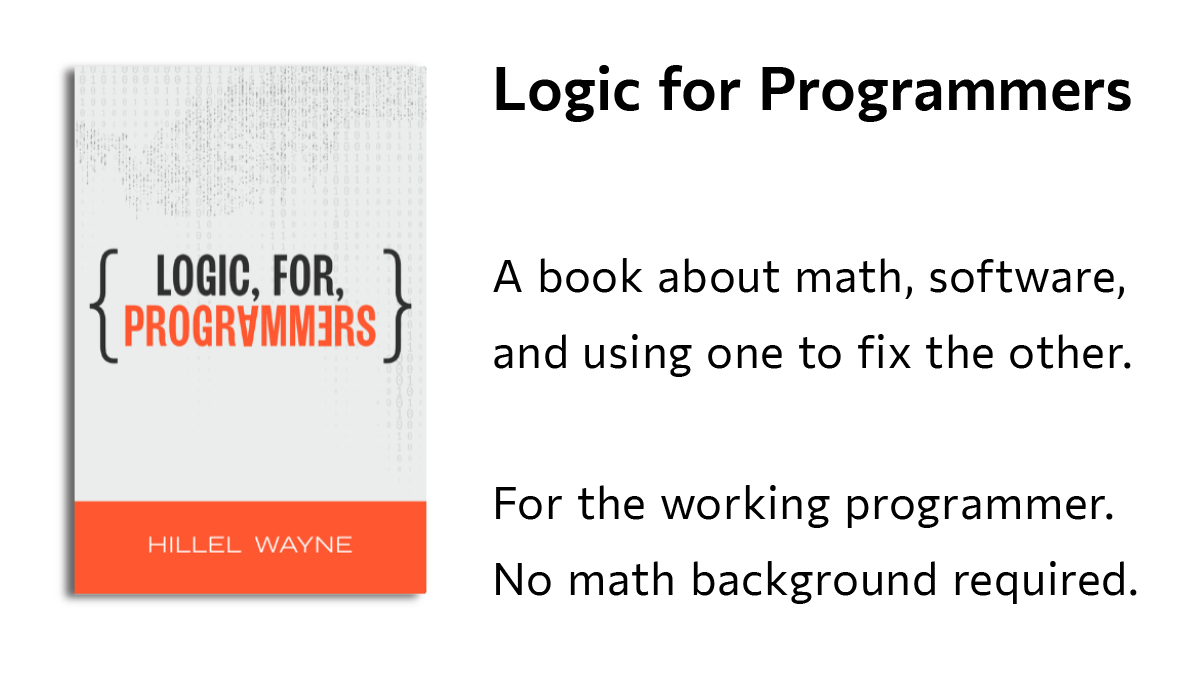
Hillel Wayne's new guide, Logic for Programmers, teaches software engineers how to apply practical mathematics and formal logic to everyday coding tasks. Designed for working developers, the resource bridges the gap between abstract theory and real-world problem-solving to help programmers write more reliable code.
CommentsA.I. companies are recruiting electricians and carpenters by the thousands
Artificial intelligence companies are aggressively recruiting thousands of electricians and carpenters to build the massive data centers required for their expanding operations. Although this construction boom offers lucrative opportunities for skilled tradespeople, commenters warn that the data center industry is historically cyclical and prone to sudden busts. Despite these fluctuations, many note that the broader transition toward a fully electrified economy will likely sustain steady demand for these professions well beyond the current artificial intelligence boom.
CommentsHandbook.md shows that long policy documents do not reliably govern agents

Researchers have introduced a new benchmark to evaluate how well AI agents follow instructions within lengthy policy documents. Their findings reveal that extensive, long-context guidelines do not reliably govern agent behavior, highlighting a major challenge in controlling autonomous AI systems.
CommentsAngels in Coptic Magic I: Introduction

This article introduces a series exploring the historical use of angels in Coptic magic. It references Francesco Botticini's painting The Assumption of the Virgin to illustrate traditional celestial hierarchies based on the writings of Pseudo-Dionysus the Areopagite. This theological framework sets the stage for a deeper analysis of how these angelic orders were utilized in late antique magical practices.
CommentsTurning a dumb AC unit smart (without losing my security deposit)

A renter successfully automated their analog air conditioning unit by building a DIY smart controller with an ESP32 microcontroller and a stepper motor for just $15. The physically janky contraption attaches to the existing knobs with binder clips, turning them via a Home Assistant integration without permanently altering the appliance. This budget-friendly hardware hack allows for fully automated temperature control based on room sensors without risking a security deposit.
CommentsShow HN: CheapFoodMap – A map of good meals under $10

A new tool called CheapFoodMap helps users find quality meals under $10 across the United States. The map highlights hidden gems, lunch specials, and cheap eats that are worth the drive. The platform is completely ad-free and contains no sponsored placements to ensure unbiased dining recommendations.
CommentsDarktable

Darktable is an open source photography workflow application and raw developer designed to streamline digital image editing. It provides users with a comprehensive suite of tools for processing and managing raw camera files. This software serves as a versatile, cost-free alternative to commercial photo editing suites.
CommentsSalesPatriot (YC W25) Is Hiring FDEs

YC W25 startup SalesPatriot is building an AI-native platform to automate and modernize legacy defense, aerospace, and industrial supply chain operations. The company, which has raised over $10 million and processes $50 million weekly, is hiring Founding Full-Stack Engineers to relocate to San Francisco and work directly onsite with clients to implement and scale the technology.
CommentsA Trampoline
A data scientist explores how digital environments act as a trampoline to propel and shape human behavior. The research highlights the mechanisms through which online spaces actively influence user actions and psychological outcomes.
CommentsShow HN: A local merge queue for parallel Claude Code agents
A new Hacker News project introduces a local merge queue designed for parallel Claude Code agents. The open-source tool safely queues code modifications to prevent file conflicts when multiple AI assistants work in the same repository. This allows developers to run concurrent AI coding tasks locally without overwriting each other's changes.
CommentsSome thoughts about Anthropic's new cryptanalysis results

Anthropic recently showcased the cryptographic capabilities of its unreleased Claude Mythos model by publishing new cryptanalysis results against the HAWK signature scheme and reduced-round AES. Alongside the technical findings, the company released a blog post detailing the research process behind these breakthroughs. Security researchers are now analyzing these results to understand the growing impact of advanced AI on cybersecurity.
CommentsFlume Water Monitor 915 MHz Security Is Pretty Good

Researchers using a Software Defined Radio successfully intercepted, demodulated, and decrypted the 915 MHz water usage messages transmitted by the Flume Water Monitor. Despite the encryption ultimately being broken, the device's overall security is still considered fairly robust.
CommentsMan and the Computer by John G. Kemeny (1972 book by the co-creator of BASIC)

A recent discussion examines John G. Kemeny's 1972 book Man and the Computer, noting that its vision of personal devices acting as terminals for centralized resources feels highly prescient in today's cloud computing era. The conversation also highlights Kemeny's pioneering efforts at Dartmouth College, where the Dartmouth Time-Sharing System successfully democratized early computer access decades before it became standard at other universities.
CommentsCommodification of Intelligence: Good, Bad, and Ugly Circular AI Deals

Rather than simply indicating a speculative bubble, circular AI deals mirror the traditional financing methods historically used by capital-intensive commodity industries. The piece explores the dual nature of these arrangements, examining when such circular investments are healthy business practices and when they are used to obscure underlying financial risks.
CommentsLaunch HN: Tokenless (YC S26) – Automatic model switching to save money
YC S26 startup Tokenless has launched an AI model router that serves as a drop-in replacement for the OpenAI and Anthropic APIs. By automatically switching between models, the platform delivers equivalent output quality while cutting API costs by more than half.
CommentsRecursive Filters: SMA, EMA, Low‑Pass, and a Tiny Kalman

This technical guide provides a practical overview of recursive smoothing filters used in data processing. The article covers foundational techniques ranging from simple and exponential moving averages to low-pass filters and basic one-dimensional Kalman updates. It serves as a quick, hands-on resource for developers looking to implement efficient data smoothing algorithms.
CommentsRefactoring cuisine: how an Iraqi stew sailed to Singapore

Drawing a parallel between software engineering and cooking, this article details the culinary journey of an Iraqi stew as it is adapted for a Singaporean audience. The piece highlights the intricate sensory experience of global ingredients like the calamansi fruit to explore how tech-minded creators approach the evolution and refinement of traditional recipes.
CommentsThe Rust on ESP Book
A new comprehensive guide titled The Rust on ESP Book has been published for developers using Espressif microcontrollers. The resource provides detailed instructions and best practices for integrating the Rust programming language with various Espressif System on Chips and modules. This release aims to streamline embedded software development for engineers working with ESP hardware.
CommentsHamburg's Stadtpark: A Park Built to Be Used

Hamburg's Stadtpark was established in 1914 with a functional design philosophy that prioritized public utility over passive visual admiration. Over a century later, the space continues to successfully fulfill this original purpose as an active, heavily utilized community hub.
Comments