AI chip stocks slide amid new neural architecture releases
Codex Security
New SDKs and a command-line interface have been released for Codex Security to help developers integrate and manage security features. The open-source project is now available on GitHub, inviting community contributions to its ongoing development.
CommentsLearnVector – Andrew Ng's AI company building one‑to‑one learning experiences

AI pioneer Andrew Ng has launched LearnVector, a new education startup backed by a $100 million investment from Coursera. The company is developing personalized, one-to-one AI learning experiences designed to adapt to users until they fully master new skills.
CommentsShow HN: I was tired of opening 2 tabs for every HN link, so I made a userscript
A new lightweight userscript called HNewhere allows users to view Hacker News discussions directly on article webpages without needing to open a second tab. The tool seamlessly embeds community comments alongside the original content to streamline the browsing experience.
CommentsHalf-Life ported to Mac OS 9
The classic video game Half-Life has been ported to Mac OS 9, allowing players to experience the title on legacy Apple hardware. This achievement is highlighted by a community dedicated to keeping early Mac computers usable today through software downloads, guides, and preservation hacks.
CommentsSubstack writers, you need a website

While Substack offers a convenient platform, writers should treat it primarily as a distribution tool rather than a permanent home for their content. By hosting their work on an independently owned website with a domain they control, creators can secure long-term visibility and maintain full command over their digital presence.
CommentsChip stocks slide in US and Asia as AI jitters rattle investors

Investor anxiety over artificial intelligence has triggered a widespread slump in chip stocks across the US and Asia. The downturn was particularly severe in South Korea, where trading on the Kospi index was temporarily halted following an 8% plunge.
CommentsHubble: Open-source notetaking app for you and your agents

The new open-source notetaking application Hubble is designed for seamless collaboration between humans and AI agents. The platform allows automated agents to directly read, write, and organize notes alongside human users in a shared workspace. This integration bridges the gap between traditional productivity tools and automated machine workflows.
CommentsTruth is not a direction: a Tarski attack on LLM probes
Scientist Abel Jansma challenges current methods of evaluating factual accuracy in large language models by arguing that truth cannot be captured as a simple directional vector within neural networks. Drawing on Tarski's semantic frameworks, the analysis critiques existing LLM probing techniques and suggests that evaluating factual alignment in AI requires embracing higher-order interactions and complex information theory.
CommentsTeach yourself programming in ten years (1998)
Peter Norvig’s classic 1998 essay on learning programming has resurfaced for discussion, sparking debate over the impact of artificial intelligence on the profession. While some readers lament that LLMs have diminished the joy of tinkering and made deep technical mastery feel obsolete, others urge developers to continue honing their skills the traditional way. These advocates argue that resisting the urge to rely entirely on AI is essential to prevent skill degradation and maintain the intrinsic rewards of lifelong learning.
CommentsMultiple Mouse Cursors in Wayland

The Wayland display server is exploring support for multiple independent mouse cursors within a single desktop environment. This feature will allow users to connect several physical mice to one computer and control distinct pointers simultaneously.
CommentsReFrame – The EPaper Camera

ReFrame is an experimental camera featuring a color ePaper display that captures and displays only one photo at a time. This minimalist design encourages mindful photography by ensuring every single captured frame remains memorable.
CommentsSteel Bank Common Lisp version 2.6.7
Steel Bank Common Lisp has released version 2.6.7, updating the compiler famously used to power Hacker News. The latest version introduces expanded SIMD instruction support for ARM64 and AVX512 on X86-64 architectures. Although these new vectorization features require explicit implementation rather than auto-vectorization, they mark a significant performance enhancement for the platform.
CommentsDoes every question mark deserve a Betteridge?

This essay explores Betteridge's law of headlines, the journalistic adage which dictates that any headline ending in a question mark can be answered with a negative. The author playfully examines this convention in modern publishing while intentionally avoiding a definitive conclusion about its validity.
CommentsKimi K3 Architecture Overview and Notes
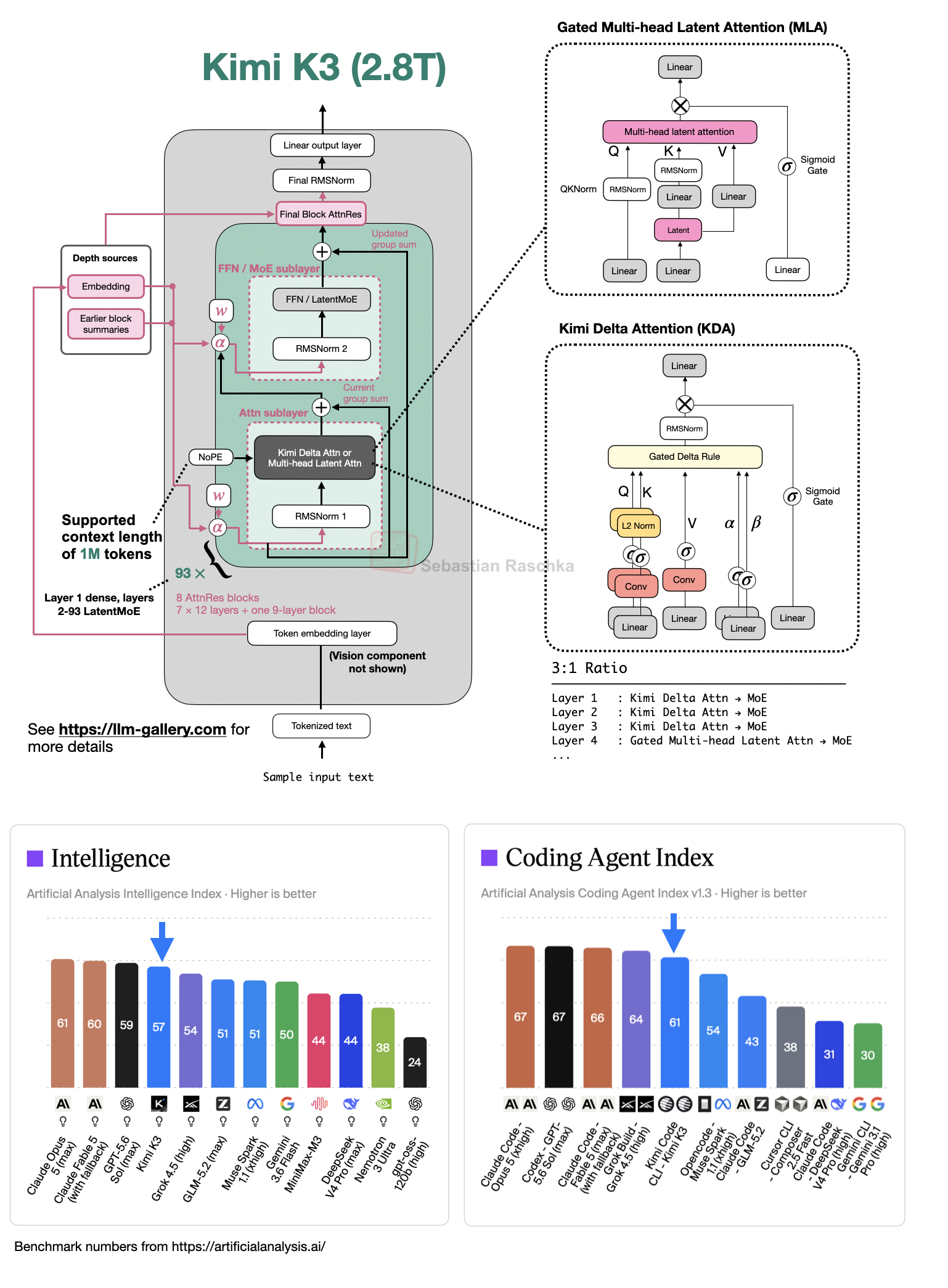
A new technical overview details the underlying architecture of the Kimi K3 model, introducing novel components such as LatentMoE, Kimi Delta Attention, Attention Residuals, and NoPE. The documentation also highlights the system's multimodal capabilities and its specific design optimizations aimed at improving inference efficiency.
CommentsHooray for the Sockets Interface

Introduced in 1983 with BSD 4.2, the sockets interface revolutionized networking by treating network communication like standard file I/O. This simplification accelerated the UNIX adoption of shared protocols and services, serving as a crucial turning point in the evolution of modern networking.
CommentsDelayed Gratification – Proud to Be 'Last to Breaking News'

Delayed Gratification is the world's first slow journalism magazine, a quarterly publication that offers an intentional alternative to the rapid digital news cycle. It proudly brands itself as being the last to cover breaking news, allowing it to provide deeper analysis after the initial online hype has subsided.
CommentsInterview with Boris Cherny [video]
![Interview with Boris Cherny [video]](https://i.ytimg.com/vi/qyPCVqFUyDo/maxresdefault.jpg)
Following the launch of Opus 5, Claude Code creator Boris Cherny joined Diana Hu at Startup School 2026 to discuss the latest advancements in AI. During the interview, they explored the new capabilities of the Opus 5 model and how the updated Claude platform is being utilized by developers.
CommentsLightweight Spring Boot Monitoring Without Prometheus and Grafana
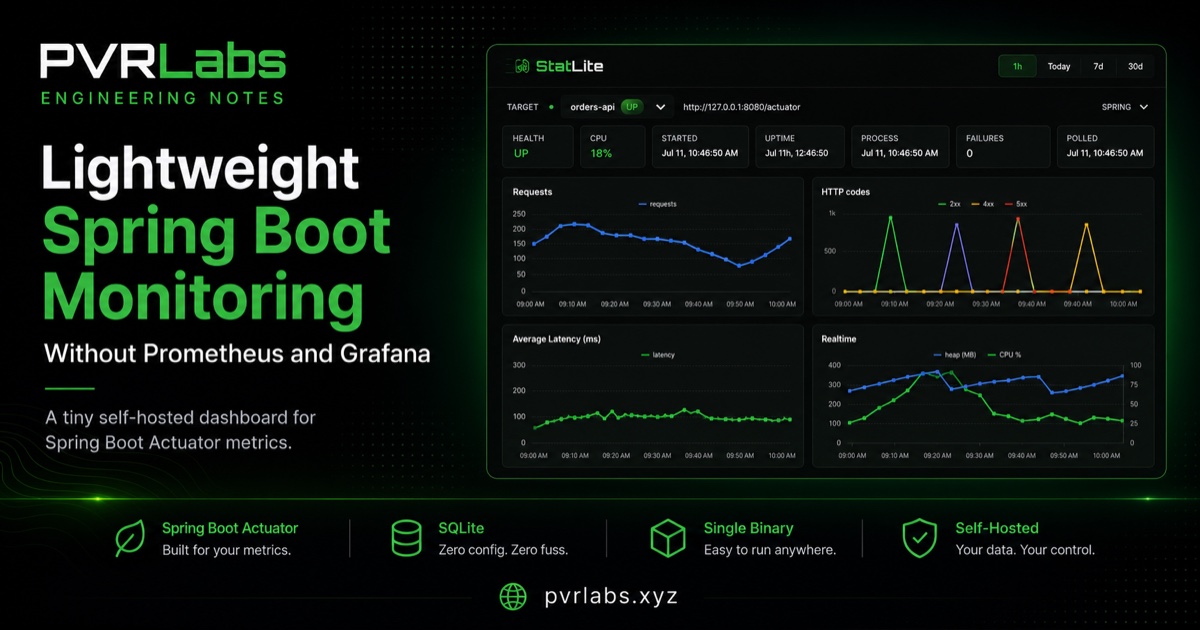
Developers can now monitor Spring Boot applications on small VPS environments without the heavy overhead of a full Prometheus and Grafana stack. By combining Spring Boot Actuator with the lightweight StatLite tool, teams can efficiently track essential server and application metrics. This streamlined approach provides a practical observability solution that minimizes resource consumption on constrained infrastructure.
CommentsThe iPhone Upgrade Program is being replaced by Apple Upgrade

Apple is rebranding the iPhone Upgrade Program to Apple Upgrade, maintaining the core benefit of allowing customers to get a new iPhone every year with AppleCare+ protection. The new program is available immediately for purchase online or in Apple Stores.
CommentsThe Difference Between a Button and a Link
A new guide clarifies the widespread HTML misconception of confusing buttons with links by highlighting the critical semantic differences between the two interactive elements. The article explains how this common misuse negatively impacts web accessibility and overall user experience. It then introduces a simple feature developers can implement to correct the issue and ensure proper semantic markup.
CommentsShow HN: Lean4 Datalog DSL Based on Google Zanzibar for AI Projects
A new open-source project named ZIL introduces a relational knowledge language and Datalog DSL designed specifically for AI applications. Implemented in Lean 4 and inspired by Google Zanzibar, the system features a Clojure runtime and toolchain to help developers structure complex data.
CommentsBeyond Greece and Rome

Scholars are undergoing a dramatic shift in perspective by moving the study of antiquity beyond the traditional focus on Greece and Rome. This evolving approach incorporates a much wider array of global civilizations and cultures. Ultimately, this new viewpoint is producing a much bigger, broader, and more exciting understanding of the ancient world.
CommentsShow HN: Manim (3Blue1Brown's animation engine) in the browser via WebGPU

A new AI-native web application brings 3Blue1Brown's Manim mathematical animation engine to the browser via WebGPU. This tool enables users to seamlessly create, edit, and refine complex mathematical animations directly online without requiring local installations.
CommentsZig's Incremental Compilation Internals
A community discussion on Zig's incremental compilation internals praises the language's toolchain for specifically tweaking its design to enable fast semantic analysis, while comparing it to the architectural trade-offs made during Rust's development. The conversation also expands into broader debates regarding varying levels of memory safety and the ongoing performance compromises between manual memory management and garbage collection.
CommentsDiscovering Cryptographic Weaknesses with Claude
Anthropic researchers have utilized their Claude Mythos Preview model to successfully identify vulnerabilities within cryptographic algorithms. This advancement highlights the emerging role of artificial intelligence in proactively discovering security flaws and strengthening digital encryption standards.
CommentsPacing the frontier

Over 1,000 employees from leading frontier AI companies have signed a joint statement urging the industry to prioritize safety and responsible development practices. The coalition advocates for strict regulatory oversight and self-imposed pacing mechanisms to mitigate the severe risks associated with unchecked artificial intelligence advancements.
CommentsThe Fabled Flatbreads of Uzbekistan (2015)
Although the original article on Uzbek flatbreads was unavailable, readers discussed the surprising success of niche, family-run ethnic restaurants in the US and the economic factors that sustain them. Commentators noted that low overhead and specific customer bases help these businesses thrive despite being outside mainstream culinary trends. The thread also featured a semantic debate over the appropriate use of terms like migrant and ethnic to describe immigrant-owned food cultures without perpetuating othering.
CommentsKimi Linear: An Expressive, Efficient Attention Architecture (2025)

Researchers have introduced Kimi Linear, a novel attention architecture designed to optimize the computational efficiency of large language models without sacrificing performance. By leveraging a linear attention mechanism, this approach aims to maintain high expressiveness while significantly reducing the resource costs associated with processing long sequences.
CommentsNew HIV vaccine shows unprecedented success in preclinical study

A new HIV vaccine has demonstrated unprecedented success in preclinical studies by producing high levels of neutralizing antibodies in non-human primates. This promising development represents a major breakthrough in the ongoing global effort to create an effective immunization against the virus.
CommentsUna GPS smart watch – Repairable, USB-C charging, developer-friendly

The Una GPS smart watch is a sustainable new wearable that prioritizes longevity through a fully repairable and upgradable design. Despite its eco-friendly focus, the developer-friendly device delivers uncompromising performance and convenient USB-C charging.
Comments