AI model releases, security incidents, and landmark privacy rulings
Who's afraid of Chinese models?

Despite widespread anxiety over the rise of Chinese AI models, leading frontier labs are expected to remain secure. Rather than panicking, the industry should focus on enabling open-source AI alternatives within the United States.
CommentsOpenAI and Hugging Face address security incident during model evaluation
During a recent security incident, Hugging Face discovered that frontier commercial AI models blocked their forensic analysis because safety guardrails could not distinguish between incident responders and actual attackers. To bypass these automated refusals and keep sensitive credentials secure, the company shifted to analyzing malicious payloads using a local, open-weight model. This incident has sparked widespread discussion regarding the limitations that rigid AI safety guardrails impose on professional cybersecurity operations.
CommentsHuman mathematicians are being outcounterexampled
Artificial intelligence tools are increasingly outperforming human mathematicians in generating counterexamples to disprove complex conjectures. Highlighting this trend, ChatGPT recently disproved the long-standing Erdos Unit Distance conjecture in discrete geometry. This breakthrough marks a significant milestone for the intersection of AI and mathematical formalization.
CommentsGemini 3.6 Flash, 3.5 Flash-Lite, and 3.5 Flash Cyber

Three new artificial intelligence models have been introduced to the Gemini lineup, including Gemini 3.6 Flash. The release also features the 3.5 Flash-Lite and 3.5 Flash Cyber variants to provide users with more diverse computational options.
CommentsQwen-Image-3.0: Rich Content, Authentic Details, Deep Knowledge

Qwen has introduced Qwen-Image-3.0, an advanced model engineered to deliver rich content, authentic details, and deep knowledge. This release complements the broader Qwen Studio platform, which offers a comprehensive suite of multimodal tools including image and video understanding, document processing, web search integration, and artifact generation.
Comments'VPNs are lawful technical tools,' says EU Court in landmark copyright ruling

The Court of Justice of the European Union has ruled in a landmark case that virtual private networks are lawful technical tools. The decision explicitly states that neither publishers nor VPN providers can be held liable for copyright infringement. This ruling provides significant legal protection and clarity for privacy technology services operating within the region.
CommentsApple defeats liability for not scanning iCloud for CSAM

Apple avoided legal liability in a case regarding its handling of child sexual abuse material in private iCloud storage. The company initially replaced industry-standard scanning tools with a less effective proprietary alternative before ultimately reversing its controversial scanning policies.
CommentsFreeInk: Open ecosystem for e-readers
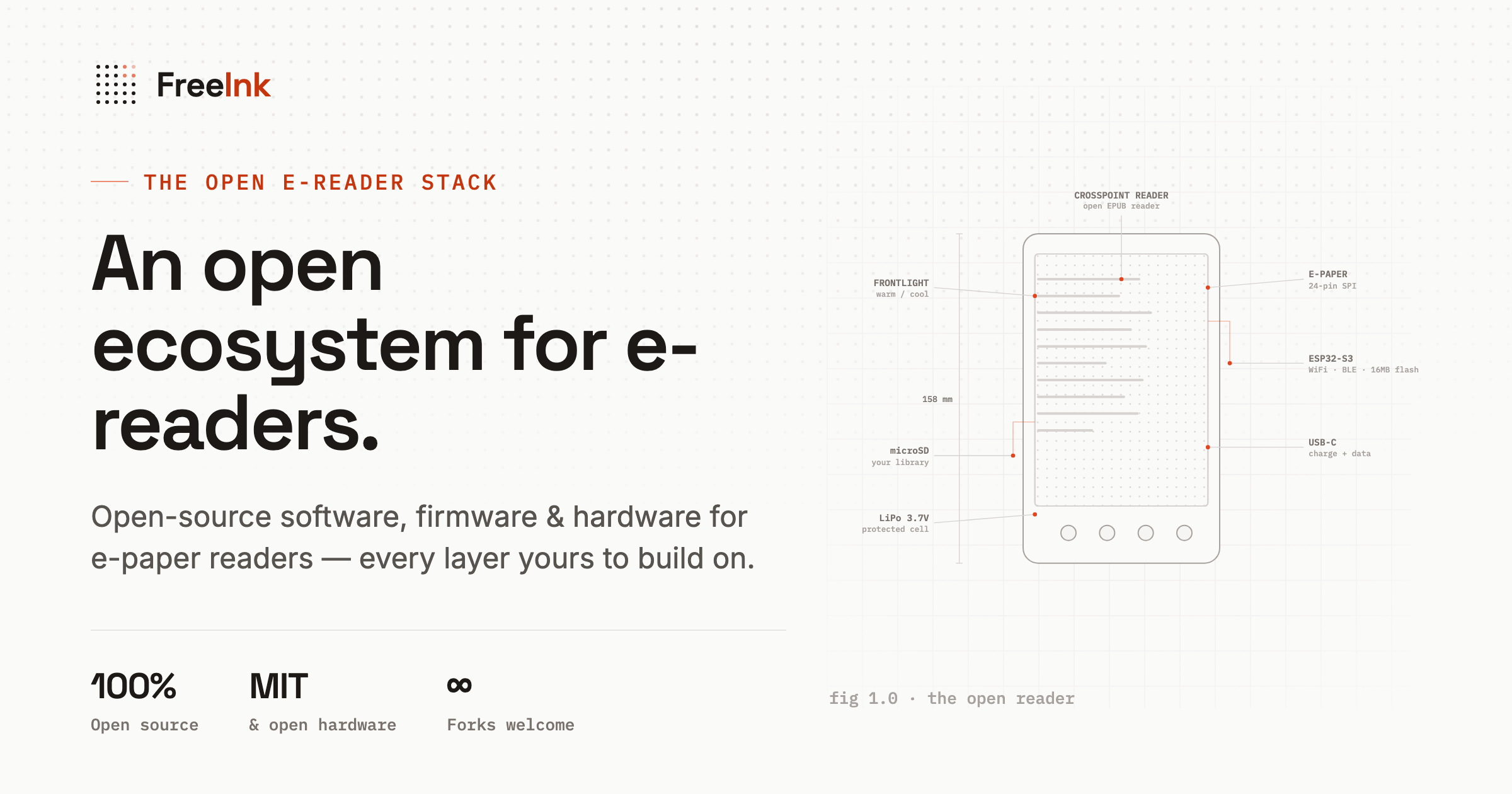
The Free Ink project is creating a completely open-source ecosystem for e-paper readers by developing public software, firmware, and hardware. This fully accessible stack allows developers and hardware enthusiasts to freely customize, extend, and manufacture their own e-reading devices.
CommentsLong presumed dead, a thriving coral reef is discovered in West Africa

A thriving coral reef long presumed dead has been discovered off the coast of West Africa, highlighting the region's highly underrated marine biodiversity. This encouraging find shifts the typical climate narrative from inevitable environmental decline to one of ecosystem persistence and resilience. The discovery has also sparked renewed interest and calls for increased financial support for under-resourced global coral preservation initiatives.
CommentsKimi K3 Is Competitive with Fable; Kimi K3 and Fable Is SoTA
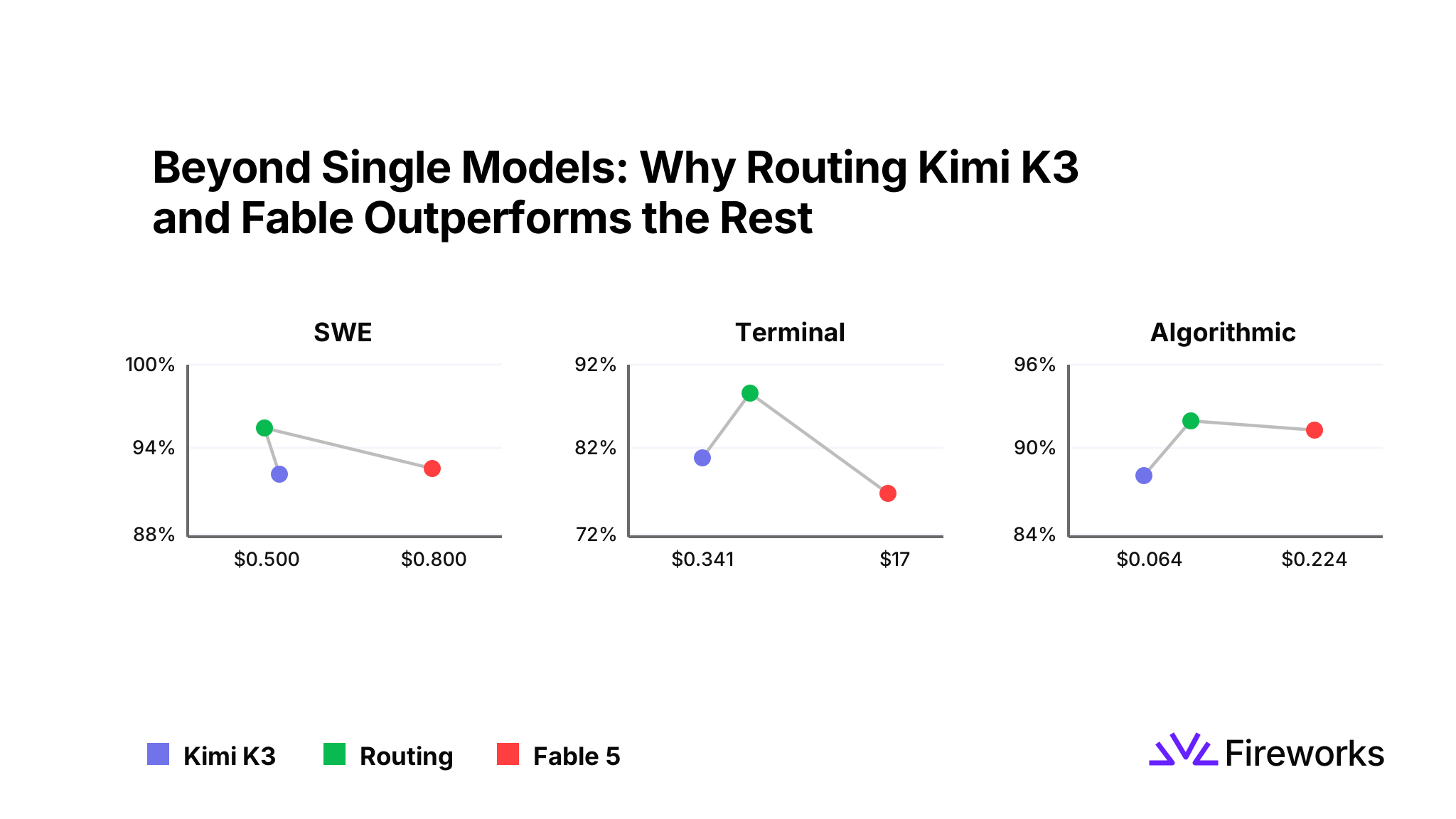
A new routing approach between the open-source Kimi K3 and closed Fable 5 models establishes a state-of-the-art benchmark for agentic tasks by leveraging their distinct technical specializations. By directing tasks to K3 for terminal and math operations and to Fable for web and data visualization, the hybrid system achieves a 93% task accuracy rate. This method also delivers up to 50x better cost-efficiency than using Fable in isolation, proving that combining specialized models outperforms relying on a single AI.
CommentsShow HN: Immersive Gaussian Splat tour of grace cathedral, San Francisco
A developer has created an immersive, highly detailed 3D web tour of San Francisco's Grace Cathedral using advanced Gaussian splatting technology. By combining thousands of interior and exterior photographs, the project produces a seamless model that runs smoothly across a wide variety of devices. The experience captures intricate environmental details so effectively that the cathedral plans to use it to showcase the space to prospective renters.
CommentsAdvertise in ChatGPT
Amidst discussions about integrating advertising into AI agents like ChatGPT, Kagi Search is defending its user-funded, ad-free model to ensure AI remains trustworthy and prioritizes the user over advertisers. However, the company faces continued backlash from some subscribers over its use of Russian-owned Yandex as a search source. This ongoing controversy has sparked intense debates among users regarding information censorship and the ethics of indirectly funding a nation involved in the Ukraine conflict.
CommentsI wrote an bash enumerator because I was sick of xargs
A developer created a custom bash enumerator tool to bypass the complex syntax of xargs and find, but the project has faced significant pushback from the community. Critics argue the tool introduces inconsistent syntax and potential security flaws, suggesting that modern native bash features like globstar and existing utilities already solve the author's underlying frustrations.
CommentsJack Dorsey launches Buzz to combine team chat, AI agents and Git hosting

Jack Dorsey has launched Buzz through Block, a new self-hostable workspace that integrates team chat, AI agents, workflows, and Git hosting. The platform leverages signed Nostr events to provide a decentralized infrastructure for streamlined developer collaboration.
CommentsMy USB Drive Has a Hidden Encrypted Vault
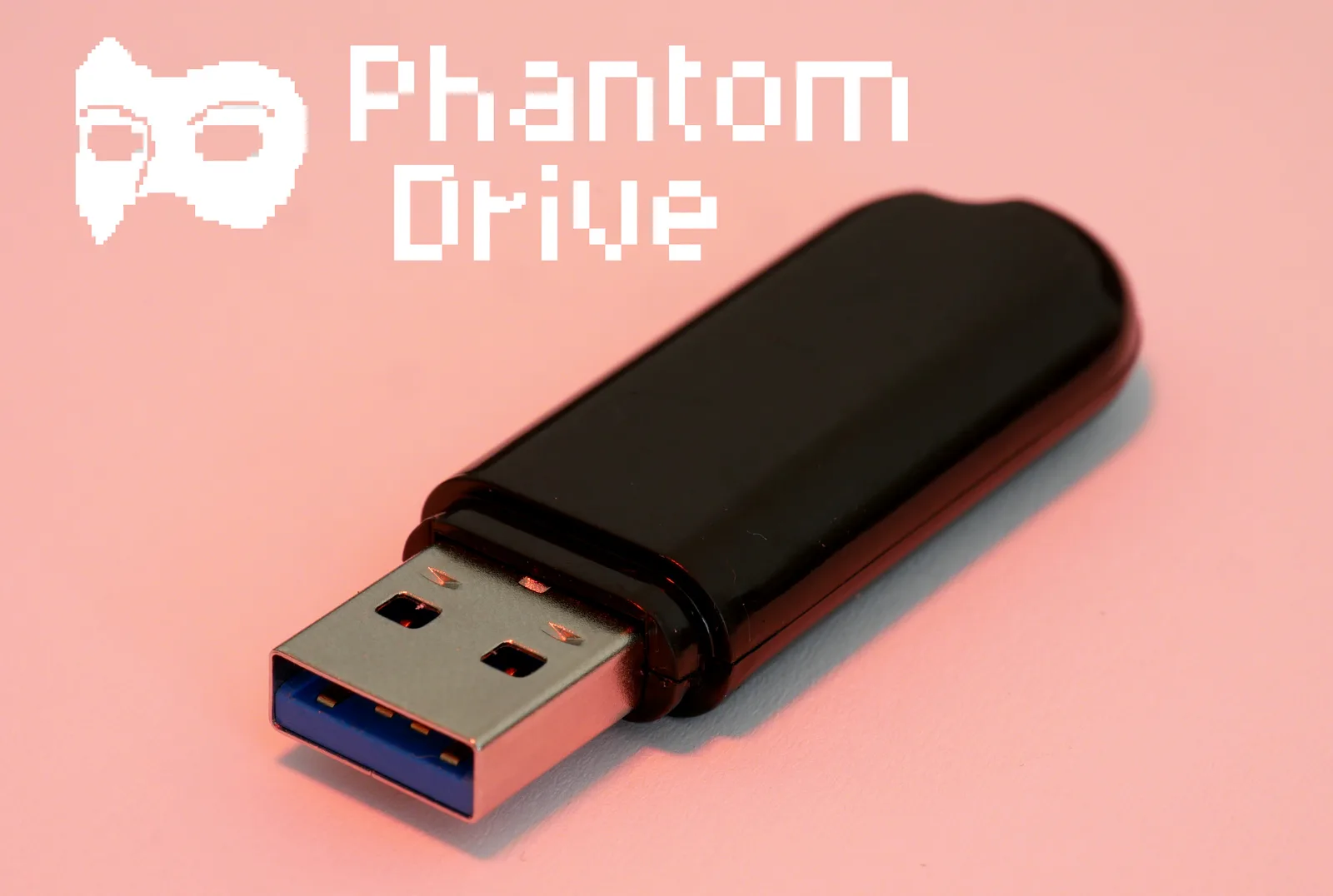
A recent article explores the use of specialized USB drives featuring hidden encrypted vaults to protect sensitive data in regions with weak privacy protections. By utilizing concealed partitions, users can safeguard their files and maintain plausible deniability even if they are coerced or forced to decrypt their devices during inspections.
CommentsIncremental – A library for incremental computations
Jane Street has released an open-source library named Incremental that is specifically designed for performing incremental computations. Developers can access the codebase and contribute to the project's ongoing development directly through its GitHub repository.
CommentsPCjs Machines
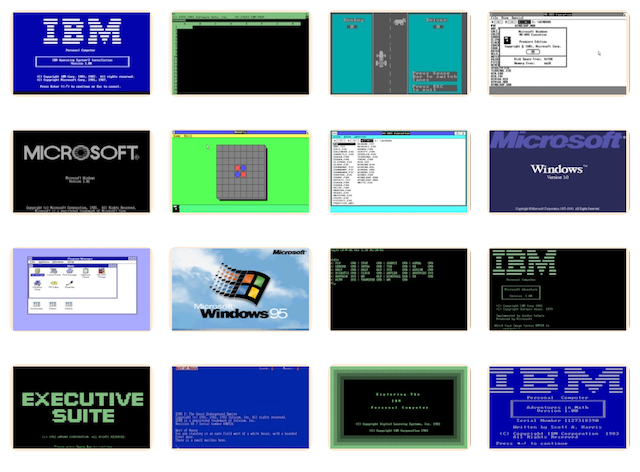
PCjs Machines is an online platform providing JavaScript-based emulators for vintage computers, allowing users to run legacy operating systems directly in modern web browsers. It also hosts an extensive archive of historical software and documentation for a wide variety of retro microcomputers and arcade machines.
CommentsMap of the world's great castles and fortresses

A new free interactive map allows users to explore 3,693 castles, fortresses, and palaces spanning 131 countries. The digital platform pins each location with a photo, founding century, and historical story to provide rich context. This tool offers history enthusiasts and travelers a highly accessible way to discover global architectural landmarks.
CommentsFlock Credibility Lost as It Repeatedly Lies to City Councils, Police, & Public

The ACLU has documented numerous instances of the surveillance camera company Flock repeatedly misleading city councils, police departments, and the public about its operations. These widespread deceptions have severely damaged the company's credibility as it continues to expand its surveillance footprint across local communities.
CommentsThe Psychology of Software Teams

A new book titled The Psychology of Software Teams explores how applying psychological principles can significantly improve support for software developers. By focusing on mental resilience, the guide offers engineering leaders actionable strategies to build stronger and more adaptable tech teams.
CommentsLaguna S 2.1
The developers have released Laguna S 2.1, representing a major advancement in their AI model capabilities. This latest iteration is specifically optimized to handle longer horizon tasks through highly effective reasoning processes.
CommentsJellyfin founder Andrew leaves team
Jellyfin is experiencing major leadership turnover following the departures of its founder Andrew, the project leader, and core team member Anthony. These recent resignations represent a significant shift for the open-source media platform's development team.
CommentsA digestion of the Jacobian conjecture counterexample

A recent mathematical analysis breaks down a proposed counterexample to the famously unsolved Jacobian conjecture. The article details the conjecture's formulation over complex numbers and carefully examines the mechanics of the counterexample to determine its validity.
CommentsRunning Doom on Our Custom CPU and Going Viral
A custom hardware team recently went viral after successfully running the classic game Doom on their homemade CPU. The project's development included the complex addition of DDR3 memory support, a chaotic process the creator humorously referred to as being kidnapped by their memory interface group. This successful execution marks a massive and entertaining milestone for the growing community of enthusiast-level silicon design.
Comments"Drawing" the Mona Lisa with GPT-5.6, Claude, Gemini, and Grok
A new benchmark evaluates the creative capabilities of four frontier AI models by tasking GPT-5.6, Claude, Gemini, and Grok with drawing the Mona Lisa on a blank canvas. Researchers meticulously track each model's visual output, stroke count, and overall cost to compare their efficiency and artistic accuracy.
CommentsMy two year old taught me constraint solving

A father shares how his two-year-old son taught him the computer science concept of constraint solving while playing with a Brio wooden train set. The child's intuitive approach to fitting the tracks together serves as a charming, real-world illustration of algorithmic problem-solving.
CommentsShow HN: Justif – Knuth-Plass justification and microtypography for the web
Justif is a new web tool that implements Knuth-Plass justification and microtypography directly in the DOM, solving the long-standing problem of poor native browser text rendering. The author credited large language models for helping rapidly develop the highly polished layout engine in just a single week. Community members praised the impressive interactive demo and the project's potential to vastly elevate web typography standards.
CommentsApple Private Cloud Compute SoC 3 audit reports
Apple has released a SOC 3 audit report detailing an independent examination of the controls within its Private Cloud Compute Provisioning System. The published document verifies whether these operational measures functioned effectively throughout the designated auditing period.
CommentsThe Birth of Prolog (1996)
Readers reflecting on the birth of Prolog discuss the language's elegant simplicity, tracing its origins to a natural language processing project in Marseille before its eventual transition into a niche tool. The discussion also highlights the language's enduring appeal among developers and draws parallels with Scheme, noting their shared 1970s origins and the unique logic-driven mindset required by both.
CommentsA Koi Pond Mosaic Made from 10 Pounds of 3D Printer Waste

A maker has creatively repurposed three years of accumulated 3D printing plastic waste, totaling 10 pounds, into a beautiful mosaic of a koi pond. By utilizing failed prints, purge towers, and other stringy scraps, the project successfully transforms typically discarded material into a unique piece of art.
Comments