Consumer Hardware Privacy Flaws and AI Optimization Breakthroughs
LG monitors silently install software through Windows Update without consent
LG monitors are silently installing background software through Windows Update without user consent the moment they are connected via HDMI. This hidden application runs at every system boot with full internet and system access, raising severe security and privacy concerns for both new and older models. Critics are largely blaming Microsoft for permitting this automatic installation mechanism, which is also used by other hardware manufacturers to deliver unwanted bloatware.
CommentsSpeech Recognition and TTS in less than 500kb
Moonshine AI has introduced a lightweight voice model that processes speech recognition, intent recognition, and text-to-speech in under 500 kilobytes. The tool offers ultra-low latency, providing developers with a highly efficient framework for building responsive voice agents and interfaces.
CommentsGPT-5.6 used a prompt to close a 30-year gap in convex optimization
GPT-5.6 has closed a three-decade gap in convex optimization by using a prompt to prove a theoretical lower bound on time complexity. The AI model successfully demonstrated that solving this specific class of functions requires the same minimum number of evaluations as a 30-year-old algorithm. This milestone highlights the growing capability of large language models to independently resolve advanced mathematical conjectures.
CommentsRegressive JPEGs
Developers are sharing creative workarounds to embed animations and live video streams by repurposing standard image formats like progressive PNGs and MJPEG instead of relying on traditional video tags. Techniques include using HTTP refresh headers and multipart responses to stream continuous frames directly into standard image elements. While some express frustration that websites still strip animations from modern formats like APNG, the community celebrates these inventive hacks for building interactive, JavaScript-free web applications.
CommentsThe Kimi K3 Moment
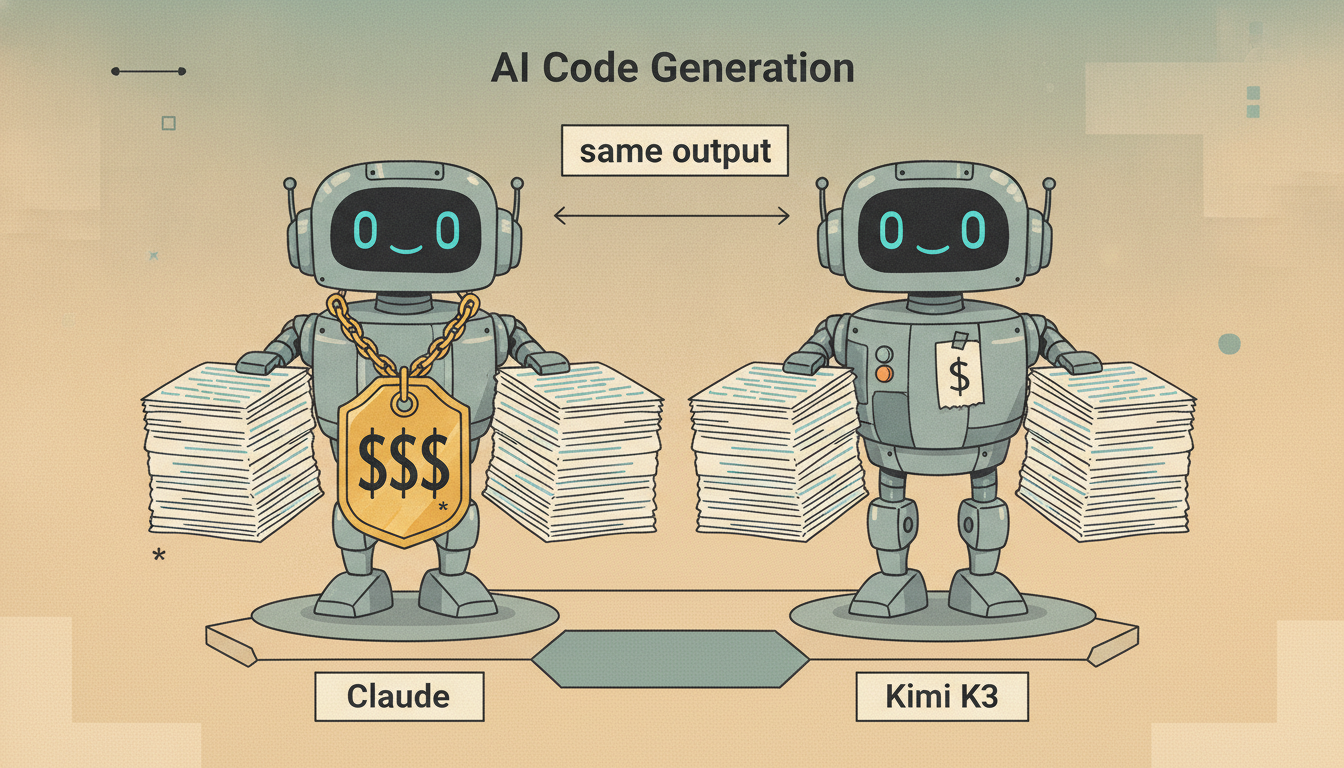
A developer evaluating the new Kimi K3 AI model found its coding capabilities and output quality to be virtually indistinguishable from industry leader Claude. This parity marks a significant milestone in the tech industry, demonstrating that top-tier software development AI is no longer exclusive to a single provider.
CommentsCodex Resets
A new tracking resource monitors the reset schedules for OpenAI's Codex usage limits by analyzing announcements made on X. By following updates from user @thsottiaux, the tool helps developers anticipate when their API rate limits will refresh.
CommentsFable 5 vs. GPT-5.6 Sol on an NP-Hard Problem: Does /goal help?

A recent evaluation compared the problem-solving capabilities of Claude Fable 5 and GPT-5.6 Sol on an unpublished NP-hard optimization task. The test examined the models both with and without their native /goal mode to determine if the feature improved outcomes. Results indicated that Fable 5 performed exceptionally well, though the /goal mode did not significantly enhance overall performance.
CommentsHardcore IndieWeb: Run your own website 100% independently for only $0.01/day

While an article advocates for running a fully independent website for a penny a day, readers argue that true independence requires self-hosting at home or utilizing free Tor onion services. The discussion highlights an ongoing debate over the practicality of these zero-cost, decentralized hosting methods compared to the simple convenience of paying for accessible clearweb hosting.
CommentsIf You Build It, They Will Come

This tech news piece explores the industry's ongoing debate over the build it and they will come philosophy in product development. It examines whether simply engineering an innovative platform is sufficient to naturally attract a user base in today's highly competitive digital landscape.
CommentsTP-Link Kasa cameras leaked home GPS via unauthenticated UDP for 6 years
A six-year-old security flaw in TP-Link Kasa smart cameras exposed users' home GPS coordinates through an unauthenticated UDP port. Discovered by an independent IoT security researcher, the vulnerability allowed the devices to continuously broadcast sensitive location data without requiring any authentication.
CommentsIs this the end of the once-mighty GoPro?

Once the undisputed leader in the action camera market, GoPro is facing a severe decline that could mark the end of the company. The struggling brand may only avoid total collapse if it can successfully find a buyer.
CommentsWhat AI did to stackoverflow in a graph
A recent graphical analysis reveals a dramatic drop in Stack Overflow's web traffic following the widespread adoption of AI coding assistants. The visual data highlights a major shift in developer behavior as programmers increasingly rely on generative AI to answer coding questions instead of searching community forums. This trend underscores the disruptive impact of large language models on traditional knowledge-sharing platforms within the tech industry.
CommentsGleam Is Now on Tangled
The Gleam programming language has migrated its code repository to Tangled, a decentralized GitHub alternative built on the ATProto protocol. While the move highlights the growing use of decentralized infrastructure, readers criticized the original article for failing to explain what either technology actually does.
CommentsReviving a 15-year-old netbook with Arch Linux
A tech enthusiast is breathing new life into a 15-year-old 2009 ASUS Eee PC netbook by installing the lightweight Arch Linux operating system. The device features severely outdated hardware, including a low-end Intel Atom processor and just 1GB of RAM. Ultimately, the project demonstrates how specialized Linux distributions can effectively revive obsolete technology for modern use.
CommentsSetting up your spare Mac for Claude Code to control, a step-by-step guide
A new tutorial provides step-by-step instructions for transforming a spare Mac into an always-on machine fully controlled by Claude Code. This setup allows users to seamlessly interact with the remote system from their primary computer via SSH or directly from their smartphones using the Claude app.
CommentsElixir-lang.org has a new design

The official website for the Elixir programming language, elixir-lang.org, has launched a brand new design. Elixir is a dynamic, functional language running on the Erlang VM, designed to help developers build scalable and maintainable applications from zero to scale.
CommentsGoodbye, and Thanks for All the Bikesheds
Tech professionals are discussing the high costs of bikeshedding, noting that teams often waste thousands of dollars in salary debating inconsequential and reversible decisions. To combat this, engineers recommend making quick, intuitive choices and iterating on implementations rather than endlessly optimizing for unknown future scenarios. Ultimately, recognizing the minimal impact of trivial choices allows development teams to bypass exhaustive debates and accelerate actual implementation.
CommentsLego building instructions through time

A new interactive digital project explores the evolution of Lego building instructions, tracing the transition from early printed paper diagrams to modern 3D online guides. The retrospective highlights how technological advancements have transformed the way users interact with the iconic toy's design and construction process.
CommentsI'm Making Strandfall, a Solarpunk Orienteering Larp

A creator is developing Strandfall, an upcoming solarpunk-themed orienteering LARP that integrates digital technology with physical outdoor navigation. The project aims to create an immersive experience by seamlessly blending the real and digital worlds for players.
CommentsVāgdhenu: A Sanskrit Chanting TTS System
Researchers at the Indian Institute of Science in Bengaluru have developed Vāgdhenu, a meter-aware text-to-speech system that converts written Sanskrit ślokas into vocalized chants. Led by Professor Prathosh A P, the new tool is specifically engineered to accurately reproduce the traditional rhythmic structures of the ancient language.
CommentsShow HN: Q3Edit – Edit and play Quake 3 maps in the browser
Q3Edit is an open-source, WebAssembly-powered browser tool that allows users to edit and play Quake III Arena maps without local installations. It uniquely integrates live MCP authoring, enabling seamless AI-assisted map creation directly within the editor using models like Codex and Claude.
CommentsI started a “dirt notebook”

A writer struggling with note-taking perfectionism has adopted a dirt notebook to overcome the habit of cherishing blank pages and keeping notes too pristine. By dedicating one specific book to be intentionally messy and ruined, they can now freely capture raw ideas without the pressure of maintaining perfect pages.
CommentsA Second-Grade Teacher Revived a Beloved Video Game
A second-grade teacher successfully revived the beloved 1990s PC game Backyard Baseball by acquiring the IP rights and commissioning a development team to rebuild the title after the original source code was lost. Developers worked with fan-provided CD-ROMs and applied complex binary patches to reconstruct the game's executable. This effort allowed the classic title to be modernized with upgraded assets and contemporary platform features for current systems.
CommentsStenchill: 3D Printable Solder Paste Stencil Generator

Stenchill is a new free online tool that allows users to generate 3D printable solder paste stencils directly from Gerber files for at-home FDM printing. Compatible with popular PCB design software like KiCad, Eagle, and Altium, it converts files to STL or 3MF formats to provide an accessible DIY solution for surface-mount reflow soldering.
CommentsThe Computer at the Bottom of a Canal
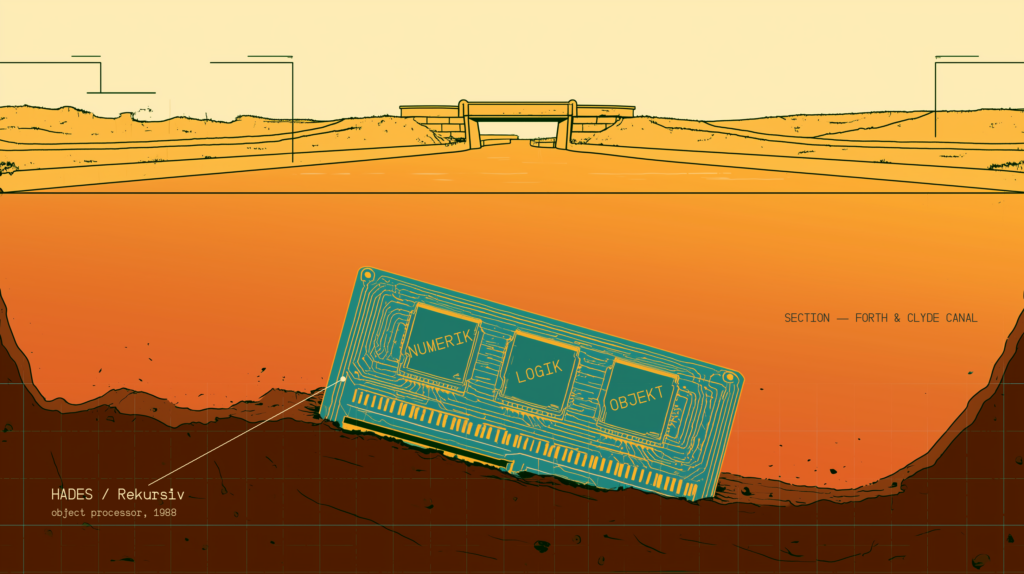
Lost at the bottom of the Forth and Clyde Canal is a forgotten 1988 custom processor developed by a Scottish hi-fi company. Ahead of its time, the submerged silicon featured groundbreaking hardware-level memory bounds checking and automatic heap garbage collection.
CommentsOur Approach to Bioresilience: Isomorphic Labs and Google DeepMind

Google DeepMind and Isomorphic Labs are leveraging advanced AI models to strengthen global bioresilience against biological threats. By applying artificial intelligence to this critical field, the companies aim to significantly improve prevention, detection, and response capabilities for potential outbreaks.
CommentsTech note: making your own V-I plots at home

The author of the new book The Secret Life of Circuits shares a guide on creating authentic Voltage-Current plots at home. This DIY approach ensures that the circuit artwork featured in the publication remains highly realistic and physically accurate.
CommentsEU ban on destruction of unsold clothes and shoes enters into application

A new European Union ban on the destruction of unsold clothing and footwear has officially taken effect. Under these regulations, businesses are required to prioritize sustainability by selling excess inventory or preparing items for reuse. This policy aims to significantly reduce textile waste and promote circular practices across member states.
CommentsQubes OS Security in the Public Record

A new arXiv preprint titled Qubes OS Security in the Public Record provides a comprehensive analysis of the security architecture of the compartmentalized Qubes operating system. The paper establishes a formal public record of the platform's protective capabilities, offering cybersecurity professionals valuable insights into its overall robustness.
CommentsAn Update on Igalia's Layer Based SVG Engine in WebKit (Reducing Layer Overhead)
Igalia has updated its layer-based SVG engine in WebKit to reduce layer overhead through the implementation of conditional layer creation. This optimization significantly improves the rendering performance and efficiency of SVG content across WebKit-based browsers.
Comments