AWS $1.7 billion billing error; Apple targets OpenAI
AWS: Inaccurate Estimated Billing Data – $1.7 billion
A unit conversion error in the AWS billing system caused massive overcharges by mistakenly charging customers per byte instead of per gigabyte, leading to estimated bills reaching up to $1.7 billion. Readers attribute this mistake to a lack of end-to-end testing between the metering and pricing systems. To prevent similar financial disasters, commenters suggest implementing a dedicated test currency for future integration tests.
CommentsFirst atmosphere found on Earth-like planet in habitable zone of distant star

Researchers have detected an atmosphere on a rocky, Earth-like planet orbiting within the habitable zone of a distant star. This marks the first time an atmosphere has been found on a potentially habitable exoplanet, advancing our understanding of worlds that could support life.
CommentsKimi K3, and what we can still learn from the pelican benchmark

Chinese AI lab Moonshot AI has announced Kimi K3, a 2.8 trillion-parameter model described as the company's most capable to date. The model is currently available via their website and provides new insights regarding the pelican benchmark.
CommentsThanks HN for 15 years of support and helping me find my life's work
In a discussion thanking Hacker News for its 15 years of support, users are sharing how the platform has profoundly shaped their personal and professional lives. Commenters highlight how connections made through the site and the associated Recurse Center led to lifelong friendships and dream jobs at companies like DuckDuckGo. The thread also reflects on the enduring value of the community's supportive environment and its unique social guidelines.
CommentsThe Zilog Z80 has turned 50
Celebrating its 50th anniversary, the Zilog Z80 microprocessor has sparked nostalgic reflections from veteran technologists who credit learning digital logic and assembly on the chip for their foundational understanding of computing. Readers emphasize the enduring value of mastering hardware from first principles, contrasting the manual coding and hardware constraints of the 1970s with today's over-served ecosystems and modern architectures like RISC-V.
CommentsLearning a few things about running SQLite
A recent technical piece shares practical insights and key lessons learned from operating SQLite in real-world environments. It outlines essential considerations for developers looking to deploy the popular embedded database in production. The guide provides actionable tips for managing, optimizing, and running SQLite effectively.
CommentsThe state of open source AI
Community discussions suggest that open-weight AI models could threaten closed developers like OpenAI and Anthropic, as hyperscalers like Apple and Google can deploy them for free to protect their own device ecosystems. The conversation also debates whether China's push for open models is a tactical maneuver to bypass Western restrictions or a principled strategy to accelerate practical economic applications. Ultimately, the high costs of training frontier models raise concerns about the financial sustainability of open-weight strategies as the industry shifts focus toward efficient, on-device edge AI.
CommentsKaiser nurses say AI, surveillance are making their jobs and patient care worse

Kaiser Permanente nurses handling triage calls warn that the increasing use of AI and workplace surveillance is negatively impacting both their working conditions and patient care. The healthcare workers argue that these technologies threaten their fundamental duty of care by prioritizing corporate metrics over patient well-being.
CommentsThree ways people respond to a problem (other than solving it)

This article examines the various ways people react to workplace challenges without actually solving them, highlighting behavioral patterns that often delay progress. It also provides practical advice for consultants on how to identify and effectively manage these non-solution responses in professional environments.
CommentsPebble Mega Update – July 2026
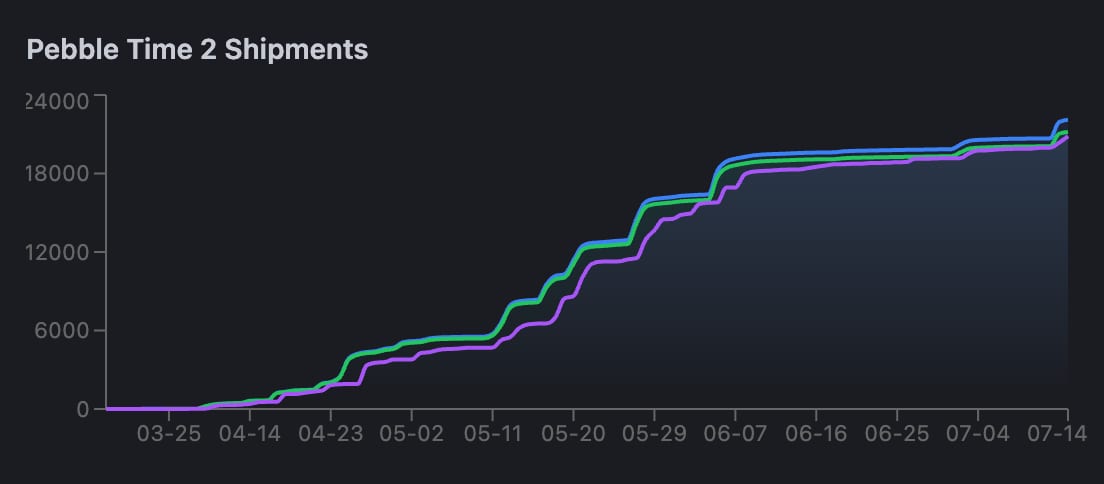
In its July 2026 mega update, Pebble detailed the current shipping status of the Pebble Time 2 and addressed user-reported issues alongside new software patches. The company also provided a new production update regarding the upcoming Pebble Round 2 smartwatch.
CommentsEEG shows brain can simultaneous encode two speech streams
A recent EEG study reveals that the human brain can temporarily encode two competing speech streams simultaneously when rapidly switching auditory focus. Researchers found that neural tracking of a new speaker begins before the brain disengages from the previous one. This transient dual encoding, supported by reduced alpha power, explains how we flexibly navigate complex listening environments.
CommentsHow Has Roman Concrete Lasted for Millennia? 1,900-Year-Old Latrine Offers Clues
/https://tf-cmsv2-smithsonianmag-media.s3.amazonaws.com/filer_public/f8/ef/f8ef2bbf-1984-46d7-9fba-cb9324c82871/3917.jpg)
Scientists analyzing a 1,900-year-old Roman latrine have discovered that a chemical process called carbonation seals cracks in ancient concrete, explaining its remarkable longevity. Researchers hope to apply this self-healing mechanism to develop stronger and more durable building materials for modern construction.
CommentsStatic search trees: 40x faster than binary search (2024)
A recent technical deep dive details the optimization of a static search tree, achieving search speeds up to 40 times faster than traditional binary search for sorted data. By leveraging advanced techniques like manual SIMD instructions, memory layout adjustments, prefix partitioning, and query batching, the author maximizes overall throughput. The implementation builds on foundational work from Algorithmica, refining the code down to the assembly level to eliminate unnecessary instructions and achieve peak performance.
CommentsAn Engineer's Guide to USB Typе-С (2024)
A new engineering guide to USB-C explores the immense complexities of the USB-PD protocol that frequently lead to poorly implemented power delivery in consumer hardware. To help debug these widespread issues, the author highlights an open-source USB-PD protocol analyzer designed to troubleshoot power negotiation and cable capabilities. While some readers criticized the guide for overlooking basic five-volt implementations, the community praised the debugging tool and noted the continued usefulness of affordable PD decoy boards for custom hardware projects.
CommentsSolod: Go can be a better C
In a recent article, Solod argues that the Go programming language can serve as a superior alternative to C for modern software development. The discussion highlights how Go's modern features, such as built-in concurrency and memory safety, resolve many of the traditional complexities and vulnerabilities inherent to C. This comparison suggests that developers tackling systems-level programming should strongly consider adopting Go to improve both productivity and code reliability.
CommentsFrank Lloyd Wright’s first home

Frank Lloyd Wright designed his first home in Illinois at the age of 22. He lived in the residence for 20 years.
CommentsApple targets dozens of OpenAI employees with legal letters
Apple is sending legal letters to dozens of OpenAI employees following the alleged mishandling of proprietary information during the development of a new hardware platform. Commentators suggest this dispute underscores broader concerns about OpenAI's corporate ethics and its deteriorating relationships with major industry partners.
CommentsShow HN: Watch bots interact with an SSH honeypot in real time
A newly showcased interactive project allows users to observe automated bots attacking an SSH honeypot in real time, sparking a discussion among security practitioners about the origins of this traffic. Participants in the thread, including the creator of the Cowrie honeypot software, share statistics revealing that the vast majority of this persistent malicious background noise originates from major cloud providers like Azure and DigitalOcean.
CommentsOpen Book Touch: open-source e-reader

The Open Book Touch is a new pocketable, front-lit e-reader built on open-source principles to provide a fully customizable reading experience. Designed to support every book and language, it offers a universal alternative to proprietary devices for tech enthusiasts.
CommentsEvidence of inconsistencies in evaluation process and selection of winners

New evidence exposes significant inconsistencies in AI evaluation processes and the selection of competition winners. To address these flaws, experts emphasize the need to design high-quality benchmarks that evaluate how frontier models truly reason, act, and judge, rather than just relying on simple data recall.
CommentsPainting the sides of railroad rails white to reduce derailment

Union Pacific is painting the sides of its railroad rails white to manage heat-related track conditions and prevent derailments during warmer temperatures. This innovative approach is part of a broader safety strategy that helped the railroad achieve a record-low derailment rate in 2025, improving by 19% year over year.
CommentsShow HN: A zoomable timeline of 4M Wikipedia events
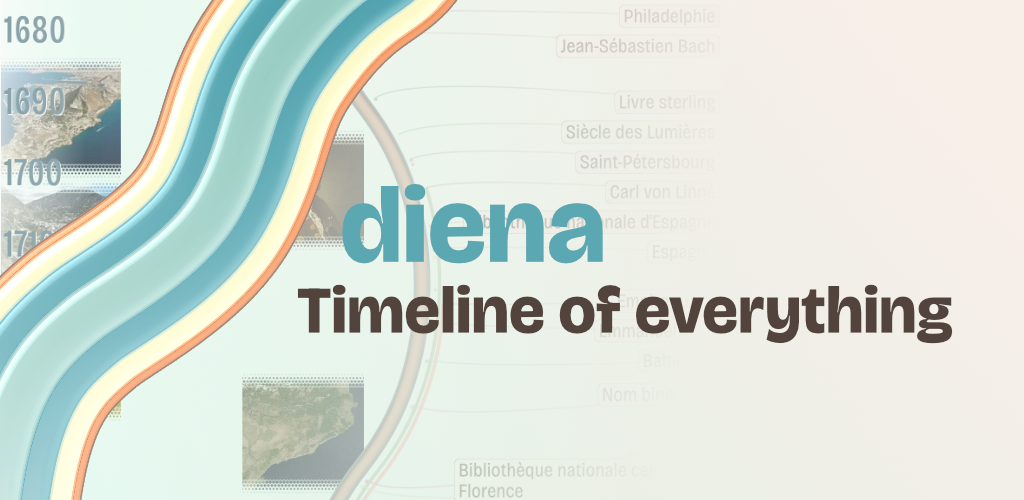
A newly launched interactive web tool lets users explore a zoomable timeline of over four million Wikipedia events. The project visualizes the history of the universe, life on Earth, and human civilization from the Big Bang to the present day and beyond.
CommentsCamera Chase Vehicle
A detailed builder's log chronicles the step-by-step creation of a quirky, custom camera chase vehicle by a veteran hardware maker known for early work on the Onewheel. Readers praised the passion project's meticulous documentation and zero-stakes inventive spirit as a refreshing break from the usual tech news focus on machine learning.
CommentsThe human-in-the-loop is tired
Developers are experiencing a unique psychological fatigue as AI systems increasingly write their own code, shifting humans from active creators to passive supervisors. This transition at the intersection of machine reward functions and human dopamine loops highlights the growing exhaustion of remaining the human in the loop.
CommentsMore Bounce to the Ounce

A recent opinion piece affectionately champions a highly ambitious rocket design that the broader aerospace industry is currently too risk-averse to develop. The author argues that this unconventional engineering approach offers superior performance, criticizing mainstream manufacturers for playing it safe rather than pushing the boundaries of spaceflight.
CommentsFAA lets Boeing sign off on 737 MAX, 787 airworthiness certificates again
The Federal Aviation Administration has restored Boeing's authority to sign off on airworthiness certificates for its 737 MAX and 787 aircraft. This regulatory decision allows the aerospace manufacturer to resume approving the final safety documentation required to deliver these planes to customers.
CommentsAI Meets Cryptography 2: What AI Found in OpenVM's ZkVM
Researchers used an AI auditor to uncover a critical soundness vulnerability in the OpenVM zero-knowledge virtual machine that allowed malicious provers to forge pairing equalities. The flaw stemmed from missing subfield checking and has been patched in the OpenVM 1.6.0 release under CVE-2026-46669. This discovery marks the second installment in an ongoing series detailing AI-driven bug hunting in open-source cryptography.
CommentsA Road to Lisp: Which Lisp
This article explores the diverse ecosystem of modern Lisp dialects by comparing the unique features, strengths, and ideal use cases of popular variants like Clojure, Common Lisp, and Racket. Ultimately, it serves as a practical guide to help developers navigate these differences and choose the right Lisp for their specific programming needs.
CommentsTopcoat: The full full-stack framework for Rust
The tokio-rs team has introduced Topcoat, a new batteries-included full-stack framework designed to simplify web application development in Rust. By providing a comprehensive set of built-in tools out of the box, it aims to streamline the development process and make building robust web apps more efficient.
CommentsMoonBASIC: A modern BASIC for building 2D and 3D games
MoonBASIC is a new open-source programming language that modernizes the classic BASIC syntax specifically for building 2D and 3D games. The project's source code is currently available on GitHub for community contributions and ongoing development.
Comments