Vint Cerf Retires Amid Rapid AI Agent Evolution
Vint Cerf, “father of the Internet”, is retiring

Vinton Cerf, a pioneering creator of the foundational internet protocols, is stepping down from his role as Google's chief internet evangelist. Widely recognized as a father of the internet, he will officially retire next week and conclude his long tenure at the tech company.
CommentsClaude Code sends 33k tokens before reading the prompt; OpenCode sends 7k
A recent comparison of AI coding assistants reveals that Claude Code incurs significant token overhead, sending 33,000 tokens to the API before even processing the user prompt. In contrast, OpenCode sends only 7,000 tokens in its default configuration. This hidden cost disparity is primarily driven by differences in instruction files, MCP schema weights, and subagent multipliers.
CommentsHow to read more books

This article outlines a personal method and practical strategies for increasing the number of books read annually. The author shares actionable habits and productivity tips designed to help readers optimize their daily routines. By implementing these specific techniques, individuals can efficiently consume more literature and improve their overall reading consistency.
CommentsTiny Emulators
The updated Tiny Emulators project utilizes a unique cycle-stepped approach to emulate 8-bit CPUs and system chips, ticking the processors alongside other components rather than treating them as central controllers. Featuring stb-style C headers and an experimental Zig variant, the open-source library has been integrated into projects like the BizHawk emulator and inspired community discussions about the appeal of deep-hardware programming concepts reminiscent of the cancelled game 0x10c.
CommentsAsk HN: What Are You Working On? (July 2026)
A developer recovering from health issues is leveraging AI coding tools to build a 2D roguelite game, prompting a broader Hacker News discussion on AI's role in game development. While participants praise AI for handling complex architecture and logic, they note it currently struggles with timing-based mechanics due to its inability to process real-time movement. However, commenters remain optimistic that rapid advancements in specialized inference hardware will soon overcome these temporal limitations.
CommentsMesh LLM: distributed AI computing on iroh
Mesh LLM utilizes the iroh network to pool GPU resources across multiple machines, creating a unified distributed AI computing system. This allows developers to access a single OpenAI-compatible API using their existing hardware, offering a scalable solution for running large language models without relying on centralized servers.
CommentsLARP – Revenue infrastructure for serious founders
LARP is a satirical concept offering fake revenue infrastructure by pairing founders to exchange $10,000 and artificially book income without any actual cash changing hands. The premise pokes fun at the extreme measures entrepreneurs might use to inflate their metrics and fabricate traction.
CommentsMigrating a production AI agent to GPT-5.6: 2.2x faster, 27% cheaper

A development team recently migrated their production AI agent to GPT-5.6, ending a four-month streak where Claude Opus dominated their performance evaluations. This transition delivered significant improvements, including a 2.2x increase in speed and a 27% reduction in costs. The article outlines the key technical lessons and practical insights gained during the migration process.
CommentsSo you want to learn physics (second edition, 2021)

A community discussion surrounding a guide to learning physics reveals a debate over whether self-study should be highly targeted or systematically structured like a full university course. While some advocate for piecemeal learning focused on immediate practical needs, others argue that rigorous, syllabus-driven study is essential for grasping the foundational shape of the discipline and complex concepts like Noether's theorem. Ultimately, readers highlight that both approaches offer distinct value for anyone looking to expand their understanding of the physical world.
CommentsHow we can reduce traffic congestion

Google researchers modified their Maps routing algorithm to divert traffic away from congested roads, yielding a two percent increase in driving speeds and lower fuel consumption across ten major cities. However, the initiative has sparked debate regarding the need for government oversight on algorithmic changes and raised concerns that tech-driven solutions may distract from the necessity of investing in public transit.
CommentsWhat xAI's Grok build CLI sends to xAI: A wire-level analysis
A new technical analysis reveals the exact data transmitted by the Grok Build command-line tool back to xAI servers. By inspecting the wire-level network traffic, the report provides developers with rare transparency into the privacy implications and telemetry practices of the AI development environment.
CommentsOld and new apps, via modern coding agents

Tracing a journey that began with Java 1.0 applets in 1999, this article explores the author's long-standing interest in machine-assisted mathematics education. It highlights how modern coding agents are now being utilized to revamp and recreate these legacy educational tools.
CommentsWhy write code in 2026
This article explores the enduring value of programming in 2026, highlighting why writing code remains a crucial and rewarding pursuit for tech professionals. It outlines a variety of compelling reasons to continue building software, emphasizing the ongoing importance of technical skills and human problem-solving in the modern digital landscape.
CommentsI love LLMs, I hate hype
The author expresses profound enthusiasm for genuine artificial intelligence progress while actively rejecting the surrounding industry hype. Having dedicated their career to the field, they celebrate recent breakthroughs in large language models and coding agents. They highlight a seamlessly working local AI setup as proof that the long-awaited Year of the Linux Desktop has finally arrived.
CommentsKode Dot Programmable pocket device for makers, pentesters and geeks

Kode Dot is a new pocket-sized, modular device designed for makers, pentesters, and tech enthusiasts. Powered by ESP32-P4 and C5 chips, it features an AMOLED touchscreen, wireless connectivity, built-in sensors, and 16 programmable pins. Users can easily expand its capabilities by attaching custom snap-on modules.
CommentsI Learned to Read Again

In a reflective essay on digital consumption habits, the author chronicles their transition from physical books to screen-based reading and the eventual return to print. The piece examines how digital media altered their cognitive focus and highlights the personal benefits of reclaiming deep reading through traditional books.
CommentsBillions of Sketches Reveal Hidden Cultural Variation in Human Concepts

A newly published arXiv paper leverages a dataset of billions of user-generated sketches to uncover hidden cultural variations in human conceptualization. By analyzing this massive visual dataset, researchers demonstrate how diverse cultural backgrounds significantly influence the fundamental ways people draw everyday objects. These findings offer valuable new insights into the intersection of cognitive science and large-scale data analysis.
CommentsAn agent in 100 lines of Lisp

The author reflects on taking an artificial intelligence course at the University of Guelph around the year 2000, long before the rise of modern deep learning frameworks. They recall that the early curriculum focused heavily on writing algorithms in Lisp rather than the transformers and neural networks that dominate the field today.
CommentsAutomation Without Understanding
A recent arXiv paper titled Automation Without Understanding explores the current landscape of artificial intelligence, where systems perform complex automated tasks without genuine comprehension. The study highlights the potential risks of deploying models that lack true reasoning capabilities. Consequently, the authors urge developers to prioritize interpretability and safety in future AI designs.
CommentsI Did Not Kill Stanley Lieber: How to Draw (With 9front)
A recent piece by artist pmjv explores the creation of the Prahou universe using the 9front operating system on vintage ThinkPads. The project highlights delightfully unconventional drawing techniques, such as using a physical ruler directly on a touchscreen and utilizing an old Windows XP disc. Ultimately, the work showcases an impressive blend of retro hardware, digital art, and creative world-building.
CommentsGhostel.el: Terminal emulator powered by libghostty
Ghostel is a new terminal emulator for Emacs powered by libghostty that integrates terminal output directly into native Emacs buffers for seamless keyboard navigation and text manipulation. By treating terminal text as standard buffer content, the project aims to outperform existing Emacs packages like vterm and eat while eliminating the need for standalone terminal applications.
CommentsSince Chromium 148, Math.tanh is now fingerprintable to link underlying OS

Starting with Chromium 148, built-in JavaScript math, CSS trigonometric, and Web Audio functions now route through the host operating system's core math library. This routing causes the browser to exhibit unique rounding behaviors that inadvertently expose the user's specific operating system. As a result, these subtle calculation differences can now be exploited by developers for accurate OS fingerprinting.
CommentsHow Doctors die. It’s not like the rest of us (2016)
A resurfaced 2016 blog post by retired physician Ken Murray reveals that doctors frequently choose less aggressive, comfort-focused end-of-life care for themselves compared to the interventions they routinely prescribe for patients. By sharing personal anecdotes of colleagues facing fatal diagnoses, the article advocates for more open discussions about palliative care and prioritizing quality of life over futile medical procedures.
CommentsAgainst Usefulness
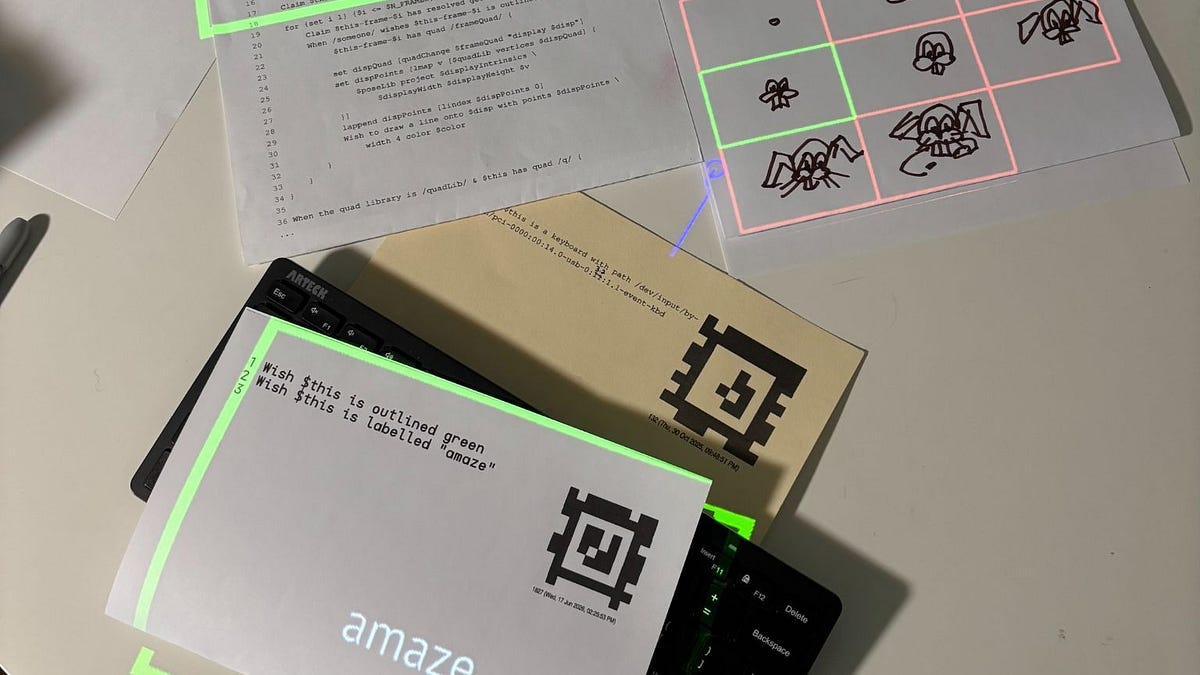
A recent New York Times Magazine feature explores the growing movement of physical computing and analog machines that prioritize the joy of creation over practical utility. By highlighting inventive projects like marble-powered paper computers, the article critiques modern technology's relentless obsession with optimization and celebrates the beauty of building fascinating, purely expressive devices.
CommentsJellyfish Undersea Roundabout

The Faroe Islands have unveiled a massive new underwater roundabout featuring a unique jellyfish-inspired design. This impressive subsea infrastructure project allows drivers to navigate beneath the water while observing marine life. It has quickly become the archipelago's latest major tourist attraction.
CommentsShow HN: Mindwalk – Replay coding-agent sessions on a 3D map of your codebase
Mindwalk is a new visualization tool that allows developers to replay coding-agent sessions on an interactive 3D map of their codebase. This spatial interface helps engineering teams easily track, analyze, and debug automated coding workflows in a more intuitive way.
CommentsMechanistic interpretability researchers applying causality theory to LLMs
Researchers in mechanistic interpretability are applying causality theory to large language models to determine if their internal operations reflect genuine reasoning or mere pattern memorization. By tweaking specific weights and activations, scientists aim to uncover how these networks process information, recently identifying shared underlying methodologies for tasks like calculating time and calendar dates. Although some argue that the immense complexity of neural networks makes them impossible to fully reverse-engineer, this approach seeks to translate encoded knowledge into human-understandable cognitive concepts.
CommentsA dock that wakes up reliably
Commenters discuss various troubleshooting steps for unreliable USB-C dock wake-up issues, suggesting tests with Android devices, Bluetooth peripherals, and USB packet debuggers. The community emphasizes that these waking failures are rarely isolated to the dock itself, but instead stem from complex interactions between laptop ports, monitors, and protocols like Thunderbolt or HDMI CEC. Ultimately, users note that modern peripherals function as interconnected network devices, transforming what seems like a simple connection into a multi-device debugging challenge.
CommentsUnder federal rule, colleges must leave grads better off or lose financial aid

A new federal regulation threatens to cut off federal student loans for college programs where graduates earn less than workers without a degree. While the rule aims to protect students from unmanageable debt, it raises broader questions about whether the value of a college degree should be measured solely by financial outcomes.
CommentsProtobuf-py: Protobuf for Python, without compromises

The newly announced protobuf-py introduces a fully conformant Protobuf runtime built specifically for Python. It delivers a native developer experience while matching the performance of Google's C engine on real-world workloads.
Comments