AI Sovereignty, Linux Networking, and Medical Breakthroughs Lead Headlines
Prefer duplication over the wrong abstraction (2016)
The author reflects on a 2014 RailsConf presentation where they advised developers to prefer code duplication over creating incorrect abstractions. This specific piece of programming advice sparked surprisingly strong and mixed reactions within the development community, with some critics doubting the logic while many others strongly agreed.
CommentsApertus – Open Foundation Model for Sovereign AI
Apertus is a fully open foundation model designed to empower nations and organizations to build sovereign artificial intelligence systems. By providing complete transparency and unrestricted access, it allows users to develop localized AI technologies without relying on proprietary models. This initiative aims to democratize advanced machine learning and ensure long-term technological independence for its users.
CommentsLoupe – A iOS app that raises awareness about what native apps can see
A new privacy-focused iOS app called Loupe has been released to show users exactly what data native applications can access on their devices. Developed by researchers at mysk-research, the tool aims to raise awareness about mobile data visibility and empower Apple users to better protect their personal information.
CommentsIdentity verification on Claude

Anthropic's implementation of identity verification for Claude is driving some international users away due to frustrations over US export controls and data privacy concerns. As affected subscribers begin migrating to alternative models like Mistral, the broader tech community is actively debating the company's underlying motives. Many question whether the new restrictions are merely a temporary compliance measure or a calculated strategy to achieve regulatory capture against open-weight AI.
Comments15-minute at-home Lyme disease tick test

LymeAlert has introduced a rapid at-home test that can diagnose Lyme disease in just 15 minutes following a tick bite. The device is designed to save individuals from the high costs and lengthy wait times typically associated with emergency room visits.
CommentsSlow breathing modulates brain function and risk behavior
Recent discussions emphasize that slow breathing techniques down-regulate the nervous system to lower heart rate and signal safety to the brain. This physiological modulation helps individuals overcome performance anxiety and manage risk behavior, enabling greater confidence and strategic thinking in high-stress scenarios ranging from public speaking to combat sports.
CommentsBeyond All Reason (Free Total Annihilation Inspired RTS)

Beyond All Reason is a free, epic-scale real-time strategy game inspired by Total Annihilation, offering Windows and Linux players massive, fully simulated battles with thousands of units. The title features 400 unique units across two factions and supports a variety of gameplay modes, including skirmishes, co-op, and large-scale multiplayer matches.
CommentsDevelopers don't understand CORS (2019)

Highlighting the recent Zoom vulnerability, an article argues that a significant number of developers still fundamentally misunderstand Cross-Origin Resource Sharing. This widespread knowledge gap frequently leads to improper web configurations that expose applications to severe security risks, underscoring the urgent need for better developer education on web security protocols.
CommentsRenting a sewing machine from the library

Finland's libraries are evolving beyond traditional book lending by providing practical resources like sewing machines to support community needs. This shift highlights how these public institutions are increasingly valued for facilitating everyday societal functions rather than just literary access.
CommentsShow HN: TownSquare, a tiny presence layer for websites
TownSquare is a new web tool that adds a shared virtual presence layer to websites. It creates an interactive space where visitors can see each other, walk around, and chat in real time. This integration aims to transform standard web pages into engaging, social environments.
CommentsEpoll vs. io_uring in Linux
A community discussion surrounding a student-built proxy's transition from epoll to io_uring highlights that CPU pinning and avoiding cross-core communication are critical for maximizing network performance. Readers advise that alongside selecting the right I/O model, developers must align threads to specific CPU cores and utilize advanced memory allocators to rival industry standards like nginx. Ultimately, the exchange underscores that deep hardware-level tuning is just as essential as the underlying I/O architecture for achieving maximum throughput.
CommentsJSON-LD explained for personal websites

A new guide explains how to implement JSON-LD on personal websites to improve search engine optimization. The resource covers key schemas like WebSite, Person, and BlogPosting to help search engines better understand site content. It also provides developers with ready-to-use code snippets for easy integration.
CommentsEverything is logarithms
A recent article framing baseless logarithms and other concepts through the mathematical lens of torsors has sparked a reader debate over technical nomenclature. Critics argue the term is confusing and clashes with classical mechanics, highlighting a broader frustration with heavily overloaded jargon in mathematics. The discussion ultimately questions whether such esoteric terminology hinders understanding compared to more familiar concepts like vectors.
CommentsThe minimum viable unit of saleable software

Large language models have significantly reduced software development costs, but they have not made it entirely free. This reality is fundamentally altering the traditional buy-versus-build calculus for modern businesses. Consequently, small software companies must now navigate a new minimum pricing threshold to remain profitable and survive in the LLM era.
CommentsShow HN: Teach your kids perfect pitch
A developer has showcased an open-source GitHub project called bsharp on Hacker News, which is designed to teach children perfect pitch. The creator is inviting the community to test the educational tool and contribute to its ongoing development.
CommentsThe brain was not designed for this much bad news

Human brains evolved to prioritize danger, but the modern, relentless cycle of global negative news easily overwhelms this natural instinct. Rather than ignoring current events entirely, researchers recommend establishing healthier habits regarding how, when, and where we consume the news.
Comments(How to Write a (Lisp) Interpreter (In Python)) (2010)
Peter Norvig's classic 2010 tutorial on building a Lisp interpreter in Python remains a highly recommended foundational resource for developers interested in creating programming languages. Hacker News readers continue to revisit and praise the guide, often comparing it to other popular educational projects like Crafting Interpreters and the language-agnostic Make-A-Lisp. While some prefer Make-A-Lisp as a litmus test for learning new languages, many still consider Norvig's step-by-step approach the best starting point for understanding interpreter design.
CommentsA 3D voxel game engine written in APL
A new open-source 3D voxel game engine built with Dyalog APL and SDL3 is now available on GitHub. The project, named avoxelgame, welcomes developers to create an account and contribute to its ongoing development.
CommentsRunning MicroVMs in Proxmox VE, the Easy Way
A community discussion surrounding Proxmox VE microVMs highlights that recent orchestration improvements make this lightweight virtualization method more viable than past evaluations suggested. While users appreciate the rapid boot times and improved security isolation compared to LXC containers, challenges such as CUDA GPU passthrough and userspace initialization speeds remain. Consequently, the community is eagerly anticipating native, first-class microVM support directly within the Proxmox platform.
CommentsGoogle Hits 50% IPv6

Google has reached a major milestone in internet technology adoption, with approximately half of its users now accessing the company's services over IPv6. This achievement highlights the continuing global transition toward the newer network protocol.
CommentsWhole cross-sectional human ultrasound tomography

Researchers have developed a novel ultrasound tomography system that uses a 512-element circular receiver array and a rotating transmitter to capture complete cross-sectional images of the human body, overcoming the limited field of view of traditional handheld ultrasounds. The new technology closely matches MRI results and offers practical clinical applications, including radiation-free fat assessment and real-time biopsy needle localization.
CommentsPowerFox Browser

PowerFox is a secure and open-source web browser designed to bring modern browsing capabilities to older Apple systems. It is fully compatible with Mac OS X 10.4 Tiger, 10.5 Leopard, and 10.6 Snow Leopard. The software supports both Intel and legacy PowerPC Mac architectures.
CommentsProportional-Integral-Derivative (PID) controllers
Reader discussions highlight the enduring appeal of Proportional-Integral-Derivative controllers among programmers due to their intuitive balance of conceptual cleverness and ease of implementation in robotics projects. Although PID remains a staple for educational applications like line-following robots, practitioners note that tuning it for complex real-world motor control is highly challenging, leading some developers to adopt advanced alternatives like Active Disturbance Rejection Control.
CommentsZigzag Decoding with AVX-512

The creator of the meshoptimizer library recently explored methods to accelerate AVX-512 vertex decoding. During this process, the developer discovered two interesting optimization techniques that were ultimately not used in the final implementation. This article explores these unused methods while teasing a future deep dive into the specific optimizations that actually made it into the codebase.
CommentsFDA advisors unanimously vote to approve Moderna's mRNA after agency drama

FDA advisors have unanimously voted to approve Moderna's mRNA vaccine, overcoming recent political interference at the agency. This decisive approval follows controversy in February when a Trump administration official initially refused to review the vaccine.
CommentsHPV vaccine cuts risk of dying from cervical cancer before 30

Recent research shows that the HPV vaccine significantly lowers the risk of cervical cancer mortality for women under 30. Despite this positive finding, experts warn that declining vaccination rates among teenagers could cause a future resurgence in both cases and deaths.
CommentsGuide to the TD4 4-bit DIY CPU

A new guide details the experience of building and programming the TD4, a compact 4-bit DIY CPU kit sourced from Aliexpress. The hardware is quite limited, featuring just two registers, some indicator LEDs, and 16 bytes of program ROM. However, it remains a highly rewarding project that effectively teaches the fundamental principles of computer architecture.
CommentsProject Fetch: Phase Two
Anthropic's latest Project Fetch results reveal that the Claude Opus 4.7 model can independently perform sophisticated robotics tasks. Operating without human assistance, the AI completed the work approximately 20 times faster than the fastest human teams managed less than a year ago.
CommentsBuilding reliable agentic AI systems
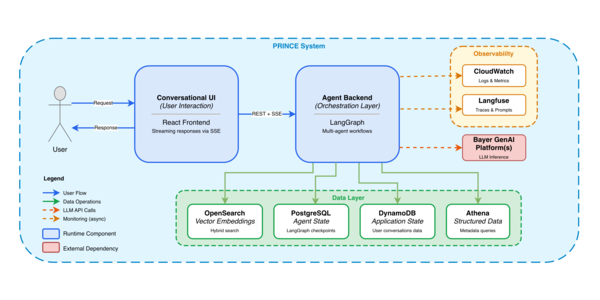
Developers are building reliable agentic AI systems to help pharmaceutical researchers efficiently query decades of historical data buried in PDF reports. These advanced agents can autonomously navigate and extract critical insights from complex documents, significantly streamlining drug discovery and analysis.
CommentsShow HN: Recall – Local project memory for Claude Code
A new open-source tool called Recall gives Claude Code persistent local memory that operates entirely offline. This prevents developers from wasting tokens by repeatedly explaining their project context at the start of every new session.
Comments