Hyundai acquires Boston Dynamics and John Jumper joins Anthropic
Hyundai buys Boston Dynamics

Hyundai Motor Group is acquiring the remaining 9.65% stake in Boston Dynamics from SoftBank for $325 million. This final purchase grants the automaker full ownership of the prominent robotics company.
CommentsProject Valhalla, Explained: How a Decade of Work Arrives in JDK 28

After a decade of extensive development, Project Valhalla is finally being integrated into JDK 28. This long-awaited update marks a significant milestone for the Java Virtual Machine ecosystem. However, the rollout introduces nuanced changes that developers will need to carefully navigate.
CommentsNorway imposes near ban on AI in elementary school
Norway has implemented a near ban on generative AI for elementary school students aged 6 to 13, restricting its use for older teenagers to supervised settings in an effort to combat declining education scores. This policy follows a recent smartphone ban and has prompted widespread discussion about overhauling educational assessments, with many suggesting a necessary shift toward invigilated exams and project-based learning to verify true student comprehension.
CommentsZen and the Art of Machine Learning Research

An exploration of the mindset required for artificial intelligence development argues that a researcher's temperament is ultimately more important than raw intellectual talent. The piece emphasizes that cultivating patience, resilience, and the right psychological approach is the true key to navigating the field's complex challenges. Ultimately, achieving world-class machine learning research relies heavily on emotional balance and perseverance rather than just technical brilliance.
CommentsThere are no instances in ATProto
A recent article clarifies that the AT Protocol does not rely on isolated server instances, comparing its architecture instead to RSS feeds and Google Reader. The piece explains that ATProto functions as a foundational data layer where users aggregate content from multiple sources through standalone applications. This architectural distinction highlights the network's focus on decentralized data portability rather than siloed server communities.
CommentsDuckDB Internals Part 1
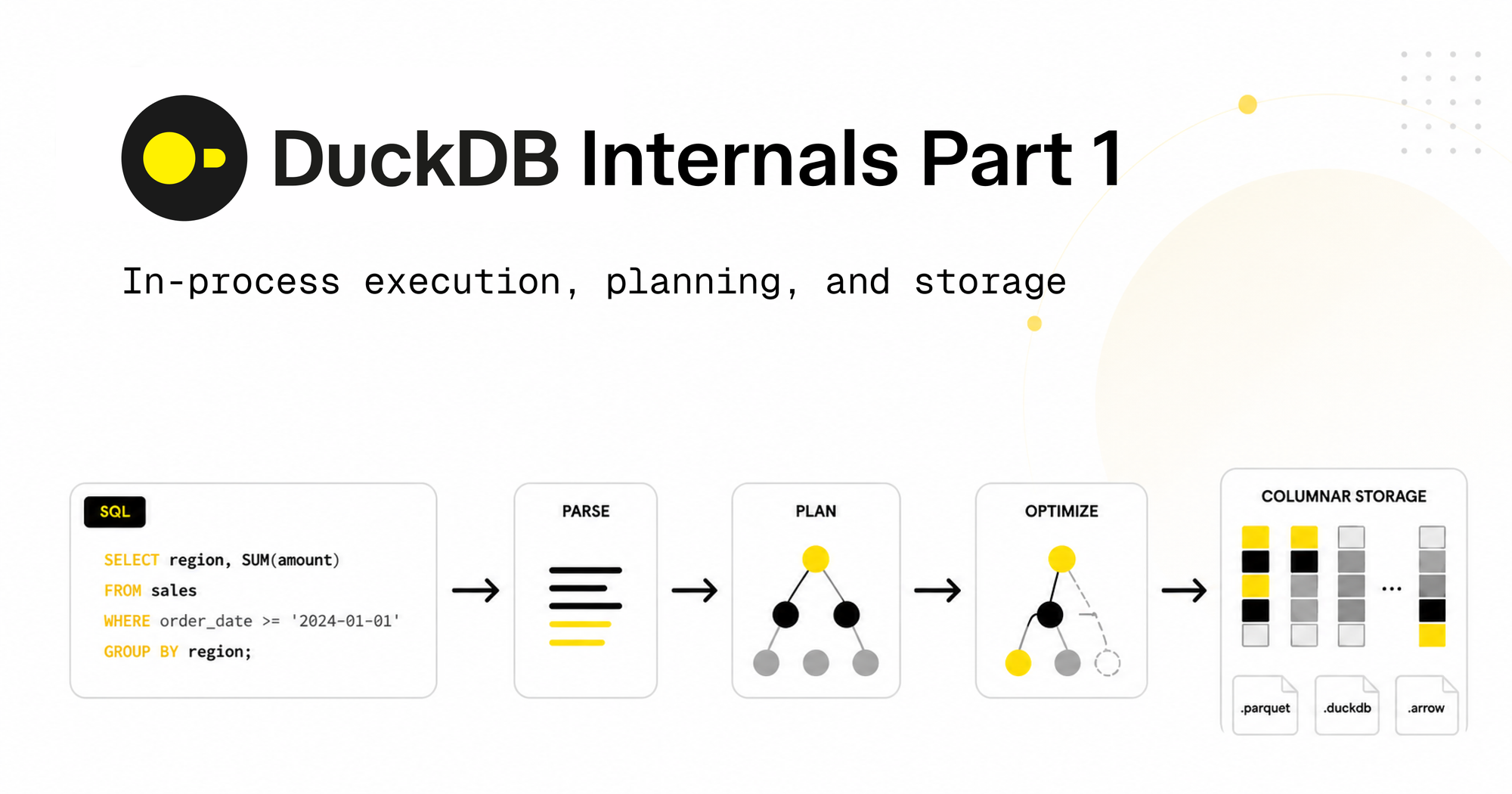
The first installment of a new series explores the internal architecture of the DuckDB analytical database, detailing how it bypasses serialization overhead and efficiently optimizes SQL queries. The article also explains the system's data storage mechanisms, specifically its use of columnar row groups and zone maps for rapid data retrieval.
CommentsTo study how chips work, MIT researchers built their own operating system

MIT researchers developed a custom operating system kernel named Fractal to study the internal architecture of computer chips. By using this system to analyze branch predictors in Apple's M1 processor, the team uncovered a significant vulnerability to major speculative attacks.
CommentsBuilding a robotics research setup that lives next to my desk

An independent researcher has developed a complete tabletop robotics setup featuring an industrial arm, dual cameras, teleoperation capabilities, and custom software for under €5,000. This affordable, desktop-sized system demonstrates how advanced robotics research and development are becoming increasingly accessible to individual creators.
CommentsHow many of the 170k English words do you know?
A new vocabulary quiz aiming to estimate users' knowledge of the 170,000 English words is drawing criticism for its clunky interface and questionable difficulty classifications. Reviewers point out inaccurate definitions, the inclusion of absurdly obscure terms, and a lack of clear methodology behind its supposedly scientific scoring system. Consequently, many users doubt the accuracy of the tool's final vocabulary estimates, with some suspecting the results are heavily inflated.
CommentsThe AirPods Effect

The widespread adoption of wireless earbuds like AirPods is creating personal audio bubbles that isolate wearers from their physical surroundings and alter everyday social dynamics. This constant immersion in customized soundscapes not only shapes individual beliefs but also contributes to a growing societal disconnect driven by personalized audio technology.
CommentsTen years of ClickHouse in open source

ClickHouse is celebrating its tenth anniversary since being released as an open source project in June 2016. Over the past decade, it has evolved into the most popular open source analytical database, supported by a thriving community of more than 2,000 contributors.
CommentsCourt Records Should Be Free

Although court records belong to the public, the federal PACER system charges users hefty fees to search and view these documents. Advocates argue that these financial barriers restrict public access and that electronic court filings should be available for free.
CommentsBobby Prince, composer for Doom, Wolfenstein 3D, and Duke Nukem 3D, has died
Bobby Prince, the legendary composer behind the iconic soundtracks for classic first-person shooters like Doom, Wolfenstein 3D, and Duke Nukem 3D, has passed away. Tributes from fans highlight his lasting legacy, noting that his metal-inspired music defined the immersive atmosphere of early gaming and recently earned a spot in the Library of Congress's National Recording Registry.
CommentsHow Japan's railways stayed one while splitting apart

In 1987, Japan privatized its national railway by dividing it into several independent regional companies. Despite this structural split, the new operators agreed to maintain a unified system to ensure a seamless experience for passengers. This decision demonstrates how fragmented organizations can successfully collaborate on core infrastructure to prioritize user convenience.
CommentsTelescope Ranchers

Starfront Observatories in Rockwood, Texas, operates as a unique telescope hotel that houses hundreds of personal telescopes in optimal dark-sky conditions. The facility allows remote astrophotographers to leave their sensitive equipment permanently on-site, completely eliminating the need to transport gear. This innovative service enables astronomy enthusiasts to control their telescopes remotely and capture high-quality images of the night sky.
CommentsGribouille 0.3.0: A Grammar of Graphics for Typst
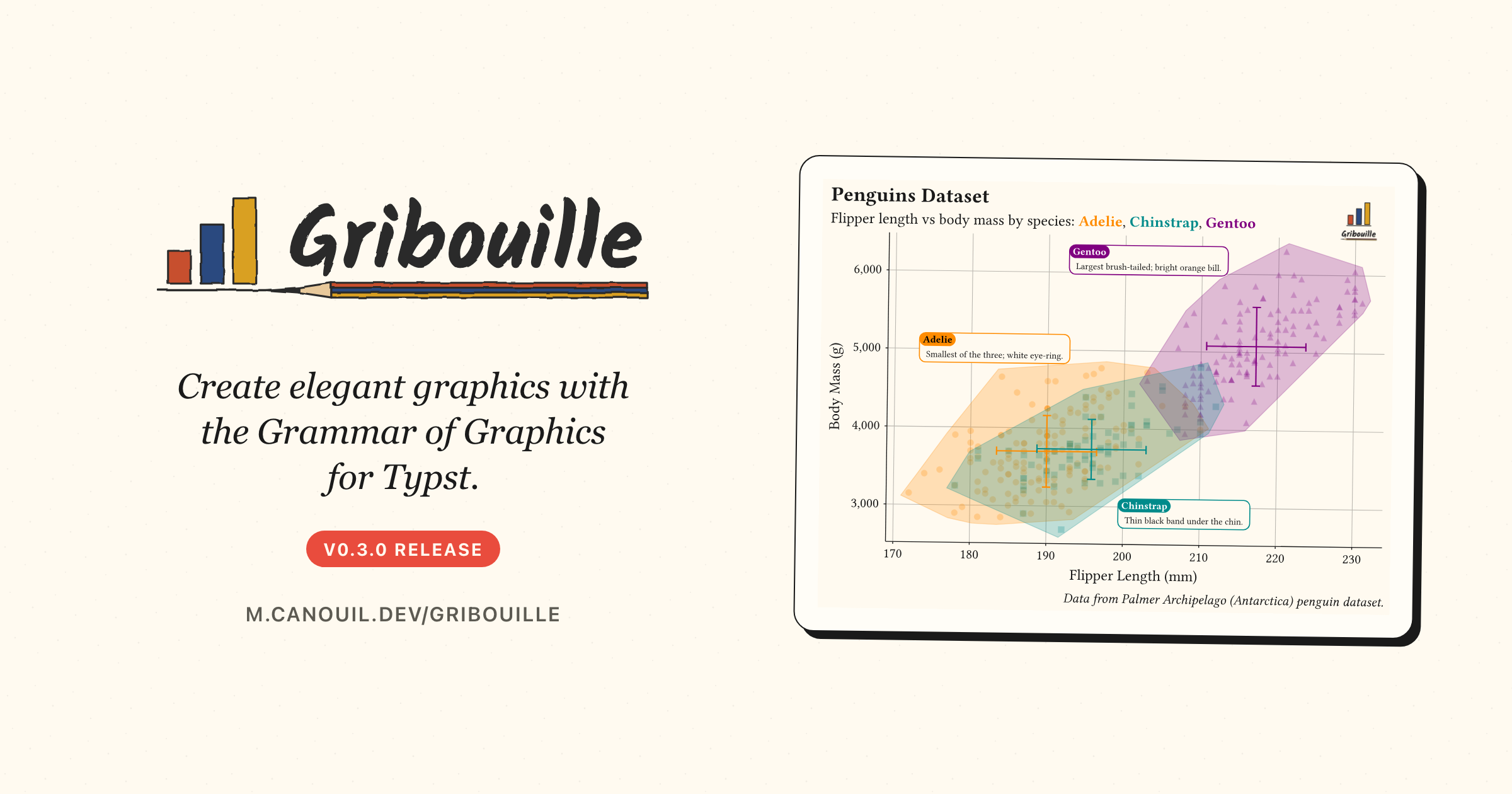
Gribouille 0.3.0, a grammar of graphics library for Typst, has been released with several functional improvements. The update introduces finer toggles for guides and axes, theme support for the compose function, and default stacking for the area geometry. Additionally, this version resolves multiple issues related to legends and annotations.
CommentsShow HN: Metiq: a real time 3D globe for 100 public datasets
Metiq is a new interactive 3D globe platform that visualizes 100 public datasets, enabling users to explore real-time global information like power stations and live space station feeds. Although users highly praise its engaging visual experience and satellite views, they note several technical flaws including data inaccuracies and a lack of mobile responsiveness. The developer acknowledges this feedback and highlights that the project's main development challenges centered on backend database and caching strategies.
CommentsGoogle workspace threatening to block Firefox access
Google is reportedly threatening to block Mozilla Firefox users from accessing its Workspace suite of applications. This potential restriction has sparked significant concern within the tech community regarding browser competition and the future of web compatibility.
CommentsDatasette Apps: Host custom HTML applications inside Datasette
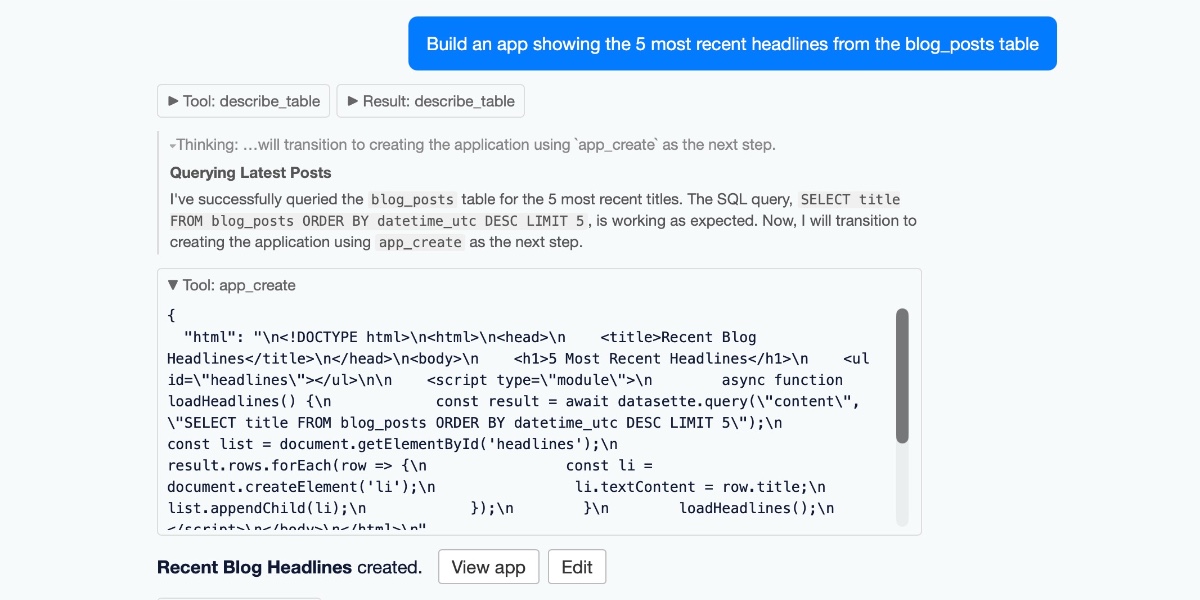
Datasette has launched a new plugin called datasette-apps that enables users to host custom HTML applications directly within the platform. This update expands the tool's capabilities beyond data exploration and was officially detailed in a recent project blog post.
CommentsShow HN: Talos – Open-source WASM interpreter for Lean
Talos is a new open-source WASM interpreter written in Lean, designed specifically to facilitate formal reasoning and verification. The project is currently hosted on GitHub and is open for community contributions.
CommentsBig Banana Car

The creators of the Big Banana Car have successfully finished building their giant motorized vehicle and are now preparing for a global driving tour. However, the ambitious project is currently delayed as the team struggles to secure necessary funding, obtain insurance, and finalize the car's completion.
CommentsJohn Jumper to join Anthropic

John Jumper is leaving Google DeepMind after nearly nine years to join AI company Anthropic. Prior to starting his new role, he plans to take some time to recharge. During his tenure at DeepMind, Jumper notably led the team behind the AlphaFold project.
CommentsI used sound waves to make espresso

A new brewing technique called ultrasonic espresso utilizes cold water and high-frequency sound waves to extract coffee. This energy-efficient method requires significantly less power than traditional machines. Taste tests confirm the resulting beverage is just as good as standard espresso.
CommentsAI Engineer Claims to Have Cracked Linear A

An AI engineer claims to have successfully deciphered Linear A, the ancient and previously untranslated Minoan writing system. If verified by the academic community, this breakthrough would solve one of archaeology's most enduring mysteries and highlight the growing capabilities of artificial intelligence in historical research.
CommentsA new bill takes aim at government pressure to silence lawful online speech

A new bipartisan bill aims to protect lawful online speech by allowing individuals to sue government officials who coerce tech platforms and AI providers into censoring First Amendment-protected content. The proposed legislation also establishes a transparency system to track government communications with these digital intermediaries regarding user expression.
CommentsSo You Want to Define a Well-Known URI

This piece outlines the appropriate use cases for defining well-known URIs in web protocol design. It also highlights the common architectural pitfalls and traps that frequently catch developers when implementing these standardized endpoints.
CommentsA 1976 university experiment spun up the U.S. wind industry

A 1976 experimental wind turbine project at the University of Massachusetts Amherst, directed by Navy veteran William Heronemus, laid the foundation for the modern United States wind energy industry. This pioneering university initiative successfully demonstrated the viability of large-scale wind power and ultimately catalyzed the widespread development of commercial wind energy across the country.
CommentsIce water drowning survival of young patient (2025)
A young patient in Norway remarkably survived ice water drowning and severe hypothermia after being clinically dead for 20 hours, aided by a dedicated medical team that adhered to the principle of rewarming patients before declaring them dead. This extraordinary survival has sparked tech discussions about integrating personal locator beacons and RECCO tracking systems directly into winter clothing to expedite future mountain rescues.
CommentsAsk HN: Will programmers write more efficient code during the memory shortage?
Amid a growing memory shortage, major tech companies are increasingly prioritizing code optimization to reduce RAM requirements, though developers emphasize that fixing basic inefficiencies remains more practical than algorithmic rewrites. Meanwhile, the discussion highlights the tech industry's heavy reliance on AI for code generation, sparking debate over the actual success and quality of these machine-written projects across major platforms.
CommentsAkse3D – open-source 3D modelling anyone can master

Akse3D is a free and open-source 3D modeling tool designed to make digital design accessible for kids and teens. Users can easily build models using primitive shapes and 2D blueprints, then export their final creations as STL files ready for 3D printing.
Comments