ReactOS Milestones, AI Skepticism, and Developer Tool Updates
Show HN: Kage – Shadow any website to a single binary for offline viewing
Kage is a new tool that allows users to archive any website into a single binary file for offline viewing. It creates this standalone file by shadowing the target site and automatically stripping out all JavaScript.
CommentsFirewood Splitting Simulator
A newly released web project called Firewood Splitting Simulator allows users to chop virtual logs in an interactive 3D environment. Built using the Three.js graphics library, the experience turns a mundane chore into a visually satisfying digital escape. Users can access the relaxing simulation directly within their browser without needing to download any additional software.
CommentsYour ePub Is fine

Adobe continues to alienate users who are forced to rely on its industry-standard software due to a lack of viable alternatives. The company's ongoing technical issues, such as incorrectly flagging valid ePub files as corrupted, only add to this widespread frustration.
CommentsHow to earn a billion dollars
Readers are debating Paul Graham's article on building billion-dollar startups, with critics arguing his exponential growth model ignores market limits and the negative externalities of companies like Meta and Uber. In response, defenders dismiss these critiques as coming from biased pundits, maintaining that users and investors remain largely satisfied with these services despite the alleged social harms.
CommentsRio de Janeiro's "homegrown" LLM appears to be a merge of an existing model
Rio de Janeiro recently claimed to have trained an original 397B parameter language model for the city. However, the developers of the underlying Nex model revealed that the supposedly homegrown AI is actually just a combination of existing weights. Specifically, Rio-3.5-Open is a direct element-wise merge of the Nex model and the official Qwen 3.5 base model.
CommentsFormal methods and the future of programming

This article examines the future of formal methods in software development. It highlights a retrospective from Jane Street, reflecting on the organization's long-standing disinterest in formal verification techniques over the past two and a half decades.
CommentsAsk HN: What are you working on? (June 2026)
The solo developer behind the city-builder game Microlandia reported to the Hacker News community that the indie title has sold nearly 10,000 copies since its launch. The creator is now collaborating with freelance artists to improve the visuals while adding complex new mechanics for energy modeling and universal basic income. Readers responded with strong support, offering technical help and asking detailed questions about the game's economic simulations and distribution process.
CommentsThe only scalable delete in Postgres is DROP TABLE
Executing large DELETE operations in PostgreSQL creates unnecessary overhead instead of efficiently freeing up resources. For scalable data removal, developers should restructure their databases to utilize the much more efficient DROP TABLE or TRUNCATE commands.
CommentsHonda Civics and the Evil Valet
This article provides a three-year retrospective on a notable automotive security exploit targeting Honda Civic vehicles through their valet systems. It details the current status of the vulnerability, manufacturer mitigations, and the broader implications for connected car security.
CommentsCaddy compatibility for zeroserve: 3x throughput and 70% lower latency
Zeroserve claims its Caddy-compatible architecture delivers three times the throughput and 70% lower latency. However, readers criticize the project for lacking essential ecosystem features like ACME and plugins compared to NGINX, despite its cleaner codebase. Additionally, discussion highlighted security concerns over a mutual TLS implementation that unexpectedly prompts users for personal client certificates in web browsers.
CommentsI indexed 669 GB of my GoPro videos using my M1 Max computer and local ML models
A developer successfully indexed 669 GB of personal GoPro videos using an M1 Max computer and local machine learning models, showcasing the growing capabilities of on-device AI for media management. The project sparked community discussions about using similar local tools to automatically generate personalized video compilations of family memories. Participants praised this on-device processing approach for its strict privacy benefits, contrasting it with the data collection practices of cloud-based photo services.
CommentsPerlisisms (1982)
A recent discussion highlights the enduring relevance of Alan Perlis's classic 1982 programming epigrams in the modern era of large language models, emphasizing how programming languages fundamentally shape human thought. The conversation also underscores his timeless warning that in human-computer symbiosis, it is ultimately the human who must adapt to the machine, rather than expecting the machine to adapt to natural language.
CommentsThe Birth and Death of JavaScript (2014)
Although the original 2014 article The Birth and Death of JavaScript is unavailable, reader discussions highlight the language's notorious quirks, ranging from confusing type coercion and arrays functioning as exotic objects to the eternal debate over using null versus undefined. Ultimately, the conversation underscores the ongoing frustration and dark humor programmers experience when navigating the language's unpredictable and deeply ingrained design flaws.
CommentsFree SQL→ER diagram tool, runs in the browser, nothing uploaded
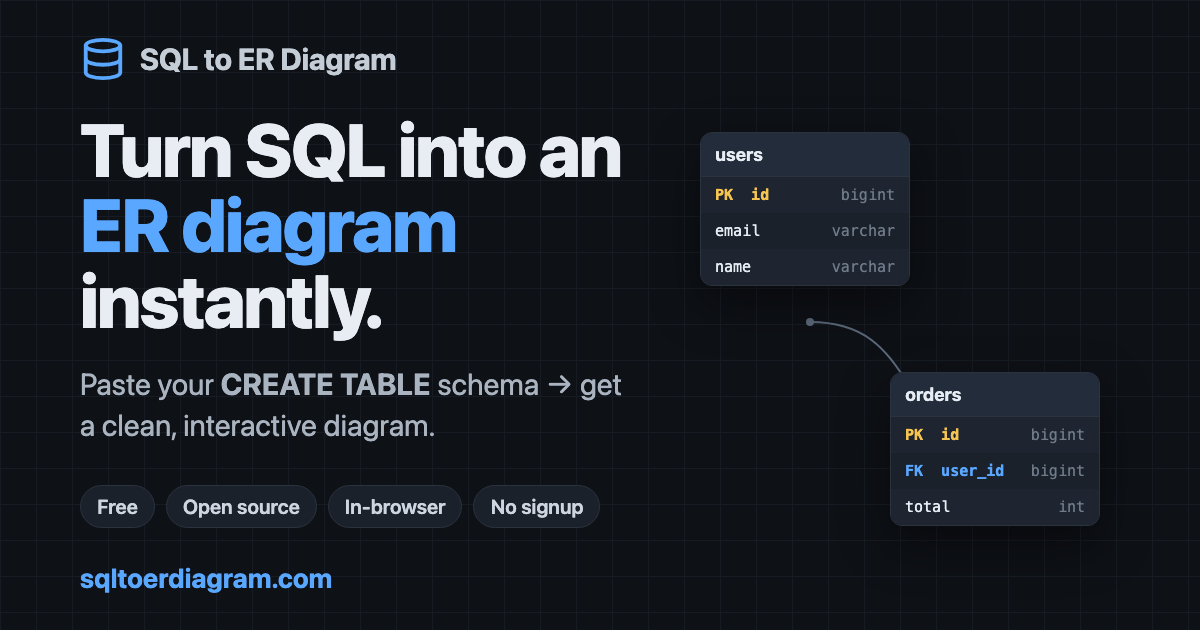
A new free, browser-based tool enables developers to instantly convert SQL and other schema formats into visual ER diagrams. The application supports inputs like Prisma, DBML, and standard DDL statements to quickly visualize database schemas. It requires no signup and ensures complete privacy by not uploading any data outside the browser.
CommentsNot everyone is using AI for everything
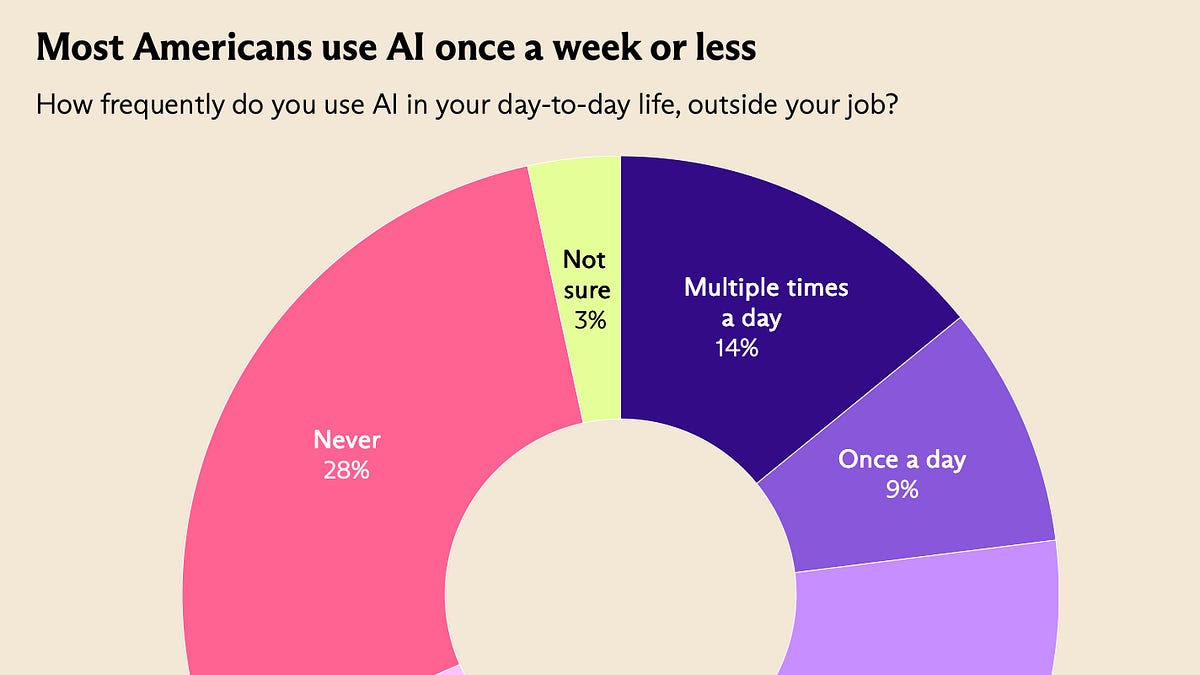
Despite the overwhelming hype surrounding artificial intelligence, consumer adoption is far from universal. Much like dietary preferences, individuals are approaching the technology with varying levels of engagement, choosing to fully embrace, carefully limit, or completely avoid it.
CommentsShow HN: Trace – Offline Mac meeting transcripts you can flag mid-call

Launched on Hacker News, Trace is a new macOS menu-bar app that generates offline meeting transcripts and on-device summaries using a local speech model. It processes conversations into clean markdown across dozens of languages entirely on your hardware, while also allowing users to flag key moments mid-call.
CommentsReactOS (FOSS "Windows") achieves 3D-accelerated Half-Life on real hardware
ReactOS is an open-source operating system designed to provide binary compatibility with Microsoft Windows programs and drivers. The project recently achieved a major milestone by successfully running the classic game Half-Life with 3D acceleration on real hardware. This accomplishment highlights the platform's growing capability to support legacy Windows software and gaming.
CommentsLisp's Influence on Ruby
Despite its distinct syntax, Ruby heavily incorporates foundational Lisp concepts through its functional programming features like blocks and higher-order methods. The article highlights how everyday Ruby method chains rely on underlying Lisp principles, such as lambdas, even though traditional elements like parentheses and prefix notation have been removed.
CommentsFarOutCompany

FarOutCompany has introduced a new digital platform designed to highlight the work of under-appreciated artists from the 1960s and 1970s counterculture. The service offers users a curated experience to explore and discover hidden creative works from this influential era.
CommentsFreeOberon – Open-Source, Cross-Platform, Free Pascal/Turbo Pascal-Like Language
FreeOberon is an open-source, cross-platform integrated development environment designed for the Oberon programming language. It features a classical pseudo-graphic interface that closely mimics the nostalgic look and feel of Free Pascal and Turbo Pascal.
CommentsChaosnet (1981)
Original documentation for the 1981 Chaosnet local area network protocol has recently been archived online for developers and computing historians. The master file for this early networking standard is now available on GitHub under the Chaosnet/amber repository. This release provides valuable insight into the foundational technologies of early local area networking.
CommentsLinux 7.1
Linux 7.1 is removing obsolete code, including old ISDN network drivers, to reduce the influx of AI-generated bug reports targeting rarely used hardware. The developer community has widely praised this cleanup effort as a highly beneficial consequence of AI that helps trim unnecessary cruft from the kernel.
CommentsSegmented type appreciation corner (2018)
An appreciation post on segmented typography sparked a discussion about using 7-segment displays as practical frontend interview questions that test core skills over abstract algorithms. Readers also shared examples of real-world hardware implementations, ranging from custom Casio watch projects to the specific character designs utilized in public transit systems.
CommentsDon't trust large context windows
Discussions surrounding large context windows highlight widespread frustration among traditional software engineers over the inherent non-determinism and anecdotal troubleshooting culture of Large Language Models. While developers struggle with the lack of repeatability and the difficulty of translating vague human prompts into reliable tool calls, many still embrace the transformative power of AI agents. Ultimately, technologists are learning to leverage these unpredictable systems to fundamentally reshape their workflows despite the underlying technical challenges.
CommentsPac-Man, but you're the ghost
Sparked by the concept of playing as the ghost, readers are reminiscing about classic local multiplayer titles like the GameCube's Pac-Man spinoff. Participants celebrate the enduring appeal of couch co-op for families and friends by sharing fond memories of local gaming sessions. However, the community also laments that the broader gaming industry has largely shifted its focus away from local play in favor of remote online multiplayer.
CommentsUSB Power Delivery: Plugging into the Benefits

USB Power Delivery and USB Extended Power Range represent the next major evolution in connectivity technology. Once these new standards are fully rolled out, users can expect significantly faster device charging speeds and improved data transmission rates.
CommentsBuilding a serial and VGA "everything console"

To eliminate the hassle of carrying various adapters for different projects, a maker has built a unified serial and VGA everything console. The device consolidates multiple connection types into a single portable unit. This provides a convenient all-in-one solution for connecting to and managing serial-oriented systems.
CommentsPython 3.14 garbage collection rigamarole

Python 3.14.0 introduced a new incremental garbage collector that was reverted in version 3.14.5 following reports of increased memory usage. The accompanying investigation explores Python's memory management mechanics to determine which workloads perform best and worst under the experimental incremental garbage collection system.
CommentsPhoenix LiveView 1.2
Phoenix LiveView 1.2 is a minor release that introduces support for colocating CSS. This feature allows developers to keep their stylesheets directly alongside their component code.
CommentsTribblix: The retro Illumos distribution
Tribblix is a retro Illumos distribution created and maintained by a single developer for over 15 years, standing out for its continued support of legacy SPARC hardware. Originally developed to reverse-engineer OpenSolaris due to a lack of official documentation, the novel operating system prioritizes older, lightweight technologies like traditional SVR4 packaging. While it performs well on older machines and specific legacy systems, users note it currently experiences boot issues on some modern hardware.
Comments