AI privacy controversies, legal rulings, and new hardware releases
Building an HTML-first site doubled our users overnight

A developer recently shared a case study on how a utility company doubled its online user base overnight by adopting an HTML-first web design approach. By stripping away heavy JavaScript and prioritizing lightweight, foundational web standards, the team drastically improved site performance and accessibility. This successful pivot highlights the enduring value of semantic HTML in delivering fast and reliable digital experiences.
CommentsmacOS Container Machines
Apple has introduced a new Swift-based tool that enables Mac users to create and run Linux containers using lightweight virtual machines. Optimized specifically for Apple silicon, macOS Container Machines provides developers with a highly efficient, native environment for managing containerized workloads.
CommentsπFS
A new open-source GitHub project called πfs is inviting developers to contribute to a novel data-free filesystem that theoretically requires no physical storage space. Instead of saving files to a disk, the system leverages the infinite digits of pi to mathematically locate and reconstruct data upon request.
CommentsGerman ruling declares Google liable for false answers in AI Overviews

A German regional court has ruled that Google is directly liable for false information in its AI search overviews, stripping away previous liability protections for search engine operators. This landmark decision, which stems from a case where the AI falsely linked publishers to fraud, could set a significant global precedent for the legal accountability of AI-generated content.
CommentsI'm Eric Ries, author of "The Lean Startup" and new book "Incorruptible" – AMA
Eric Ries, author of "The Lean Startup," hosted an AMA to discuss his new book on systemic fraud, "Incorruptible." Readers responded by recommending historical commission reports and academic research on institutional corruption to help inform his work. The ensuing comment thread also sparked a meta-debate about community etiquette, focusing on the appropriateness of users recommending books to an author during their own AMA.
CommentsCEOs who think AI replaces their employees are just bad CEOs

A recent tech article argues that CEOs who view artificial intelligence as a direct replacement for human workers are demonstrating poor leadership. The author highlights several recent examples of executives sending company-wide emails praising large language models while suggesting headcount reductions. Ultimately, the piece suggests that relying on AI to eliminate staff stems from a fundamental misunderstanding of both the technology and effective management.
CommentsPgDog is funded and coming to a database near you

PgDog has secured funding to expand its PostgreSQL connection pooler, load balancer, and sharding proxy. The newly backed tool enables developers to horizontally scale their databases seamlessly without needing to rewrite their existing applications.
CommentsAnthropic requires 30 day data retention for Fable and Mythos

Anthropic has implemented a mandatory 30-day data retention policy for all traffic on its Mythos and Fable models, stating the information is used solely for safety monitoring and automatically deleted afterward. However, users are expressing significant concern over exceptions that allow the company to retain the data indefinitely for legal or safety investigations, alongside frustration over unilateral terms of service updates.
CommentsCybersecurity researchers aren't happy about the guardrails on Anthropic's Fable

Cybersecurity professionals are criticizing Anthropic's newly released AI model, Fable, for its overly restrictive safety guardrails. Researchers argue that these stringent limitations severely hinder the model's utility for legitimate cybersecurity tasks.
CommentsHow JPL keeps the 13-year-old Curiosity rover doing science

NASA's Jet Propulsion Laboratory relies on relentless engineering to keep the 13-year-old Curiosity rover operational on Mars. Despite navigating brutal terrain, the aging spacecraft continues to successfully conduct vital scientific research. The innovative maintenance strategies developed to sustain the mission are now directly informing the design of future planetary rovers.
CommentsMercedes‑Benz starts large‑scale production of electric axial flux motor

Mercedes-Benz has officially begun large-scale production of its advanced electric axial flux motor to significantly increase power density and efficiency for its upcoming electric vehicles. This manufacturing milestone marks a major technological step in the automaker's broader strategy to expand its lineup of high-performance electric mobility solutions.
CommentsL'Affaire Siloxane
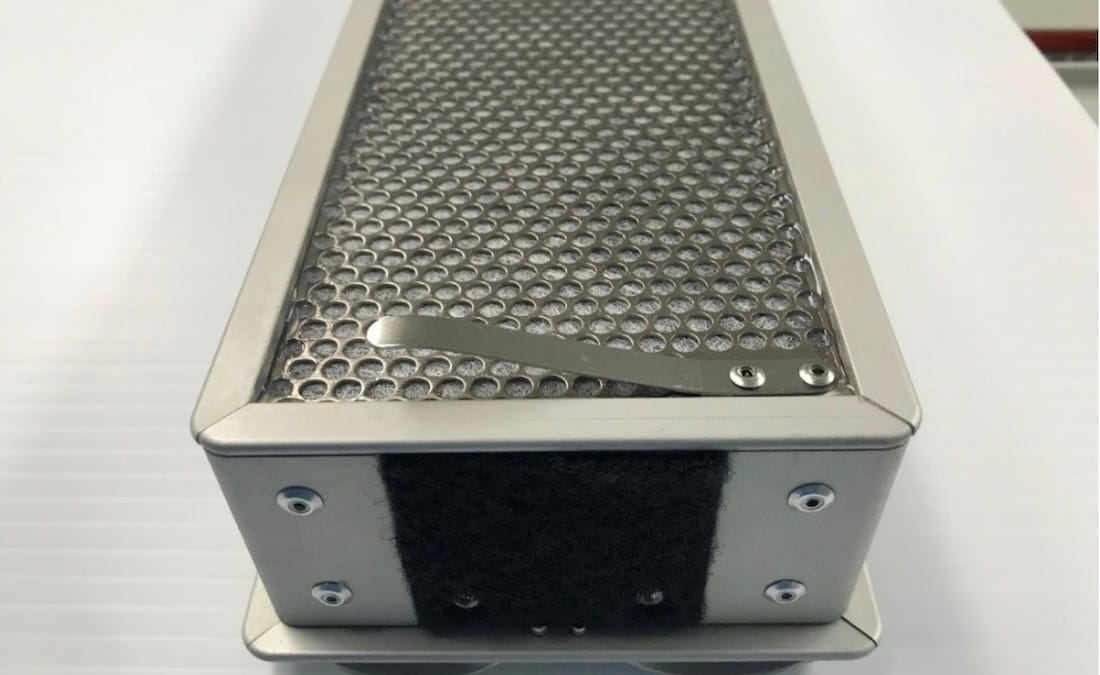
NASA nearly evacuated the International Space Station after siloxane vapors from the crew's antiperspirants accumulated to hazardous levels in the cabin air. These volatile chemicals posed a severe threat to the station's critical life support and water recovery systems. Officials implemented emergency air filtration and aggressive surface cleaning to neutralize the contamination risk.
CommentsApache Burr: Build reliable AI agents and applications
Apache Burr is a pure Python framework currently in the Apache Incubator, designed to simplify the development of reliable AI agents and decision-making applications. It enables developers to easily build everything from basic chatbots to complex multi-agent systems using transparent, predictable code. This straightforward approach ensures greater control over AI workflows without relying on opaque abstractions.
CommentsGeoLibre 1.0
GeoLibre 1.0 introduces a lightweight, cloud-native GIS platform designed to visualize, explore, and analyze geospatial data. The platform provides a seamless experience across desktop and web environments, featuring a fully responsive layout optimized for mobile screens.
CommentsAll 9,300 Japanese train station, animated by the year it opened (1872–2026)
An interactive data visualization maps the 150-year expansion of Japan's railway network by animating the opening dates of over 9,300 train stations. Users can drag a timeline slider to watch the transit system grow from a single line in 1872 to its modern, comprehensive state.
CommentsShow HN: Extend UI – open-source UI kit for modern document apps
Extend UI is a newly released open-source React component library designed for building modern document applications. It provides ready-to-use viewers for PDF, DOCX, XLSX, and CSV files, along with advanced features like bounding box citations, file uploads, and electronic signing.
CommentsRIP software hackathons. Long live the hardware hackathon

In a recent essay, Oscar argues that the tech community should pivot from traditional software hackathons to hardware-focused events. He explains that building physical prototypes fosters a unique type of collaboration and tangible innovation that coding marathons lack. This shift highlights a growing industry trend toward hands-on engineering over purely digital development.
CommentsClaude Desktop spawns 1.8 GB Hyper-V VM on every launch, even for chat-only use
A recently reported bug in the latest version of Claude Desktop causes the application to spawn a 1.8 GB Hyper-V virtual machine upon every launch, even for basic chat-only use. This unexpected behavior leads to excessive resource consumption and unnecessary system strain for affected users.
CommentsSequoyah’s syllabary created a written language for the Cherokee
/https://tf-cmsv2-smithsonianmag-media.s3.amazonaws.com/filer_public/25/77/2577ef6b-781c-4718-822a-9c672456ff5c/sequoyah_smithsonian_concept_b.jpg)
Sequoyah developed an innovative written syllabary to provide the Cherokee people with a formal written language, though it initially faced skepticism. Following a live demonstration that proved the practical value of his talking leaves system, the writing method was rapidly embraced and widely adopted across the community.
CommentsRaspberry Pi 5 – 16GB RAM

The Raspberry Pi Foundation is expanding its latest lineup with a new Raspberry Pi 5 model featuring a substantial 16GB of RAM. This significant memory upgrade builds upon the improvements of the previous generation to deliver vastly superior performance for demanding computing tasks. Enthusiasts and developers will greatly benefit from the enhanced multitasking capabilities and overall speed boost.
CommentsWho's the smartest corvid?
Reader anecdotes highlight the advanced cognitive abilities of corvids, showcasing complex behaviors such as coordinated prey theft, long-term grudge-holding, and risk-assessing gatherings around deceased flock members. These observations illustrate that crows possess not only sophisticated problem-solving skills and social intelligence but also a ruthless, calculated approach to survival in both rural and urban environments.
CommentsShow HN: HelixDB – A graph database built on object storage
HelixDB is a newly introduced OLTP graph-vector database written in Rust and built directly on top of object storage. Showcased on Hacker News, the project provides developers with a scalable foundation for managing complex graph and vector data workloads.
CommentsFarmer donates land for a park, city sells it for $10M as data center land
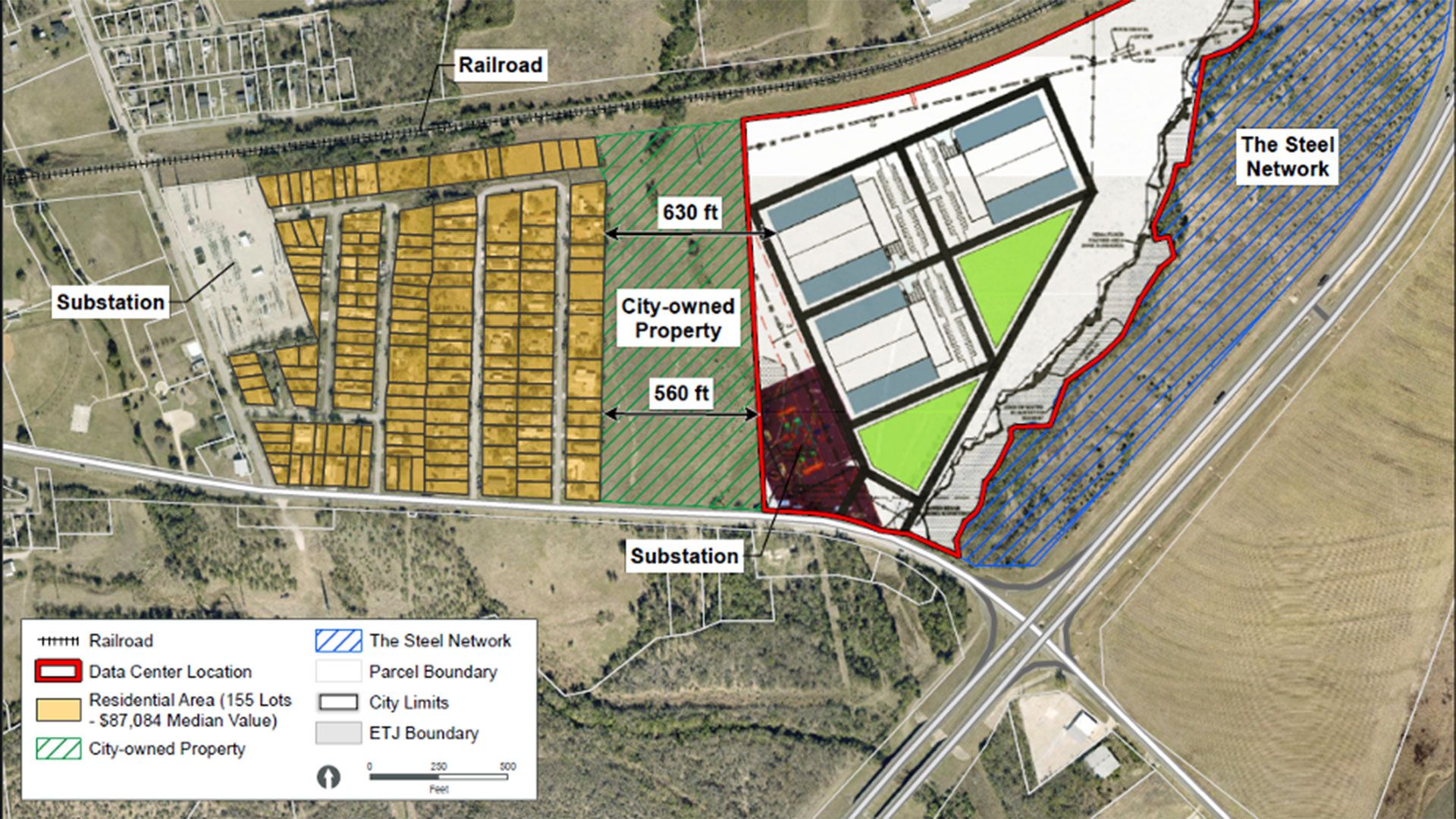
A Texas city ignored a restrictive deed and sold land originally donated by a local farmer for a public park for $10 million. The controversial sale will transform the green space into a new data center, sparking outrage over the prioritization of tech infrastructure expansion over the donor's wishes.
CommentsSurprise, pay $1000

A controversy has emerged over a deceptive software trial that unexpectedly hits users with a massive $1,000 charge once their free period ends. This incident is sparking a broader industry debate about the ethics of subscription billing and the need for stricter consumer protections against dark patterns.
CommentsRich Sutton on AI creativity and discovery

Rich Sutton has presented a controversial new perspective on artificial intelligence, arguing that generative models trained via supervised learning cannot make truly novel discoveries. In a recent video and speech, he explained the fundamental creative limitations inherent in current training methodologies.
CommentsMore Molly Guards

The latest blog post explores the concept of Molly guards and provides additional examples of safety mechanisms used to prevent users from accidentally executing irreversible actions. By adding necessary friction to critical operations, these logical barriers protect systems from costly human errors. The author highlights how implementing such protective practices significantly enhances overall software quality and reliability.
CommentsLies we tell ourselves about email addresses
Highlighting the flexibility of both physical mail and digital systems, this piece explores how email protocols rely on forgiving design rather than rigid formatting. Readers share anecdotes of incomplete physical letters successfully delivered by intuitive postal workers, illustrating that Mail Transfer Agents are built to handle similar real-world ambiguities. The discussion ultimately challenges programmers' assumptions about address strictness, demonstrating that real-world routing has always depended on context and adaptable systems.
CommentsAWS Bedrock to require sharing data with Anthropic for Mythos and future models
AWS Bedrock's decision to require data sharing with Anthropic for its upcoming Mythos AI models has sparked significant privacy concerns among enterprise users. The controversy centers on a 30-day data retention policy that critics fear could be exploited to train future models under the guise of abuse monitoring, potentially bypassing Zero Data Retention contracts. This has fueled broader skepticism regarding the trustworthiness of AI-as-a-service providers and their ability to keep private corporate data secure from model training.
CommentsThe oldest surviving animated feature film at 100

German director Lotte Reiniger's The Adventures of Prince Achmed was originally released a century ago in 1926. The historic movie holds the title of the world's oldest surviving animated feature film and remains a pioneering milestone in the evolution of animation technology.
CommentsWorld Capitals Voronoi

A new data visualization project uses a Voronoi diagram to redraw global borders by assigning every geographic point on Earth to the territory of its closest capital city. This unique spatial analysis provides a fascinating new perspective on the geographic distribution and proximity of global political centers.
Comments