AI advancements, hardware innovations, and internet policy shifts
MAI-Code-1-Flash

Microsoft released MAI-Code-1-Flash, a 137B parameter mixture of experts model with 5B active parameters that the company claims significantly outperforms Claude Haiku on the SWE-bench Pro coding benchmark. Community critics accuse the company of cherry-picking weak opponents for comparison, arguing the model merely matches the performance of much smaller and more efficient open-source alternatives like Qwen. In defense of the release, some users highlight Microsoft's emphasis on decontaminated training data and clean licensing, which could offer better real-world generalization and reduced legal liability.
CommentsGmail thinks I'm stupid, so I left

In a recent personal essay, a frustrated user explains they abandoned Gmail due to its increasingly condescending AI features. The author notes that the platform's overzealous assistance makes them feel belittled rather than helped. This highlights a growing trend of aggressive AI integrations in everyday software alienating users by prioritizing over-simplification over genuine productivity.
CommentsCan the stockmarket swallow Anthropic, SpaceX and OpenAI?

SpaceX, Anthropic, and OpenAI are planning initial public offerings that could collectively raise $200 billion and add an estimated $4 trillion to the American stock market's capitalization. The unprecedented scale of these upcoming tech listings raises significant questions about whether the market can successfully absorb such a monumental influx of new equity.
CommentsUse your Nvidia GPU's VRAM as swap space on Linux
A new Linux tool called nbd-vram allows users to utilize their Nvidia GPU's unused VRAM as system swap space to prevent slow SSD swapping. This provides a clever performance workaround for laptop owners with soldered RAM and no physical memory upgrade path.
CommentsAge verification for social media, the beginning of the end for a free internet?

Age verification requirements for social media are rapidly expanding globally under the stated goal of protecting children online. However, this push for mandatory identity checks could ultimately pave the way for complete government control and the end of a free internet.
CommentsAdafruit receives demand letter from Fenwick legal counsel on behalf of Flux.ai

Open-source electronics company Adafruit has received a formal legal demand letter from Flux.ai, represented by the law firm Fenwick. This legal action highlights emerging tensions within the open-source hardware and maker community. Adafruit is currently reviewing the demands and is expected to share further updates with its community of hackers and electronics enthusiasts.
CommentsCT scans of BYD car parts

Researchers recently CT scanned four BYD components to reveal the inner workings of the world's best-selling EV. The analyzed parts included a battery cell, window switch, EV charger, and key fob, providing a rare look inside the technology of the popular automaker whose cars are banned in the United States.
CommentsOpenAI frontier models and Codex are now available on AWS

OpenAI's frontier models and Codex are now generally available on AWS, allowing enterprises to integrate advanced AI into their existing cloud environments. This integration enables businesses to leverage their current AWS security controls and procurement workflows to accelerate the transition from evaluation to production.
CommentsPreparing for KDE Plasma's Last X11-Supported Release
The transition from X11 to Wayland in Linux desktop environments like KDE Plasma is causing significant regressions for accessibility software, most notably the popular voice-input tool Talon. Frustrations are mounting as Talon's developer plans to drop public X11 support due to missing Wayland APIs, drawing criticism over the tool's closed-source nature and strained community relations. In response, Linux developers and advocates are calling for better ecosystem coordination to finalize the necessary Wayland protocols and ensure essential accessibility tools remain viable.
CommentsChipotlai Max
A new satirical GitHub repository named Chipotlai Max presents itself as an AI coding agent powered by stolen computing resources from Chipotle. The humorous project is a fork of OpenCode that utilizes a fictional default model called Pepper AI. Its community-driven roadmap jokingly aims to expand the network by adding unauthorized compute providers from other major retailers like Home Depot, Target, and Starbucks.
CommentsmacOS needs its grid back

Frustrated with modern macOS desktop navigation, a developer has created a custom app to restore the pre-Lion grid layout. The tool brings back the original grid-enabled spaces experience, allowing users to seamlessly manage multiple displays using spatial memory.
CommentsMy thoughts after using Clojure for about a month
A discussion stemming from a developer's month-long Clojure experience highlights the Lisp community's tradition of building custom static site generators, alongside the challenges of integrating with broader web ecosystems. The conversation also explores Clojure's powerful portability, emphasizing how its various dialects enable the language to run seamlessly across multiple host environments like JavaScript, Python, and C++.
CommentsA walking tour of surveillance infrastructure in Seattle (2020)
A detailed walking tour documented by coveillance.org explores the extensive surveillance infrastructure hidden throughout Seattle's public spaces. By mapping the physical locations of various cameras and monitoring systems, the project reveals the pervasive nature of urban data collection. This ground-level perspective highlights how deeply monitoring technologies are integrated into modern city life.
CommentsFidonet: Technology, Use, Tools, and History (1993)
Reader discussions surrounding a 1993 retrospective on Fidonet highlight the pioneering dial-up network's role in fostering early, tight-knit online communities long before the modern internet. Users fondly recall using FidoNet and regional clones to share messages, distribute files, and meet in person, noting that these networks effectively functioned as a precursor to modern social media. These nostalgic reflections emphasize how much interactive, web-like functionality was already possible during the Bulletin Board System era.
CommentsHow we index images for RAG
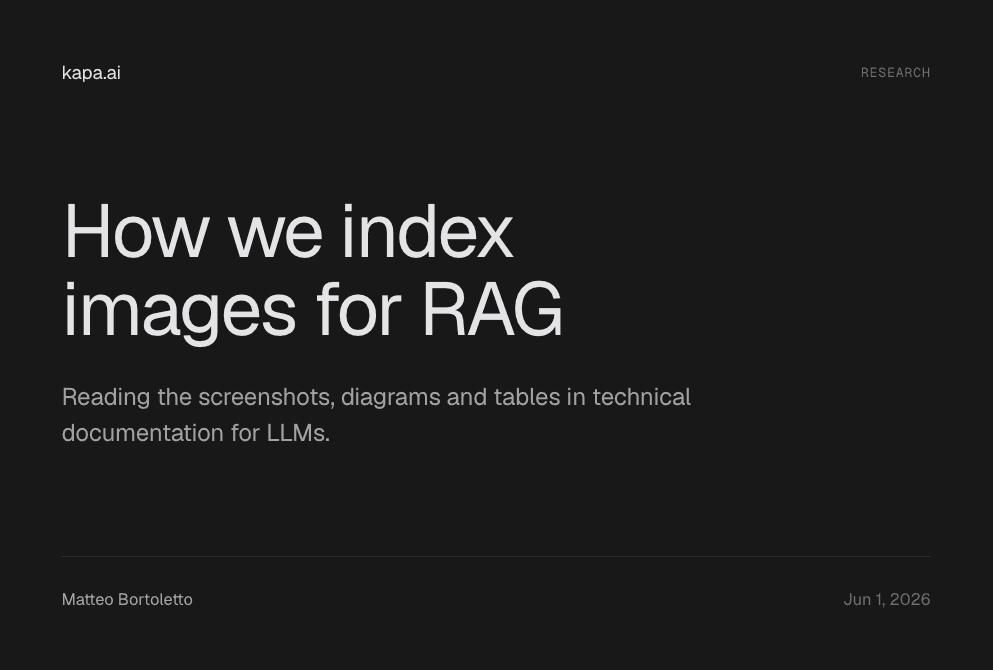
This piece details new methods for indexing visual elements like screenshots, diagrams, and tables within technical documentation. These techniques enable large language models to better interpret complex image data. Ultimately, this approach significantly improves the accuracy and context of RAG systems.
CommentsLove systemd timers

This article advocates for the widespread adoption of systemd timers as a modern and robust alternative to traditional cron jobs. The piece highlights how this integrated Linux tool simplifies automated task scheduling for system administrators of all experience levels.
CommentsWhy Janet? (2023)
After using the Lisp dialect Janet for personal projects, the developer wrote and published a free book to help grow the language's community. The article serves as a persuasive pitch outlining why other programmers should give the lesser-known language a chance.
CommentsHP re-releases classic computer science calculator: The HP-16C

HP is re-releasing its iconic HP-16C programmer calculator as a new Collector's Edition. The updated device merges the beloved classic design of the original with modern programming functions for today's computer scientists.
CommentsOpenFOV – Webcam head tracking for iRacing

OpenFOV is a new software tool that allows iRacing players to use their standard webcams for real-time head tracking. By dynamically adjusting the in-game field of view to match physical head movements, it unlocks an immersive VR-style experience on standard monitors.
CommentsTrump signs downsized AI order after weeks of reversals

President Trump signed a scaled-down executive order on artificial intelligence following weeks of policy reversals. This action comes after he postponed a broader, similar measure last month, resulting in a more streamlined approach to federal AI regulation.
CommentsOpen Repair Data Standard

The Open Repair Data Standard (ORDS) introduces a unified framework for collecting and sharing repair data to improve product reliability tracking across the electronics industry. By standardizing how repair metrics are recorded, the initiative aims to empower consumers with transparent insights into device longevity and support the broader right-to-repair movement.
CommentsExpanding Project Glasswing
Project Glasswing is expanding its operations to approximately 150 new organizations across more than fifteen countries. This global extension significantly increases the initiative's international reach and overall impact.
CommentsMulticore suppport for DOS is real – partly
A new 2024 DOS demo called Pits has achieved native multicore processing and Full HD graphics in pure DOS without relying on external drivers. Since the legacy operating system lacks built-in multithreading, developers accomplished this by running standard DOS on one CPU core while executing custom code on additional cores. This workaround coordinates the cores via shared memory and requires programmers to manually implement synchronization, effectively writing a micro-kernel to manage the complex cross-core execution.
CommentsSquillions: How money laundering won

Global money laundering has reached an unprecedented scale, operating as an illicit enterprise whose estimated value would make it the third-largest industry in the world behind commercial property. This staggering financial footprint underscores the critical need for advanced technological and regulatory solutions to combat sophisticated economic crimes and track illicit digital flows.
CommentsHow is Groq raising more money?

AI chip startup Groq is reportedly looking to raise more venture capital funding to support its business operations. The company is seeking to expand its footprint in the competitive artificial intelligence hardware market. Curiously, the article's description jokes that the company is achieving this financial feat by somehow bringing back Star Wars villain Emperor Palpatine.
CommentsStop Ruining It

Seth Godin's latest blog post warns tech companies and marketers against degrading user experiences for short-term gains. He argues that exploiting communities through intrusive tactics destroys trust and ultimately ruins the very platforms audiences rely on. Instead, brands are urged to prioritize respect and long-term value to maintain healthy digital tribes.
CommentsMuxcard, a DIY credit card size computer
The Muxcard is a DIY project that packs a fully functional computer into the dimensions of a standard credit card, featuring an ESP32 microcontroller, an E-Paper display, and NFC capabilities. This ultra-compact open-source design provides makers with a highly portable and customizable platform for their hardware projects.
CommentsThe advertising cartel coming to your web browser
Privacy advocates warn that Big Tech is designing a two-track privacy system by introducing built-in browser tracking features that bypass the strict consent regulations required of third-party advertisers. By enabling these proprietary tracking tools by default and hiding opt-out options in browser settings, companies aim to eliminate annoying cookie banners while seamlessly retaining their ability to collect user data.
CommentsFooling around with encrypted reasoning blobs

A developer's weekend project experimenting with encrypted reasoning blobs offered valuable insights into frontier LLM APIs and coding agents. While the exercise did not expose major cryptographic flaws, it provided practical, hands-on experience with advanced AI systems.
CommentsA new way to build chips: Sequentially stacking silicon to extend Moore's Law
Researchers led by Qing Cao have developed a scalable method for sequentially stacking high-performance silicon circuits to create advanced three-dimensional chips. This breakthrough overcomes the physical limitations of traditional manufacturing and provides a promising pathway to extend Moore's Law.
Comments