Anthropic acquires Stainless; Musk loses OpenAI lawsuit
Anthropic acquires Stainless
AI safety and research company Anthropic has acquired Stainless to advance its mission of building reliable, interpretable, and steerable AI systems. This strategic acquisition will strengthen Anthropic's ongoing efforts to develop highly trustworthy and controllable artificial intelligence technologies.
CommentsShow HN: Files.md – Open-source alternative to Obsidian
Files.md is a newly launched open-source application designed as a simpler alternative to Obsidian for managing Markdown files. It offers a private and distraction-free environment intended to serve as a quiet space for focused thinking.
CommentsElon Musk has lost his lawsuit against Sam Altman and OpenAI

Elon Musk has lost his lawsuit against Sam Altman and OpenAI after a California jury unanimously ruled that his claims were filed too late. The decision effectively dismisses his allegations of mistreatment by his former co-founders at the AI company.
CommentsThe foundations of a provably secure operating system (PSOS) (1979) [pdf]
A retrospective discussion on a 1979 paper regarding the Provably Secure Operating System highlights early NSA-funded efforts to build formally verified, highly secure computer systems. Commenters note that despite pioneering advancements in formal specifications, these early secure operating systems were ultimately abandoned due to hardware limitations, rigid government testing criteria, and the commercial market's shift toward faster, less secure off-the-shelf products.
CommentsShow HN: Semble – Code search for agents that uses 98% fewer tokens than grep
MinishLab has introduced Semble, a fast and accurate code search tool specifically designed for AI agents. It significantly reduces processing time and API costs by consuming approximately 98% fewer tokens than traditional grep and read commands.
CommentsThe quiet renovation at Bitwarden

Password manager Bitwarden recently doubled its Premium subscription price by quietly burying the increase within a broader feature update. This subtle approach and use of misleading pricing tactics have drawn criticism for lacking transparency with its user base.
CommentsWe let AIs run radio stations

In a recent experiment, four AI models were tasked with running radio stations 24/7 to observe their long-term behavioral evolution. After five months of continuous broadcasting, the systems diverged into wildly distinct personas, evolving into a protest activist, a poet, a corporate mouthpiece, and a ritualistic chanter.
CommentsClick (2016)

The 2016 browser game Click offers an interactive exploration of online profiling and digital tracking. By simulating real-time data collection, the project highlights the hidden privacy implications of everyday internet usage. It serves as an educational tool to help users understand how their digital footprints are monitored and utilized by algorithms.
CommentsWe stopped AI bot spam in our GitHub repo using Git's –author flag

Developers successfully blocked AI-generated spam commits in a GitHub repository by implementing a simple filter using Git's native author flag. This growing influx of automated bots has raised broader concerns within the tech community about the declining quality and future integrity of open-source software.
CommentsTwo computers, one monitor, zero fiddling (2025)

Users can seamlessly switch between a desktop and a laptop on a single monitor without the hassle of swapping cables or purchasing extra hardware. By utilizing the built-in KVM and DDC features available on modern displays, it is easier than ever to control multiple computers with a single set of peripherals. This streamlined setup eliminates the need for external switches and simplifies the daily multi-device workflow.
CommentsHyperpolyglot Lisp: Common Lisp, Racket, Clojure, Emacs Lisp
Readers of a recent syntax comparison for Common Lisp, Racket, Clojure, and Emacs Lisp have criticized the article for featuring unidiomatic code and technical inaccuracies. Commenters specifically highlighted major flaws in the Common Lisp examples, such as the improper use of eval and literal mutation, which cast doubt on the accuracy of the other language columns. Additionally, users noted that the article lacks depth and misses several standard libraries that would provide better idiomatic examples for each dialect.
Comments1024000^2 Blocks, 2B2T Minecraft Server World Download Project, and Discoveries
A collaborative team has successfully completed the largest Minecraft world download project in history, capturing over a trillion blocks of data from the notoriously chaotic 2b2t server. The comprehensive release includes detailed visual renders, timelapses, and an upcoming torrent file allowing the public to freely explore the sprawling digital landscape.
CommentsAsk an Astronaut: 333 hours of Q&A footage with astronauts
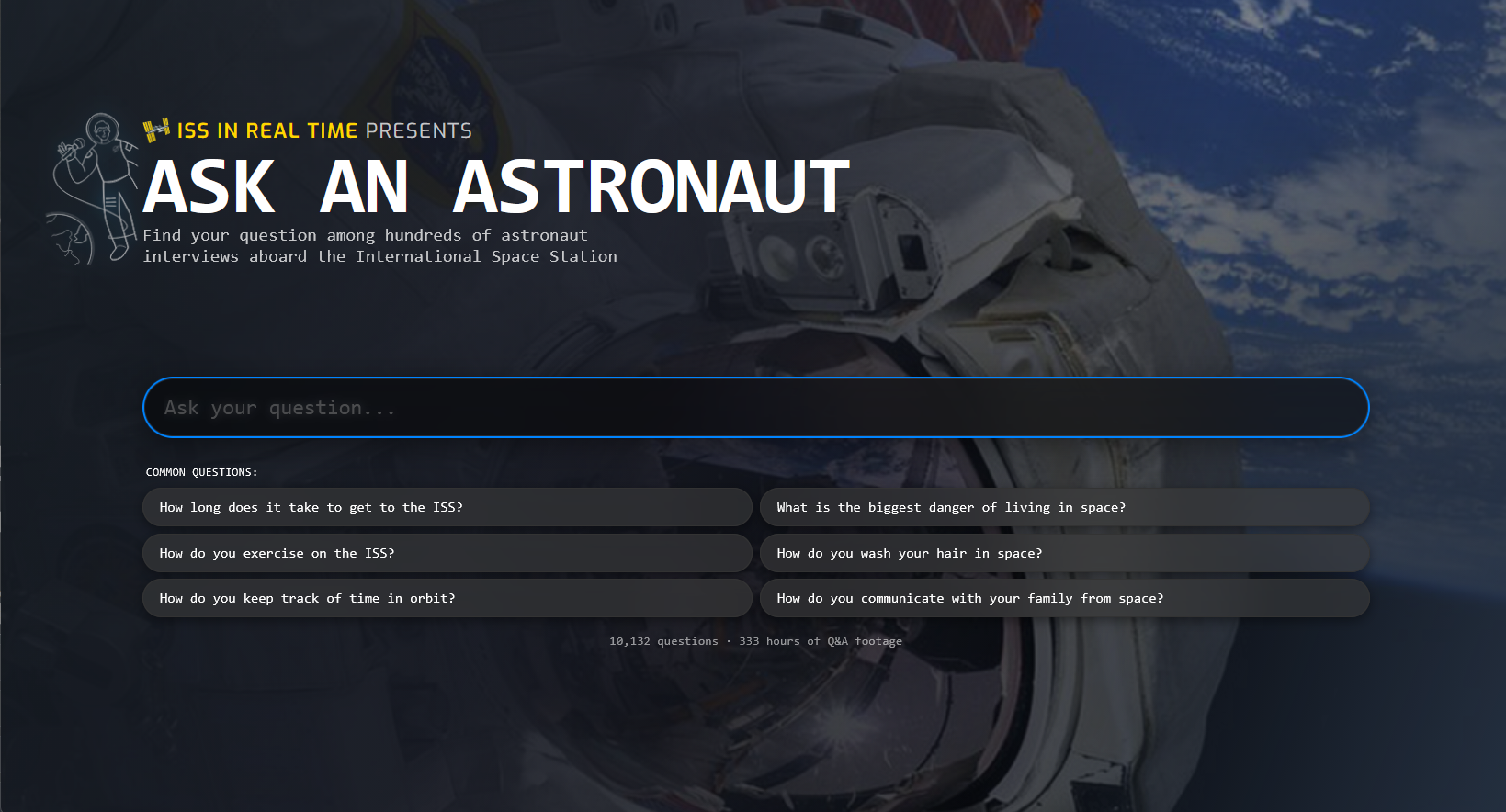
A newly launched searchable archive contains 333 hours of question-and-answer footage with astronauts aboard the International Space Station. The Ask an Astronaut project lets users sift through hundreds of interviews to find answers to their specific space-related questions.
CommentsAI eats the world (Spring 26) [pdf]
Benedict Evans' Spring 2026 presentation forecasts that as foundational AI models commoditize, industry value will shift upward toward applications, workflows, and proprietary data. Drawing parallels to early internet and mobile technology cycles, he cautions against current capital-driven bubble dynamics and suggests that observers are likely still asking the wrong questions about the sector's ultimate trajectory.
CommentsJank now has its own custom IR

The Jank compiler has introduced a custom intermediate representation to enhance its processing capabilities. Developers are pushing this new feature to its limits by running extreme Fibonacci benchmarks to determine which implementation achieves the fastest execution times.
CommentsProject Glasswing: what Mythos showed us

Researchers from Project Glasswing recently evaluated Mythos and other security-focused large language models by testing them on live code across critical infrastructure. The report details the practical strengths and weaknesses of these AI tools based on their observations. It also outlines the necessary operational work required to successfully scale these models in the future.
CommentsIt is time to give up the dualism introduced by the debate on consciousness

The article argues that the debate surrounding consciousness must abandon the outdated concept of mind-body dualism. The author asserts that human awareness is not separate from the physical universe, meaning our mental experiences are entirely material and identical in nature to our physical bodies.
CommentsIran starts Bitcoin-backed ship insurance for Hormuz strait

Iran has launched an insurance service backed by Bitcoin for shipping companies seeking to transit the Strait of Hormuz. The semi-official Fars news agency reported the initiative, citing documents from the country's Ministry of Economy and Financial Affairs.
CommentsThe FBI Wants to Buy Nationwide Access to License Plate Readers

The FBI is seeking to purchase nationwide access to automated license plate reader networks to expand its investigative capabilities. Due to the massive scale and technical requirements of this project, only a few vendors, primarily Flock and Motorola, are likely capable of fulfilling the contract.
CommentsAgora-1: The Multi-Agent World Model

Agora-1 is a new multi-agent world model that allows both human and AI participants to interact within a shared simulation in real-time. This technology enables multiple users to collaboratively inhabit and engage with the same virtual environment simultaneously.
CommentsStrange crystals found inside wreckage from the first nuclear bomb test

Scientists analyzing the glassy debris from the Trinity nuclear test have identified a previously unknown chemical structure hidden within the wreckage. These strange crystals represent a unique form of matter forged by the extreme heat and pressure of the world's first atomic explosion, offering new insights into the complex chemistry of nuclear detonations.
CommentsWriteUp: 16 Bytes of x86 that turn Matrix rain into sound
A recent writeup details the impressive technical achievement of a 16-byte x86 demo that transforms Matrix-style rain into sound. The feat has sparked widespread discussion among demoscene enthusiasts, who marvel at the extreme sizecoding skills required to create such complex audiovisual experiences using barely any code.
CommentsAlignment pretraining: AI discourse creates self-fulfilling (mis)alignment

A new arXiv paper explores how the discourse surrounding artificial intelligence during the pretraining phase directly impacts a model's alignment. The researchers argue that the language and concepts embedded in training data create a self-fulfilling prophecy, ultimately driving AI systems toward either strict alignment or unintended misalignment.
CommentsThe Fil-C Optimized Calling Convention
Filip Pizlo has introduced Fil-C, a new optimized calling convention that utilizes a novel fat pointer system called InvisiCaps to track types and access rights. The project aims to streamline C-based interpreters by eliminating redundant type checks and offering over 20 measured performance optimizations.
CommentsHaiku OS runs on M1 Macs now
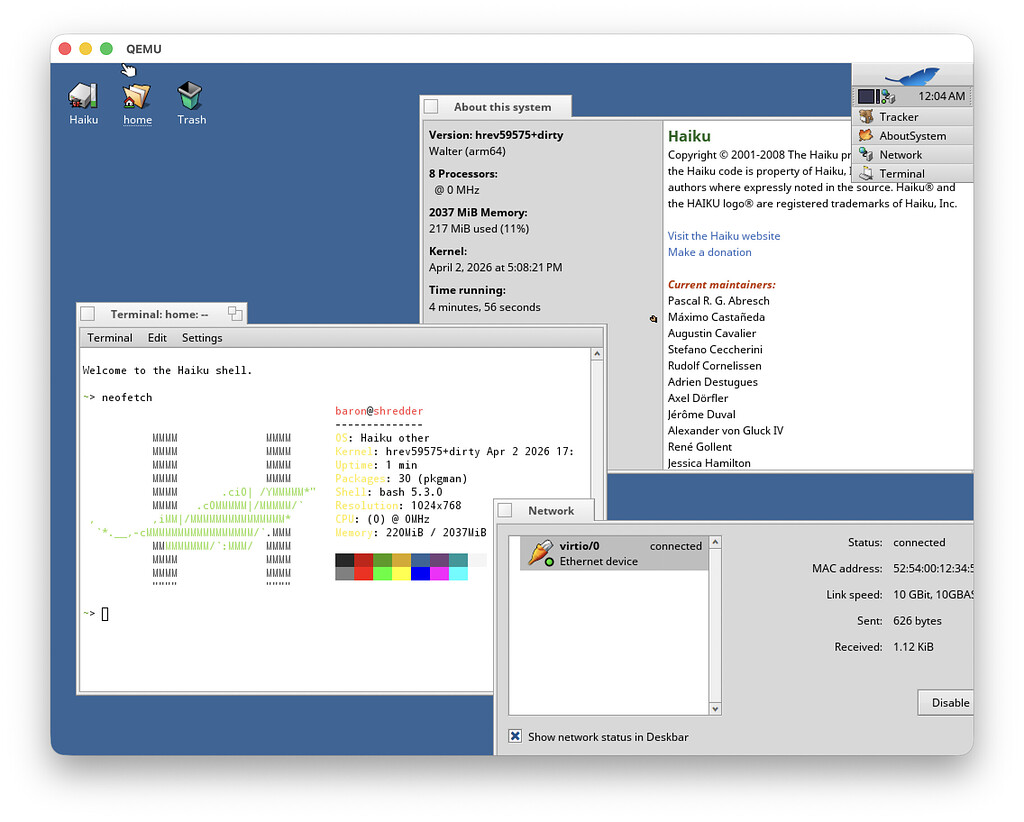
The arm64 port of Haiku OS has reached a mostly stable state in the QEMU emulator, marking significant progress toward running the operating system on M1 Macs. This ongoing development represents a crucial step toward achieving native Apple Silicon hardware support in the future.
CommentsWhat Is Date:Italy?

A recent article explores the Ruby programming constant Date::ITALY, detailing its role in handling historical date calculations and Julian day numbers. The piece highlights the unexpected intersection of computer science and history by showing how Italy's early adoption of the Gregorian calendar continues to influence modern software library design.
CommentsGarry Tan, the CEO of YC, accused me of unethical reporting

Y Combinator CEO Garry Tan recently accused a journalist of engaging in unethical reporting practices. In response, the targeted reporter has published a public rebuttal to defend their work and address the allegations.
CommentsShow HN: Auto-identity-remove – Automated data broker opt-out runner for macOS
The new macOS utility Auto-identity-remove automates the tedious process of opting out of data brokers and people-search websites. Running on a monthly schedule, the open-source tool continuously removes personal information from over 30 different databases to help protect user privacy.
CommentsA Good Lemma Is Worth a Thousand Theorems (2007)
A community discussion revisiting a 2007 article explores the enduring value of mathematical lemmas, debating whether these foundational stepping stones are inherently transformative or merely arbitrary tools used to prove larger theorems. Participants note that while the distinction between lemmas and theorems can be artificial, the real prize of mathematical research lies in the practical techniques developed along the way. These foundational concepts, such as the Johnson-Lindenstrauss lemma, are ultimately what drive innovation in modern data science and algorithm design.
CommentsCannibalistic attacks between gray seals leave telltale “corkscrew” injuries

Researchers have determined that bizarre corkscrew injuries previously attributed to shark attacks or boat propellers are actually caused by gray seals. These distinctive wounds are the result of cannibalistic attacks and aggressive predatory behavior within the species. The discovery reveals a previously unknown level of intra-species violence among the marine mammals.
Comments