AI Commercialization, Apple Hardware Challenges, and Open Source Shifts
Linux gaming is faster because Windows APIs are becoming Linux kernel features

Linux gaming performance is improving significantly as Windows APIs are increasingly integrated directly into the Linux kernel. Thanks to this ongoing integration, the number of unplayable games on the operating system continues to shrink.
CommentsSetting up a free *.city.state.us locality domain (2025)

US residents can register free subdomains under their local city and state domains by coordinating with their delegated domain manager. The setup process requires using Amazon Lightsail for nameservers, submitting an interim template, and pointing DNS records to a webhost.
CommentsI moved my digital stack to Europe

Driven by a desire for digital sovereignty, the author details their experience migrating their tech stack to European cloud providers. The piece examines this shift away from US tech giants and argues that Europe's cloud infrastructure has matured into a highly capable and competitive alternative.
CommentsRestore full BambuNetwork support for Bambu Lab printers
The FULU-Foundation is actively seeking GitHub contributors for its open-source OrcaSlicer-bambulab project to restore full BambuNetwork support for Bambu Lab 3D printers. Developers interested in advancing 3D printing software can join the initiative by creating a GitHub account to assist with development.
CommentsA History of IDEs at Google
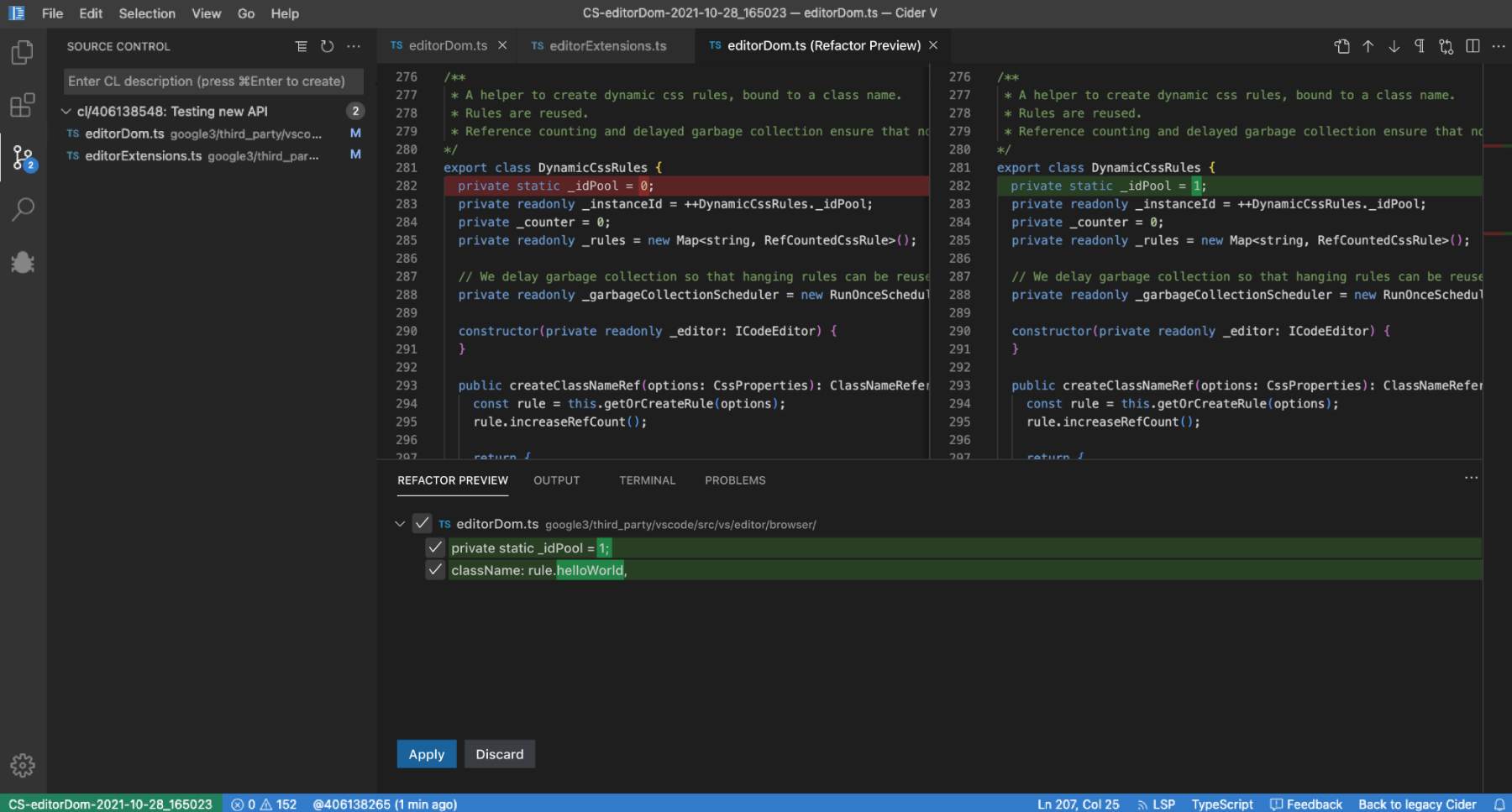
Laurent Le Brun's blog post details the evolution of Google's internal development environments, tracing the company's shift from relying on third-party tools to building bespoke, cloud-based IDEs tailored for its massive monorepo. This overview highlights how the immense scale and complexity of Google's codebase forced the tech giant to engineer highly customized, scalable software ecosystems rather than relying on commercially available tools.
CommentsThe Emacsification of Software
As AI makes software production increasingly effortless, developers are retreating into highly personalized, isolated coding environments akin to custom Emacs configurations. While this trend maximizes individual productivity, it creates severe bottlenecks for collaboration and code sharing because these custom environments are nearly impossible for others to understand or integrate. This shift is now challenging traditional version control platforms like GitHub and forcing teams to rethink how they collaborate on highly fragmented, individually generated code.
CommentsReverting the incremental GC in Python 3.14 and 3.15

Python 3.14 introduced a new incremental garbage collector that caused significant memory pressure in production environments. Consequently, developers have decided to revert this feature in both Python 3.14 and 3.15 to restore the previous garbage collection system.
CommentsLeaving GitHub for Forgejo

A DevOps consultancy details its decision to migrate code repositories and development workflows from GitHub to Forgejo, prioritizing self-hosted and open-source solutions. This move reflects a growing trend among tech professionals to seek greater control, security, and operational continuity outside of proprietary platforms.
CommentsThe US is winning the AI race where it matters most: commercialization
The United States is securing its leadership in the global artificial intelligence race by dominating the most critical technological layers. While energy resources are important, America maintains a wide margin over competitors in cloud infrastructure, data, and commercialization.
CommentsMacBook Neo Deep Dive: Benchmarks, Wafer Economics, and the 8GB Gamble

Apple's new $699 MacBook Neo utilizes the iPhone 16 Pro's A18 Pro chip to deliver CPU performance between the M3 and M4 with a single-core Geekbench 6 score of 3,569. A recent deep dive into the device examines its full benchmarks, thermal dynamics, and wafer economics, while scrutinizing the laptop's base 8GB RAM configuration.
CommentsXs of Y – roguelike that names itself every run. Written in 4kLoC
Developer nooga has released a work-in-progress roguelike game that procedurally generates a new name for every playthrough. Written in a concise 4,000 lines of code, the open-source project is currently available on GitHub for community contributions.
CommentsPrinceton mandates proctoring for in-person exams, upending 133 year precedent

Princeton University has ended its 133-year tradition of unproctored in-person exams by mandating universal proctoring to combat AI-assisted cheating. Effective July 1, the new policy requires faculty to act as witnesses during tests while preserving the existing student-run Honor Committee system.
CommentsChess puzzle I found in my dad's old book
Tech enthusiasts recently dissected a classic chess puzzle requiring the placement of four queens and one bishop to attack every square on a chessboard. By utilizing Python scripts and constraint programming, the community discovered 388 possible solutions, explored alternative piece combinations, and highlighted the puzzle's counter-intuitive need for overlapping piece responsibilities.
CommentsNew stainless steel can survive conditions for hydrogen production in seawater

Researchers at the University of Hong Kong have developed a highly corrosion-resistant stainless steel capable of withstanding the harsh conditions required to produce green hydrogen from seawater. Utilizing a novel double-protection mechanism, this durable new material could serve as a cost-effective alternative to the expensive titanium components currently used in hydrogen production systems.
CommentsPreserving Fisher-Price Pixter

Developer Dmitry.GR has successfully transformed the Fisher-Price Pixter from an unknown and obscure device into a fully documented and emulated product. This preservation effort ensures the vintage hardware is saved from digital oblivion and remains accessible for future tech enthusiasts.
CommentsScrcpy v4.0
The open-source tool Scrcpy has released version 4.0, continuing to offer users a seamless way to display and control their Android devices directly from a desktop computer. This latest update marks a major milestone for the Genymobile project, which remains actively open for community contributions on GitHub.
CommentsTell NYT, Atlantic, USA Today to keep Wayback Machine

Major publishers including the New York Times and USA Today have blocked the Internet Archive from automatically saving their content by updating their web crawler directives, prompting a petition to urge them to reverse the decision. Readers expressed frustration that the Internet Archive strictly respects these rules while AI companies routinely ignore them without facing legal consequences. The discussion also highlighted broader debates regarding copyright enforcement, the financial sustainability of digital journalism, and the distinction between automated web crawling and direct content redistribution.
CommentsDeterministic Fully-Static Whole-Binary Translation Without Heuristics

A recent arXiv paper introduces a novel method for deterministic, fully-static whole-binary translation that completely eliminates the need for heuristics. By translating entire software binaries at compile time with strict predictability, this approach ensures exact cross-architecture code execution without relying on dynamic runtime analysis. This systematic technique promises to significantly improve software portability and performance across diverse hardware platforms.
CommentsMy graduation cap runs Rust

Software developer Eric Park recently shared details about his custom graduation cap, which features a microcontroller programmed entirely in the Rust programming language. The project serves as a creative exploration of embedded systems, demonstrating the growing versatility of Rust in hardware and DIY maker communities.
CommentsS-100 Virtual Workbench
The S-100 Virtual Workbench provides an emulation environment for classic S-100 bus computers, sparking nostalgic conversations among veteran developers about their early programming experiences. Readers fondly recalled the hardware limitations and DIY ethos of the era, sharing memories of coding on Heathkit machines and early minicomputers. These discussions highlight how overcoming the technical constraints of early personal computing shaped a generation of hobbyists and programmers.
CommentsAn idiot’s guide to lead optimisation for proteins
A newly published guide outlines the use of the Cradle AI platform for protein lead optimization in early drug discovery. Although some scientists caution that purely data-driven machine learning models lack the physical context to accurately capture complex protein structures, developers highlight that fine-tuning foundation models for specific local tasks successfully predicts crucial traits like binding and aggregation.
CommentsWhen “idle” isn't idle: how a Linux kernel optimization became a QUIC bug

A Linux kernel optimization inadvertently caused a severe performance drop in the QUIC protocol. The bug occurred because the system pinned the CUBIC congestion window at its minimum floor by confusing RTT wait times with actual application idleness. Developers resolved the issue by updating the code to accurately measure and distinguish between these two types of idle periods.
CommentsHeritability of human life span is ~50% when heritability is redefined

Recent research indicates that human lifespan is approximately 50% heritable when statistical definitions of heritability are redefined using alternative ratios. This revised metric significantly increases previous estimates, suggesting genetics play a much larger role in longevity than traditionally believed. The findings highlight how the choice of mathematical frameworks can drastically alter our understanding of complex biological traits.
CommentsTraceway: MIT-licensed observability stack you can self-host in ~90s
Traceway is a new MIT-licensed observability stack that allows developers to self-host comprehensive monitoring and troubleshooting tools in under 90 seconds. Designed to provide a complete view of system behavior, this open-source solution aims to be the only tool teams need to quickly identify and resolve application issues.
CommentsHow can Apple deal with the memory shortage?

Apple is facing a growing memory shortage that could drive memory costs to as much as 40% of a device's total bill of materials. The tech community has been closely monitoring the situation since January as the company strategizes how to manage these skyrocketing component prices.
CommentsLaunch HN: Ardent (YC P26) – Postgres sandboxes in seconds with zero migration

Y Combinator P26 startup Ardent has launched a tool that creates isolated Postgres database sandboxes in under six seconds with zero migration required. The platform enables coding agents and developers to safely test, clean, and migrate data on separate branches without risking production environments.
CommentsThe vi family
This article explores the enduring legacy of the vi text editor family and its popular modern variants like vim. It highlights why mastering vi remains a worthwhile investment for developers of all skill levels. Ultimately, the piece positions the software as the only text editor programmers will ever truly need to learn.
CommentsFc, a lossless compressor for floating-point streams
The newly released open-source tool fc provides a research-grade solution for the lossless compression of floating-point data streams. It is designed to efficiently reduce file sizes for complex numerical datasets without sacrificing any underlying data integrity. Developers and researchers can explore the project details and access the source code through the xtellect/fc repository.
CommentsStarship V3

SpaceX is continuing its mission to revolutionize space technology with the development of Starship V3. The company, which was founded in 2002, designs, manufactures, and launches advanced rockets and spacecraft. These ongoing efforts are part of its ultimate goal to enable people to live on other planets.
CommentsKickstarter is forced to ban adult content by payment processors

Kickstarter has updated its content guidelines to prohibit various forms of adult and NSFW content from its platform. Reports indicate this sudden policy change was forced by pressure from payment processors, specifically Stripe.
Comments