AI Agents, Severe Security Flaws, and EU Regulations
Bambu Lab is abusing the open source social contract
The author of a prominent tech critique has reiterated their refusal to recommend Bambu Lab 3D printers following the company's aggressive push to make its always-connected cloud solution the default. To reclaim control over their existing P1S hardware, the creator has completely disconnected the printer from the internet and disabled automatic firmware updates. Additionally, they have abandoned the company's native software in favor of third-party slicing applications.
CommentsGooglebook

The newly introduced Googlebook is a high-performance laptop built to harness Gemini Intelligence. The device delivers heavyweight computing power and features seamless integration with Android smartphones.
CommentsShow HN: Needle: We Distilled Gemini Tool Calling into a 26M Model
Cactus Compute has released Needle, a lightweight foundation model that distills Google Gemini's tool-calling capabilities into just 26 million parameters. Weighing only 14MB, the model can process up to 6,000 tokens per second on resource-constrained hardware. This enables advanced, local AI functionalities on tiny devices like mobile phones, wearables, smart home systems, and robots.
CommentsWhy senior developers fail to communicate their expertise
Senior developers often struggle to communicate their expertise because they focus on technical complexity while business stakeholders prioritize managing uncertainty. This misalignment hinders collaboration, but the integration of AI offers a unique opportunity to bridge the communication gap. By adapting their messaging to address business risks, engineering leaders can better align technical execution with organizational goals in the AI era.
CommentsIf AI writes your code, why use Python?

AI coding assistants are challenging the long-standing dominance of Python and TypeScript. These languages were historically favored because their rapid development speeds outweighed slower execution performance. However, as AI automates much of the programming process, developers may soon prioritize runtime efficiency over the sheer ease of writing code.
CommentsRendering the Sky, Sunsets, and Planets

A new article explores techniques for rendering realistic skies, sunsets, and entire planets in real time directly within the browser. The guide details a progression of shader-based methods, from simple sky domes to complex atmospheric simulations utilizing raymarching and scattering models.
CommentsCERT is releasing six CVEs for serious security vulnerabilities in dnsmasq
CERT has disclosed six critical security vulnerabilities in the widely used dnsmasq DNS and DHCP server. The announcement has reignited developer debates over the necessity of rewriting legacy C codebases in memory-safe languages like Rust to prevent future exploits. However, critics warn that while memory safety eliminates certain bugs, it is not a universal fix and rewritten projects can still suffer from other security flaws.
CommentsHow to make your text look futuristic (2016)

This 2016 article explores the typographic techniques used to create futuristic text in movies, highlighting the classic use of the Eurostile Bold Extended font. It outlines six simple rules for designers to establish a convincing sci-fi aesthetic on screen. The guide emphasizes starting with clean, sans-serif typefaces as the foundation for future-forward text design.
CommentsScreenshots of Old Desktop OSes
Readers discussing screenshots of legacy desktop operating systems expressed frustration with modern interface designs like invisible scrollbars and shared configuration tweaks to restore visible boundaries across Linux, macOS, and Windows. The conversation also sparked nostalgic discussions about older Unix and RISC OS environments. Many users contrasted the historical performance issues of systems like Solaris CDE with the enduring charm of emulating classic Acorn machines today.
CommentsThe Future of Obsidian Plugins
Obsidian has unveiled a redesigned Community website and a dedicated developer dashboard to streamline and support its growing plugin ecosystem. These new tools aim to improve plugin discovery for everyday users while providing third-party creators with enhanced management and analytics features.
CommentsThey Live (1988) inspired Adblocker
A developer has created an open-source adblocker inspired by the 1988 cult film They Live that replaces standard web advertisements with the movie's iconic subliminal slogans. The project is currently available on GitHub for users who want to browse the internet while seeing hidden messages like consume and obey.
CommentsQuack: The DuckDB Client-Server Protocol

DuckDB has introduced Quack, a new remote protocol that enables instances to communicate in a client-server architecture supporting multiple concurrent writers. Built on standard HTTP for easy deployment, Quack delivers the high performance needed to handle diverse workloads ranging from bulk operations to small transactions.
CommentsLearning Software Architecture
A recent article responds to an inquiry from a research physicist seeking guidance on learning software architecture. The piece outlines practical strategies and resources for mastering software design skills tailored to those with a scientific background.
CommentsKraftwerk's radical 1976 track

Celebrating its 50th anniversary this month, Kraftwerk's 1976 single Radioactivity remains a groundbreaking milestone in electronic music. Over the decades, the pioneering track evolved into the German band's most significant political protest song.
CommentsReimagining the mouse pointer for the AI era

Google DeepMind is transforming the traditional mouse cursor into a context-aware AI partner to streamline digital interactions. This innovation, starting with the Chrome browser, aims to replace the friction of standard text prompting with seamless, intuitive AI collaboration.
CommentsInteraction Models
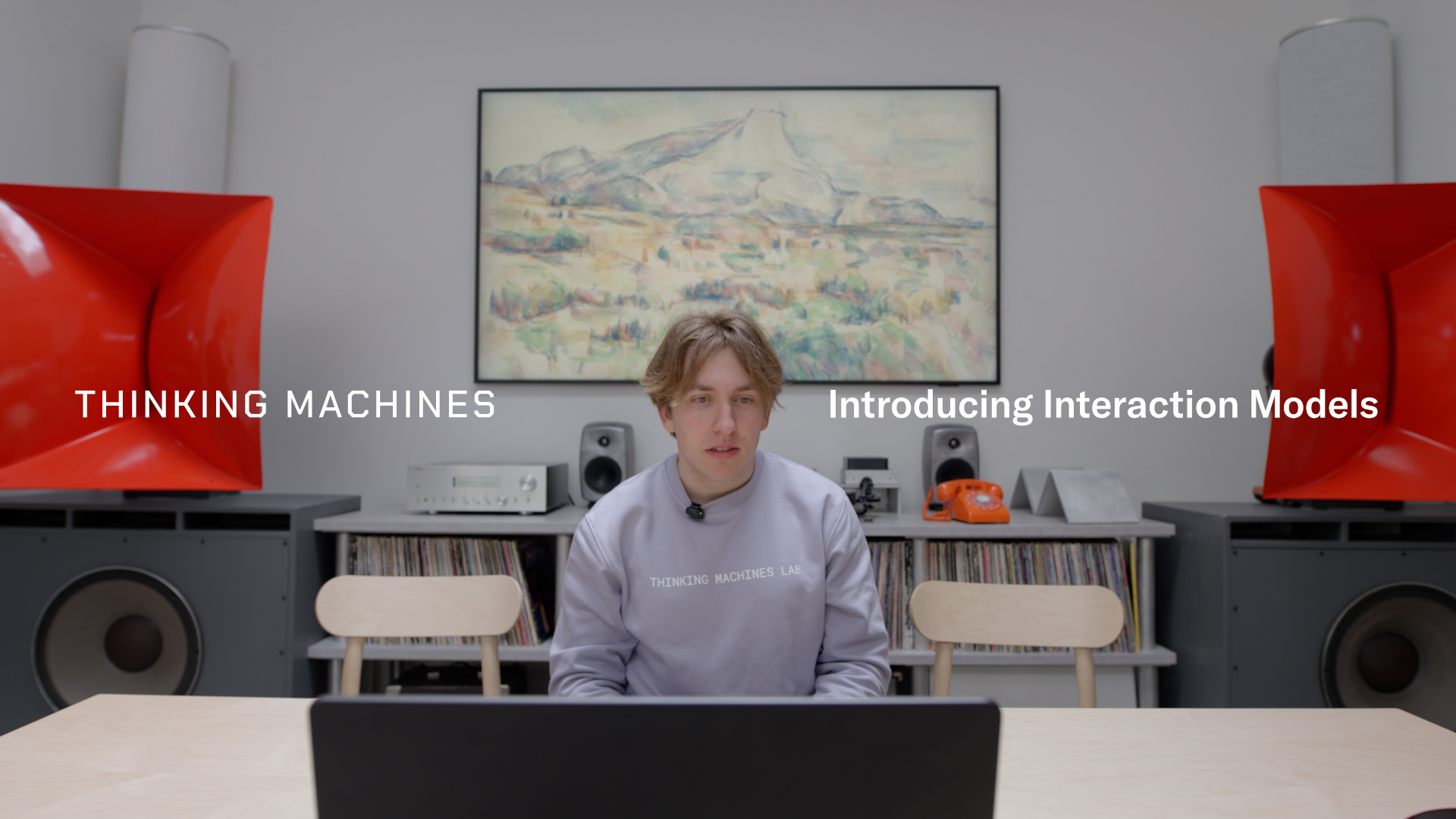
Interaction models are advancing artificial intelligence by replacing traditional turn-based interfaces with native multimodal support. By seamlessly processing audio, video, and text in real time, these new systems enable much more dynamic and natural human-computer collaboration.
CommentsEU to crack down on TikTok, Instagram's 'addictive design' targeting kids

The European Union is investigating social media platforms like TikTok and Instagram over their addictive design features that target children. EU Commission President Ursula von der Leyen announced the crackdown to address how these apps allow minors to go down rabbit holes of harmful content.
CommentsShow HN: Agentic interface for mainframes and COBOL
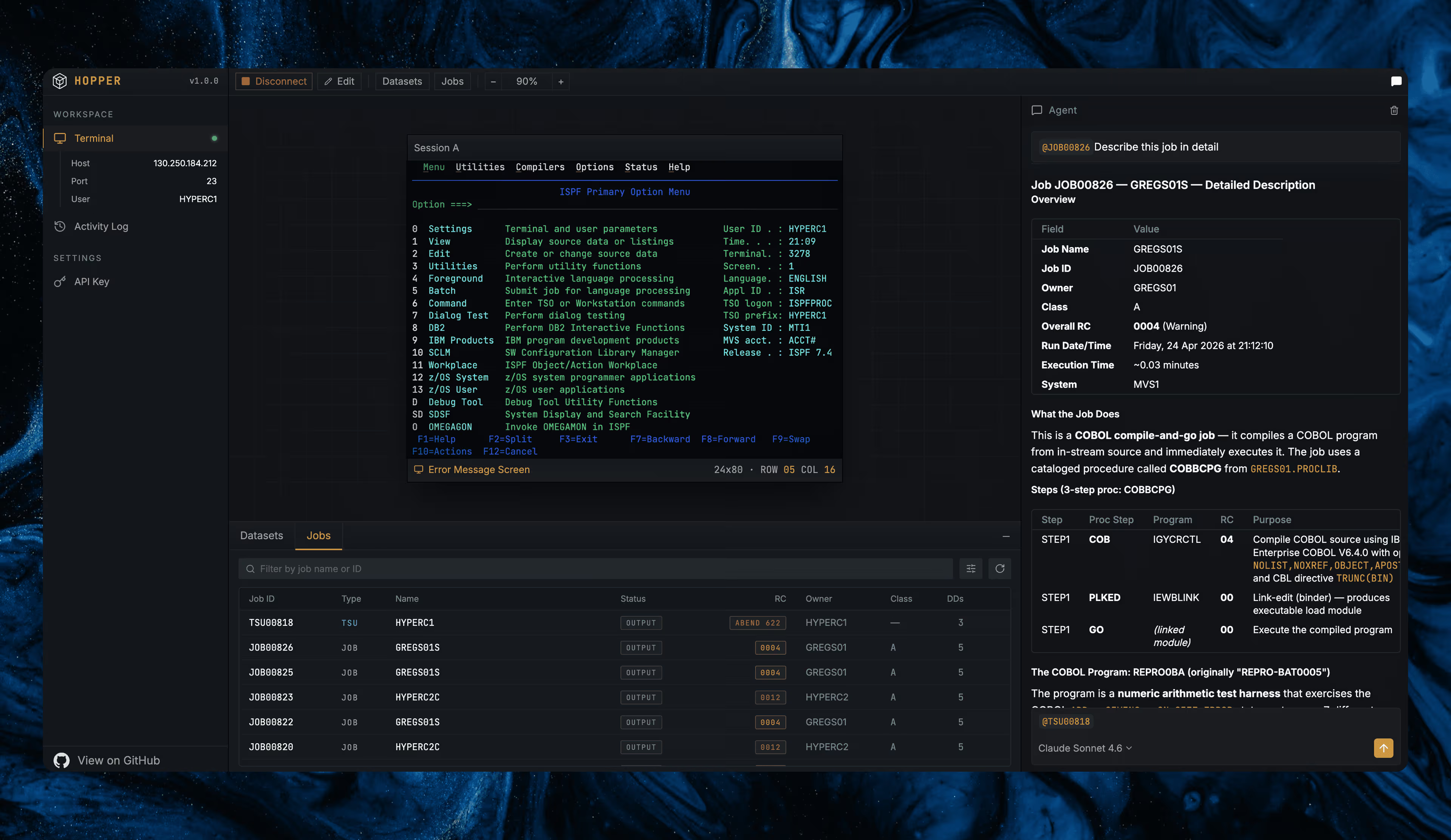
Hopper is a new agentic TN3270 terminal emulator that brings modern AI capabilities to legacy mainframe and COBOL environments. The tool allows AI agents to autonomously navigate ISPF, write column-strict JCL, debug failed jobs, and query VSAM directly within z/OS.
CommentsClaude Platform on AWS

The Claude Platform on AWS is now generally available, providing customers with seamless access to its full suite of features. This integration streamlines enterprise deployment by natively supporting existing AWS authentication, billing, and commitment retirement processes.
CommentsSoftware Internals Book Club
The Software Internals Book Club engages hundreds of developers in deep technical discussions on complex software books via a dedicated mailing list. Reader discussions highlight community interest in accessing archived comments and joining future cohorts, while also sparking technical debates about the complexities of email validation and the need for updated networking literature.
CommentsCanada’s Bill C-22 Is a Repackaged Version of Last Year’s Surveillance Nightmare

The Canadian government has introduced Bill C-22, a new surveillance proposal also known as the Lawful Access Act. This legislation is a repackaged version of last year's Bill C-2, which was abandoned after facing intense backlash from the privacy community for threatening digital rights under the pretext of border security.
CommentsWhen life gives you lemons, write better error messages

This piece highlights the importance of crafting clear and helpful error messages to improve the everyday online user experience. It emphasizes that effective error handling is a collaborative team effort that can transform frustrating system failures into positive user interactions.
CommentsLaunch HN: Voker (YC S24) – Analytics for AI Agents
Y Combinator Summer 2024 startup Voker has launched an analytics platform designed to help developers monitor and improve AI agents in production. The tool eliminates the need to manually sift through logs, enabling teams to proactively identify and resolve agent issues before they impact end users.
CommentsShow HN: Gigacatalyst – Extend your SaaS with an embedded AI builder
Gigacatalyst is an embedded AI builder that allows SaaS customers to generate custom frontend user interfaces on the fly using natural language prompts. The tool sandboxes the generated code to keep it independent of the core application, ensuring safe and easy sharing of new features without relying on third-party plugins. Currently serving over 2,000 daily users, the platform reflects a broader industry shift toward highly customizable, AI-driven enterprise software.
CommentsExtremely Low Frequencies

Originally developed for classified military and submarine communications, extremely low frequency radio technology relies on massive, highly power-intensive antenna arrays. Today, the foundational principles of these historical communication systems have been repurposed for modern industrial applications, such as transmitting telemetry data from miles underground during drilling operations.
CommentsAs researchers age, they produce less disruptive work

Research indicates that scientists tend to produce less disruptive and groundbreaking work as they age. Instead of challenging established paradigms, older researchers typically focus on incremental advancements within their existing fields. This trend explains why major scientific progress is largely driven by younger minds and highlights the need for a continuous influx of new talent to sustain innovation.
CommentsShow HN: A modern Music Player Daemon based on Rockbox firmware
A new project named rockboxd introduces a modern, network-enabled music player daemon built upon the classic Rockbox firmware. This platform brings contemporary networking capabilities to the established audio technology, enabling seamless music management and streaming.
CommentsInstructure pays ransom to Canvas hackers

Education technology company Instructure paid a ransom to hackers after its Canvas learning management system was breached twice. In exchange, the cybercriminals returned the compromised personal data of 275 million users across more than 8,800 institutions. Instructure assured its users that no customers will face further extortion from this incident.
CommentsShow HN: Statewright – Visual state machines that make AI agents reliable
Introduced on Hacker News, Statewright is a new open-source project that uses visual state machines to implement guardrails for AI agents. By restricting behaviors to defined operational states, the tool aims to make autonomous AI systems more reliable. Developers can find the source code and contribute to the project on GitHub.
CommentsDead.Letter (CVE-2026-45185) – How XBOW found an unauthenticated RCE on Exim
The autonomous security agent XBOW has uncovered a critical unauthenticated remote code execution vulnerability in the Exim mail server. Tracked as CVE-2026-45185, this use-after-free flaw allows attackers to execute arbitrary code without requiring authentication. The finding highlights the growing competition between human security researchers and AI-driven autonomous exploit development during the disclosure process.
Comments