NPM supply chain compromised, GitLab layoffs, and AI hacking
Postmortem: TanStack NPM supply-chain compromise

A sophisticated supply-chain attack compromised 42 TanStack packages on the npm registry after an attacker exploited GitHub Actions vulnerabilities to publish 84 malicious versions. The breach chained a pull request exploit with cache poisoning and OIDC token extraction, prompting developers to review the official postmortem and audit their dependencies.
CommentsI'm going back to writing code by hand
In a piece about returning to manual coding, the author and readers criticize AI code generators for lacking the human judgment required to adapt architectural constraints over time. Without exhaustive, line-by-line human review, AI tools often contort software to fit outdated rules or hide catastrophic mistakes that eventually render the codebase unmaintainable. Consequently, developers are finding that the intense oversight needed to prevent hidden errors makes writing code by hand a more reliable and practical approach.
CommentsUCLA discovers first stroke rehabilitation drug to repair brain damage (2025)

Researchers at UCLA Health have discovered the first drug capable of fully replicating the brain-repairing effects of physical stroke rehabilitation in mice. By successfully mimicking physical therapy in animal models, this breakthrough treatment offers a promising pharmaceutical alternative that could eventually revolutionize human stroke recovery.
CommentsRunning local models on an M4 with 24GB memory

A recent experiment explores the performance of running local AI models on a standard MacBook equipped with an M4 chip and 24GB of memory. The study aims to determine if this accessible hardware configuration can consistently produce practical and usable outputs for everyday tasks.
CommentsGitLab announces workforce reduction and end of their CREDIT values

GitLab has announced a workforce reduction and the elimination of its CREDIT core values in a recent letter to customers and investors. The software development company stated that these structural changes are intended to streamline operations and better align with its current business priorities.
CommentsNullsoft, 1997-2004 (2004)

America Online has effectively dismantled its Nullsoft division by purging the team down to just three remaining employees. This drastic downsizing marks the abrupt end of an era for the prolific branch that significantly contributed to the software landscape between 1997 and 2004.
CommentsGmail registration now requires scanning a QR code and sending a text message

Google has introduced a new verification step for Gmail registration that requires users to send a text message. To create an account, users must now scan a QR code with their smartphone, which automatically triggers an SMS to Google to verify their phone number.
CommentsRatty – A terminal emulator with inline 3D graphics

Ratty is a newly introduced terminal emulator that utilizes GPU rendering to support inline 3D graphics. This innovation allows developers to view and interact with complex 3D visuals directly within their standard command-line environment.
CommentsThe greatest shot in television: James Burke had one chance to nail this scene (2024)

An 80-second rocket launch clip featuring James Burke continues to be celebrated as the greatest shot in television 45 years after its original broadcast. Because Burke only had a single chance to capture the scene perfectly, viewers often need multiple viewings to fully appreciate the technical mastery of the footage.
CommentsAn AI coding agent, used to write code, needs to reduce your maintenance costs
While some developers report that AI coding agents reduce maintenance costs by modernizing legacy code and automating testing, others warn that generating poorly understood code actually increases outages and technical debt. Consequently, participants emphasize that maintainability must remain a core engineering responsibility to ensure AI genuinely decreases rather than exacerbates long-term software maintenance burdens.
CommentsMythos Finds a Curl Vulnerability

Anthropic withheld its new AI model, Mythos, from public release due to its exceptional ability to identify security vulnerabilities in source code. Demonstrating this advanced capability, the model has now successfully discovered a security flaw in curl.
CommentsTraining an LLM in Swift, Part 1: Taking matrix mult from Gflop/s to Tflop/s

A new technical guide demonstrates how to optimize large language model training in Swift by drastically accelerating matrix multiplication. By exploring ten handwritten implementations ranging from plain C and Swift to Apple's Metal API, the tutorial shows how developers can push performance from gigaflops per second up to teraflops per second.
CommentsGoogle says criminal hackers used AI to find a major software flaw
Google's threat intelligence group reported that criminal hackers likely used an AI model to discover and weaponize a major software vulnerability, citing the exploit script's textbook formatting and hallucinated details as evidence. However, readers note that while these markers strongly indicate the code was generated by an AI, they do not definitively prove the model was used to find the underlying bug.
CommentsI let AI build a tool to help me figure out what was waking me up at night

After experiencing frequent sleep disruptions, an author utilized AI development tools to build a custom application that tracks and identifies the causes of nighttime awakenings. This project highlights how AI is lowering the barrier to entry, allowing individuals to easily create personalized tech solutions for everyday quality-of-life issues.
CommentsCUDA-oxide: Nvidia's official Rust to CUDA compiler
Nvidia has introduced cuda-oxide, an official compiler that enables developers to write and compile GPU device code directly in Rust. Rather than replacing host-side libraries like cudarc, the new tool complements them by generating embedded PTX code from Rust source files for execution via existing CUDA APIs. Additionally, cuda-oxide leverages Rust's strict memory and type safety models to provide robust guardrails against common undefined behaviors in GPU kernel programming.
CommentsSoftware engineering may no longer be a lifetime career

Despite the rise of AI code generators, industry professionals emphasize that software engineering is primarily about problem-solving, architecture, and understanding requirements rather than simply typing code. While developers who view their roles strictly as code writers may face obsolescence, those who adapt will transition into more complex roles where AI serves as a tool for rapid experimentation. Ultimately, delivering functional software still requires human critical thinking and contextual understanding that current AI models cannot fully replace.
CommentsGuy Goma's Accidental BBC Interview Lives on After 20 Years
Twenty years after Guy Goma was mistakenly brought onto a live BBC broadcast, his highly confused interview remains a beloved internet staple. Although he did not get the job, viewers continue to celebrate his hilarious facial expressions and stunned reactions as he realized he was on live television instead of waiting for a scheduled interview.
CommentsInterfaze: A new model architecture built for high accuracy at scale
Interfaze is a new model architecture designed to deliver high accuracy at scale across various applications. The release features comprehensive benchmark comparisons against leading foundational and specialist models, alongside practical code examples for optical character recognition, object detection, and web search.
CommentsLibrary for fast mapping of Java records to native memory
A new Java 25 library called TypedMemory enables developers to efficiently map Java records to strongly typed off-heap native memory. By leveraging the Foreign Function and Memory API, the tool provides a fast and direct approach to native memory management for performance-critical applications.
CommentsAMÁLIA and the future of European Portuguese LLMs

A new technical report details the launch of AMÁLIA, an open-source large language model specifically designed for European Portuguese. This release marks a significant milestone in regional AI development and sets a promising direction for the future of specialized language models across Europe.
CommentsShow HN: TikTok but for scientific papers

Papel is a new research app aiming to bring the TikTok experience to the discovery of scientific papers. The black-and-white platform allows users to easily find literature and read it using on-device AI. It also includes collaborative features so researchers can discuss their work with peers.
CommentsI hate soldering
While the original article expresses a disdain for soldering, the accompanying reader discussion centers on a passionate debate over the cost and necessity of soldering equipment. Enthusiasts are divided between advocating for high-end tools like stereo microscopes and premium stations for microscopic components, and championing budget-friendly alternatives for hobbyists and beginners. Meanwhile, professionals argue that investing in quality gear is ultimately a worthwhile expense that saves time and prevents costly board revisions.
CommentsHow Fast Does Claude, Acting as a User Space IP Stack, Respond to Pings?

A recent experiment explores the real-time processing capabilities of large language models by tasking Claude Code with simulating a user-space IP stack. The study specifically measures the model's latency by tracking how quickly it can process and respond to standard network ping requests.
CommentsGuitar tuner that uses phone accelerometer
A new guitar tuner application uses a smartphone's accelerometer to detect physical vibrations and determine musical pitch. However, readers warn that this technique poses significant privacy and security risks, as the sensor could potentially be exploited to eavesdrop on surrounding sounds or capture keystrokes without requiring explicit microphone permissions.
CommentsVenom and hot peppers offer a key to killing resistant bacteria

Researchers have developed three novel antibiotics using compounds derived from scorpion venom and habanero peppers. These new treatments could provide a crucial defense against tuberculosis and other drug-resistant bacterial infections.
CommentsBuilding a web server in aarch64 assembly to give my life (a lack of) meaning
A developer built a static HTTP web server entirely from scratch using aarch64 assembly language, embracing the extreme challenge of bare-metal programming. The project serves as both a deep dive into low-level architecture and a humorous personal quest for meaning through code.
CommentsA.I. note takers are making lawyers nervous
AI meeting note-takers are raising legal concerns by potentially voiding attorney-client privilege and turning casual conversations into discoverable permanent records. Beyond these privacy risks, users report that the tools frequently produce highly inaccurate transcripts when handling poor audio quality. This inaccuracy stems from the underlying language models confidently hallucinating missed words based on context rather than acknowledging audio uncertainties.
CommentsdBase: 1979-2026
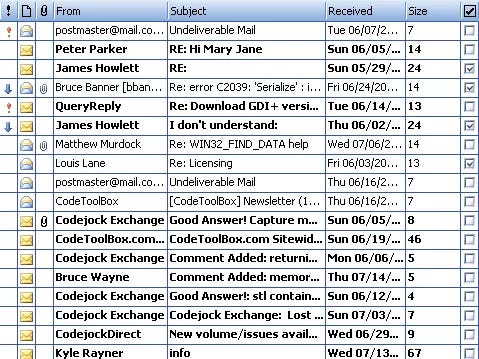
The pioneering database software dBase has officially ended its nearly five-decade run, with its final newsgroup servers going offline in November 2025. The platform's ultimate demise was hastened by years of product neglect, complex vendor litigation, and the rapid rise of artificial intelligence.
CommentsThe rise and fall of snake oil

This article explores the 19th-century evolution of snake oil, tracing its transformation from a traditional folk remedy to a mass-produced industrial medicine. The piece details how the product eventually lost its public credibility and became universally recognized as a fraudulent medical scam.
Comments7 lines of code, 3 minutes: Implement a programming language (2010)
Readers are revisiting a highly praised 2010 blog post by Matt Might that demonstrates how to implement a programming language in just seven lines of code. Commenters celebrate the tutorial for demystifying computer science and argue that such foundational concepts should be taught to everyone, not just computer science majors. The discussion also compares this elegant Lisp-based implementation to other minimal language projects, highlighting the enduring beauty of concise code.
Comments