Cloudflare cuts staff amid security flaws and outages
Google broke reCAPTCHA for de-googled Android users

Google's reCAPTCHA system now requires users to run the company's proprietary software to prove they are human. Consequently, privacy-focused individuals using de-googled versions of Android are being incorrectly flagged as bots and blocked from accessing websites.
CommentsCloudflare to cut about 20% of its workforce

Cloudflare is cutting approximately 20% of its workforce to restructure operations and prioritize the adoption of artificial intelligence tools. Alongside the layoffs, the company announced that its second-quarter revenue forecast fell slightly below Wall Street expectations.
CommentsCanvas online again as ShinyHunters threatens to leak schools’ data

Instructure's Canvas learning management platform has been restored online following a disruption caused by a confirmed data breach. The ShinyHunters hacking group claimed responsibility for the incident and is threatening to leak sensitive school data if ransom demands are not met.
CommentsPoland is now among the 20 largest economies
More than three decades after the fall of communism left the country in economic ruins, Poland has undergone a remarkable transformation. The nation has now officially secured its position as the twentieth largest economy in the world.
CommentsDavid Attenborough's 100th Birthday

Sir David Attenborough is celebrating his 100th birthday. The royal couple marked the milestone by sharing photographs of him. They also took the opportunity to wish him a very happy birthday.
CommentsAn Introduction to Meshtastic
Meshtastic is an open-source project that enables long-range, off-grid communication without relying on traditional cellular networks. By utilizing LoRa radios, this community-driven initiative allows users to build decentralized messaging networks for remote exploration and emergency preparedness.
CommentsMaybe you shouldn't install new software for a bit
Users are advised to pause installing new software and system updates for the time being. This precautionary measure follows the discovery of several new vulnerabilities in the Linux kernel that require immediate attention from developers.
CommentsCartoon Network Flash Games

A newly curated web collection allows users to play classic Cartoon Network Flash games directly in their web browsers. The archive features nostalgic titles inspired by iconic animated series such as The Powerpuff Girls, Dexter’s Laboratory, and Samurai Jack, offering fans a seamless way to revisit early internet entertainment.
CommentsAI is breaking two vulnerability cultures

Artificial intelligence is disrupting traditional software vulnerability disclosure and patching cultures within the cybersecurity industry. Although researchers still follow standard procedures like rapidly and openly fixing flaws such as the recent Copy Fail vulnerability in Linux, AI is fundamentally altering how these security issues are discovered and managed.
CommentsMojo 1.0 Beta

The Mojo programming language has officially reached its 1.0 Beta milestone, advancing its mission to combine Python's ease of use with C-level performance for artificial intelligence. This release delivers increased stability and new capabilities to help developers efficiently build and deploy complex machine learning models. The update signals that Mojo is rapidly maturing and preparing for widespread adoption in the competitive AI landscape.
CommentsServing a website on a Raspberry Pi Zero running in RAM
A recent project hosts a website entirely from the RAM of a Raspberry Pi Zero by offloading computationally heavy TLS termination to an external cloud provider. However, community discussions question the necessity of the complex proxy setup and note that modern operating systems already cache web pages in RAM by default, diminishing the technical impressiveness of the project.
CommentsUS Government releases first batch of UAP documents and videos
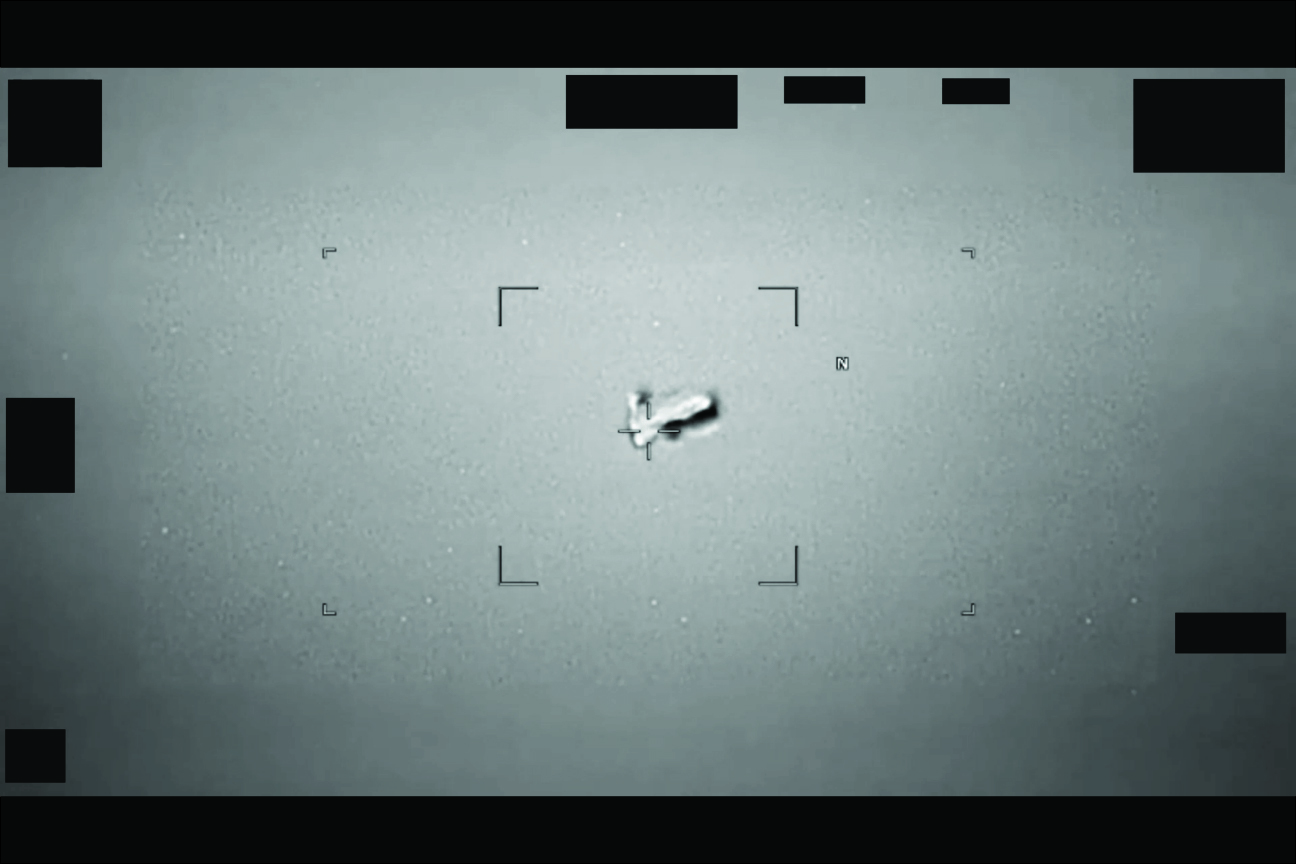
The US government has released its first batch of official documents and videos regarding Unidentified Anomalous Phenomena, commonly known as UAP. This declassification effort supports the military's ongoing mission to investigate unidentified aerial incidents and ensure national security. The newly disclosed materials provide researchers and the public with unprecedented access to data surrounding these unexplained events.
CommentsRumors of my death are slightly exaggerated
False rumors regarding the death or severe illness of the author, Cliff, recently circulated online, only to be debunked as a bizarre misunderstanding. The situation sparked a wave of humorous and bewildered reactions in the community discussion thread. Readers playfully compared the false alarm to a Monty Python sketch and joked about artificial intelligence generating the fake condolences.
CommentsAWS North Virginia data center outage – resolved

Amazon Web Services has resolved a data center outage in Northern Virginia that was caused by an overheating issue. The cloud provider successfully mitigated the problem and restored normal operations to the affected region.
CommentsYou gave me a u32. I gave you root. (io_uring ZCRX freelist LPE)
A local privilege escalation vulnerability has been identified in the Linux kernel's io_uring subsystem, specifically within the zero-copy receive freelist. The flaw involves a mishandling of a 32-bit unsigned integer that allows an attacker to exploit the memory management structure and gain full root access to the system.
CommentsSingapore introduces caning for boys who bully others at school

Singapore has introduced new guidelines allowing schools to cane male students who engage in bullying as a strict last resort. This corporal punishment will exclusively be applied to boys aged nine and older.
CommentsBrazil's Pix payment system faces pressure from Visa and Mastercard

Brazil's central bank-backed instant payment platform, Pix, is rapidly capturing market share and disrupting the traditional financial landscape. This massive consumer shift is placing significant competitive pressure on global credit card giants Visa and Mastercard. As a result, these legacy networks must adapt their strategies and innovate to defend their dominance in the Brazilian market.
CommentsPinocchio is weirder than you remembered

Although the original 1881 Pinocchio serial was meant to end with the puppet hanging dead, the author reluctantly continued the story after pleas from young readers. The resulting bizarre and satirical narrative became one of the most translated books in history and played a quiet role in teaching Italians their own language.
CommentsGoogle Cloud Fraud Defence is just WEI repackaged
Google has introduced Google Cloud Fraud Defense as the next evolution of reCAPTCHA, featuring a new QR code scanning challenge for user verification. Despite the updated branding, the new tool is essentially just a repackaged version of the existing WEI technology.
CommentsHardening Firefox with Claude Mythos Preview

New details have emerged on how the Claude Mythos Preview is being used to harden the Firefox browser through advanced agentic harnesses. These AI agents can now autonomously identify and reproduce genuine software bugs while successfully dismissing false positives.
CommentsA web page that shows you everything the browser told it without asking
A new interactive web page demonstrates the extensive amount of data browsers automatically share with websites by default. It instantly reveals this hidden information to users without requiring any input or permissions, highlighting significant privacy and tracking vulnerabilities.
CommentsPlasticity and language in the anaesthetized human hippocampus

Researchers at Baylor College of Medicine discovered that the human hippocampus remains capable of sophisticated language processing even when a patient is fully unconscious under anesthesia. This finding highlights the remarkable plasticity of the brain and suggests that the anesthetized mind retains complex cognitive functions previously thought to be lost.
CommentsNonprofit hospitals spend billions on consultants with no clear effect

A new study reveals that nonprofit hospitals spent $7.8 billion on consulting services over the past decade. Despite this massive financial investment, researchers found no significant improvements in hospital finances, staffing, daily operations, or patient care outcomes. The findings suggest that this heavy reliance on external consultants has yielded little to no measurable value for the healthcare system.
CommentsPC Engine CPU
Community discussions highlight the historically underrated processing power of the PC Engine's 8-bit CPU, noting that its high clock speed and specialized memory transfer capabilities enabled impressive arcade ports that rivaled 16-bit competitors. Enthusiasts also explored the theoretical performance limits of modern 6502-based architectures while praising the system's compact physical design and highly optimized console adaptations of classic Capcom games.
CommentsGNU IFUNC is the real culprit behind CVE-2024-3094
Recent analysis of the XZ Utils backdoor suggests that the GNU IFUNC mechanism was the fundamental enabler of the exploit, transforming a standard supply chain compromise into a deeply hidden system-level threat. By weaponizing indirect function resolution, the attacker successfully concealed malicious code within the liblzma library, highlighting a critical need to reevaluate the security implications of IFUNC features in modern build systems.
CommentsAsk HN: We just had an actual UUID v4 collision...
Prompted by a developer's report of an unexpected UUIDv4 collision, the tech community emphasizes that such failures are surprisingly common due to flawed or poorly understood entropy sources. To prevent this, experts advise against using UUIDv4 in high-reliability systems, recommending instead the aggregation of multiple diverse, non-deterministic data points. Furthermore, modern cryptographic techniques can extract true randomness from these imperfect sources by blending them into a single, unpredictable seed.
CommentsClojureScript Gets Async/Await
ClojureScript has officially integrated native async/await support into its core compiler, overcoming previous community skepticism regarding implementation complexity. Spearheaded by developer borkdude after prototyping the feature in his Squint project, this update provides a modern alternative to the older core.async library. The release has also sparked broader discussions within the community regarding asynchronous error handling and the shift toward minimal JavaScript frontends using server-sent events.
CommentsAll means are fair except solving the problem
Reader discussions surrounding a recent article highlight ongoing developer frustrations with command-line tools that mishandle stdout, stderr, and exit codes instead of simply fixing underlying problems. While POSIX conventions dictate keeping stdout clean for data piping and using stderr for logging, many tools and brittle system environments continue to violate these expectations. Participants emphasize that adhering to these foundational CLI practices is essential for reliable scripting and automation.
CommentsThe Disappearance of the Public Bench

The disappearance of public benches and the trend of making remaining ones uninviting highlights a broader societal debate regarding who belongs in urban public spaces. By eliminating these resting spots, cities are losing crucial communal infrastructure and marginalizing the populations that rely on them.
CommentsA polynomial autoencoder beats PCA on transformer embeddings

Researchers have developed a closed-form polynomial autoencoder that achieves fourfold compression of transformer embeddings while outperforming traditional PCA. By pairing a PCA encoder with a quadratic Ridge decoder, the method delivers superior accuracy without requiring neural networks or iterative training.
Comments