Privacy concerns, AI controversies, and cybersecurity threats emerge
Belgium stops decommissioning nuclear power plants
Belgium has reversed its retirement policy to keep its nuclear power plants operational, a move that has ignited intense online debate over the future of clean energy. Commenters argue over the economic viability and safety of nuclear power compared to renewables, with some emphasizing the necessity of existing nuclear fleets to meet climate goals while others highlight the plummeting costs of solar and wind. The discussion underscores the ongoing global challenge of balancing energy security, climate action, and the financial realities of power generation.
CommentsHow an oil refinery works

Although wind and solar power are expanding their share of the global energy market, petroleum remains essential and will continue to dominate the foreseeable future. This article provides a detailed breakdown of how oil refineries operate to process crude oil into the vital fuels and products that sustain the modern world.
CommentsCan I disable all data collection from my vehicle?

Rivian drivers can stop vehicle data collection by disabling cellular connectivity, but doing so will also disable essential features like navigation and over-the-air updates. While Canadian owners can toggle this off in their settings menu, non-Canadian drivers must schedule a service appointment to have the eSIM disabled. Users should also note that turning off connectivity does not automatically cancel paid Rivian subscriptions.
CommentsClaude Code refuses requests or charges extra if your commits mention "OpenClaw"

Developers using Claude Code are experiencing unexpected request refusals and extra billing charges when their recent commits mention OpenClaw in a JSON blob. This unusual trigger activates even in empty repositories, causing confusion for users who are simply calling the tool directly.
CommentsHow Mark Klein told the EFF about Room 641A [book excerpt]
![How Mark Klein told the EFF about Room 641A [book excerpt]](https://thereader.mitpress.mit.edu/wp-content/uploads/2026/04/641-cover-copy.jpg)
A retired AT&T technician named Mark Klein provided the Electronic Frontier Foundation with internal documents exposing a secret government eavesdropping facility known as Room 641A. His unexpected visit supplied the definitive evidence needed to prove that the United States government was conducting mass, warrantless wiretapping of American citizens. This historic whistleblowing event exposed the reality of domestic surveillance and sparked major legal battles over digital privacy.
CommentsCursor Camp

A new project called Cursor Camp is playfully billing itself as a campground for your cursor. The quirky experience provides a unique space designed to entertain or relax your digital pointer. It offers a lighthearted, nature-themed environment for users looking to take a quick break from their daily computing tasks.
CommentsShai-Hulud Themed Malware Found in the PyTorch Lightning AI Training Library
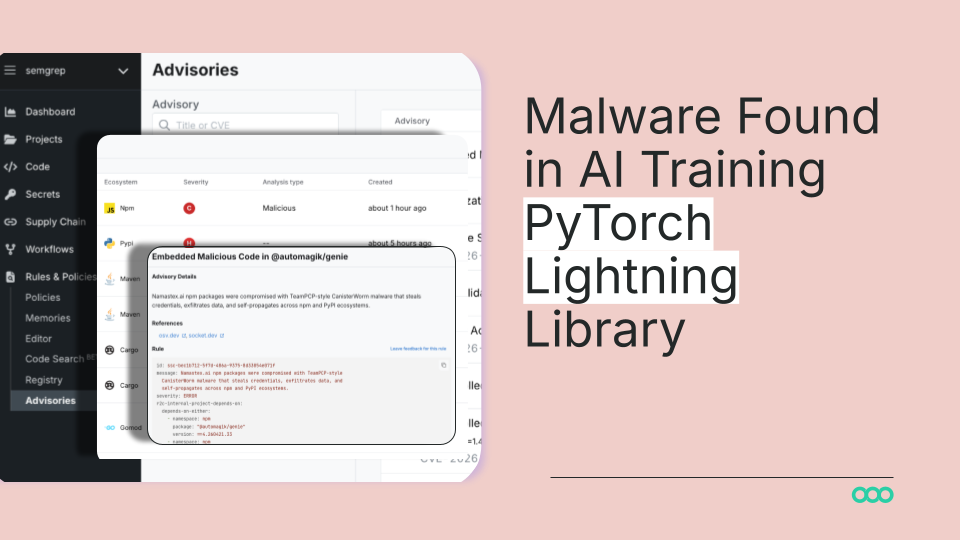
The PyPI package for the PyTorch Lightning AI training library was compromised in versions 2.6.2 and 2.6.3 with malicious code. The injected Mini Shai-Hulud themed payload executes credential-stealing malware whenever the library is imported by a user. Developers should avoid these specific versions to prevent unauthorized access to their sensitive data.
CommentsWhere the goblins came from

A recent report investigates the unexpected personality-driven quirks, known as goblin outputs, that recently emerged in GPT-5. The findings detail the root cause and timeline of how these behavioral anomalies spread across AI models. Developers have since implemented specific technical fixes to correct the issue and stabilize the system.
CommentsYou can beat the binary search

A recent article explores alternative algorithms for searching sorted arrays that can surprisingly outperform the traditional binary search. It contrasts these optimized techniques with basic linear search methods like the C++ std::find function to highlight scenarios where standard binary search is not the most efficient choice.
CommentsThe Zig project's rationale for their anti-AI contribution policy
The Zig open-source project has enforced one of the strictest anti-AI policies in the developer community by completely banning large language models from issues, pull requests, and comments. The maintainers recently outlined their official rationale for this zero-tolerance approach to AI-generated contributions.
CommentsI built a Game Boy emulator in F#
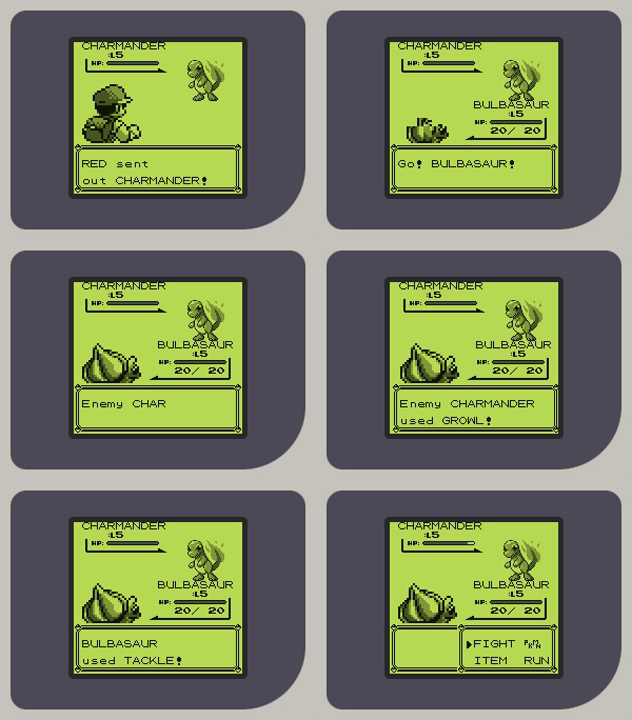
A developer has dedicated hundreds of hours to building a fully functional Game Boy emulator using the F# programming language. The project features working sound and can run on both desktop and web platforms.
CommentsI aggregated 28 US Government auction sites into one search
A developer has launched a free tool that aggregates over 100,000 items from 28 US government surplus auction websites into a single search platform. The site allows bargain hunters to easily browse vehicles, electronics, and seized property across all 50 states. It also includes useful features like deal scores, historical sold prices, and customizable email alerts.
CommentsMozilla's opposition to Chrome's Prompt API
Mozilla has officially registered its opposition to Chrome's proposed Prompt API for the web. The browser maker's stance highlights ongoing debates among developers regarding the integration of artificial intelligence features directly into core web standards.
CommentsNoctua releases official 3D CAD models for its cooling fans

Noctua has released official 3D CAD models for its cooling fans to assist users with custom designs and integrations. However, the community discussion surrounding the announcement largely ignored the technical release, devolving instead into humorous tangents about other fan manufacturers and related puns.
CommentsSpain's parliament will act against massive IP blockages by LaLiga

Spain's parliament has approved an initiative to reform the Digital Services Act and curb LaLiga's broad IP blockages. The measure aims to prevent anti-piracy court rulings from inadvertently taking down third-party websites. Additionally, the PP is advancing further amendments to the legislation.
CommentsCraig Venter has died

Craig Venter, the pioneering geneticist and founder of his namesake research institute, has died following unexpected complications from recent cancer treatment. His passing was announced on April 29, 2026, marking a significant loss for the genomics and biotechnology sectors.
CommentsHonker – Durable queues, streams, pub/sub, and cron scheduler in a SQLite file

Honker is a new tool that delivers durable queues, streams, pub/sub messaging, and time-triggered scheduling within a single SQLite file. This zero-server architecture allows developers to implement robust background processing and communication features without managing any external infrastructure.
CommentsNew mechanical panoramic film camera from Jeff Bridges
Actor Jeff Bridges has introduced the WideluxX, a new mechanical panoramic film camera that uses a moving lens to capture sweeping analog images. Marketed as a contemporary creative tool rather than a nostalgic novelty, the camera's initial pre-order allocation has already sold out. Interested buyers can now join a waiting list to secure the device.
CommentsReverse Engineering SimTower

A developer is reverse engineering the classic 1994 Maxis game SimTower to build a flawless clone that runs natively in modern web browsers. By deconstructing the original software's underlying mechanics, the project aims to faithfully recreate the beloved skyscraper management simulator for today's platforms. This web-based version will allow fans to experience the complex simulation directly through their browsers without relying on legacy hardware or emulation.
CommentsGranite 4.1: IBM's 8B Model Matching 32B MoE

IBM has released Granite 4.1, a new family of open-source enterprise language models trained on 15 trillion tokens. The standout achievement of this launch is the new 8-billion-parameter dense model. Impressively, this smaller model matches or outperforms the previous 32B Mixture of Experts version across standard benchmarks.
CommentsFull-Text Search with DuckDB
NYC-based software developer Pete Doherty has shared a new guide on implementing full-text search capabilities with DuckDB. The article explores how developers can leverage the analytical database to efficiently query and filter large text datasets.
Comments10Gb/s Ethernet: what I did to get it working in my home

A home networking enthusiast shares a detailed guide on upgrading their entire house from 2.5Gb/s to 10Gb/s Ethernet. The walkthrough covers hardware choices like MikroTik switches, addresses unexpected thermal challenges, and provides real-world iperf3 performance benchmarks. This practical breakdown offers valuable insights for users attempting similar high-speed home network installations.
CommentsBiology is a Burrito: A text- and visual-based journey through a living cell
Using a burrito analogy to explain how genetic material is densely packed, a new text- and visual-based guide takes readers on a journey through the inner workings of a living cell. The piece highlights the mind-boggling scale of microscopic biology, noting that a bacterium's genome would be nearly 1,000 times longer than its host cell if uncoiled into a straight thread.
CommentsDoes Postgres Scale?
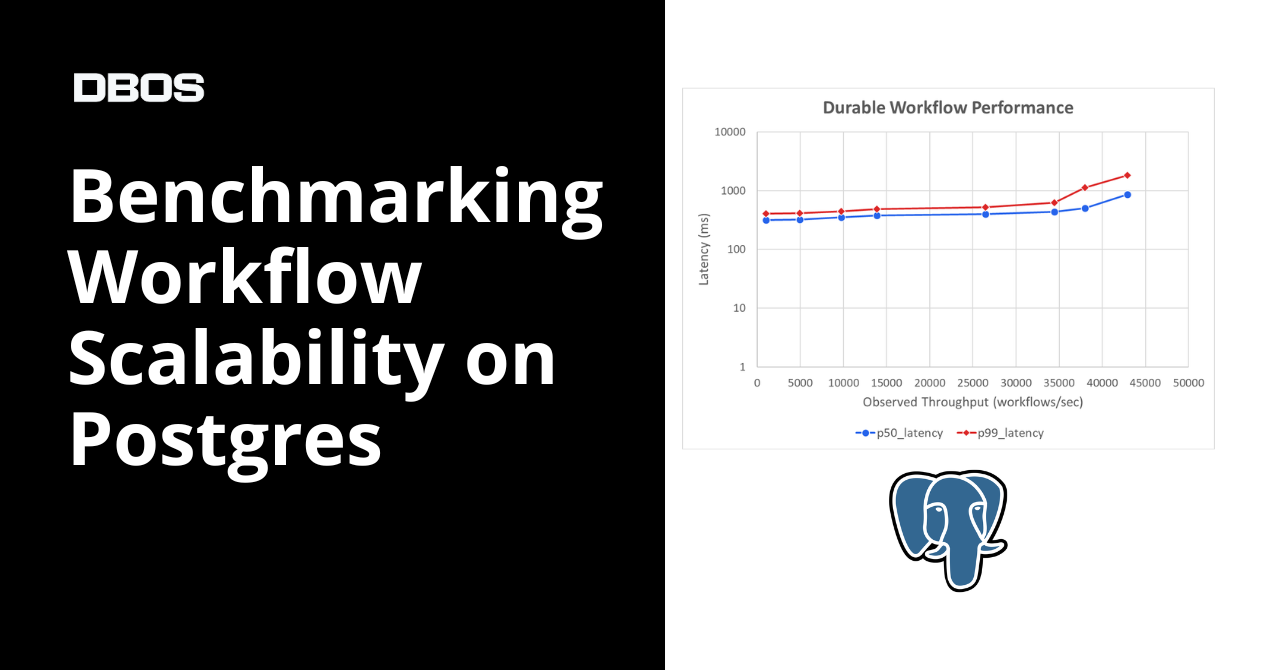
New benchmarks evaluate the workflow execution and queueing scalability of a single PostgreSQL server to determine its operational limits. The findings reveal whether Postgres can effectively handle heavy workflow management workloads directly on a single node without requiring horizontal scaling.
CommentsMike: open-source legal AI

Mike is a new open-source legal AI platform offering a zero-cost, self-hostable alternative to commercial tools like Harvey and Legora. It provides full feature parity while allowing law firms to completely own, control, and extend the technology to suit their specific needs.
CommentsAlignment whack-a-mole: Finetuning activates recall of copyrighted books in LLMs
Researchers have discovered that fine-tuning large language models can inadvertently reactivate the verbatim recall of copyrighted books, undermining previous alignment efforts. Dubbed alignment whack-a-mole, this vulnerability demonstrates that attempting to restrict a model from generating protected content can be easily bypassed through subsequent training adjustments. The researchers have released their official code to help the broader tech community better understand and mitigate this complex issue.
CommentsMeta in row after workers who saw smart glasses users having sex lose jobs

Meta and its subcontractor are disputing the reasons behind the sudden layoff of over 1,000 Kenya-based content moderators. The workers were reportedly dismissed after reviewing highly explicit footage from Meta's smart glasses, including videos of users having sex. The two companies currently disagree on the exact cause of these mass redundancies.
CommentsThe Church Rock Uranium Mill Spill

The Church Rock uranium mill spill released 1.36 tons of uranium and radioactive contaminants into the Puerco River, severely contaminating the water supply used by the Navajo Nation. The disaster received significantly less media coverage and federal assistance than Three Mile Island, a disparity readers attribute to its rural location and the marginalization of the affected Native American community.
CommentsLinkedIn is scanning browser extensions

LinkedIn is scanning users' browser extensions, sparking privacy concerns over data collection. The company is expected to justify the practice by stating it is a necessary measure to combat fraud and ensure platform security.
CommentsLondon to Calcutta by Bus (2022)

Adventures Overland plans to launch a 70-day bus service covering 20,000 kilometers between New Delhi and London, routing east through Burma, China, and Russia to avoid regions with strict visa policies for British travelers. Online discussions highlight that modern geopolitical tensions, missing infrastructure, and regional instability make planning a practical route for such historic overland journeys incredibly difficult compared to the welcoming environments of the 1970s.
Comments