Firefox Adblock, AI Agent Tools, and Hardware Upgrades
New 10 GbE USB adapters are cooler, smaller, cheaper
New RTL8159-based 10 GbE USB 3.2 adapters are entering the market to challenge the bulky, expensive Thunderbolt models previously required for high-speed laptop networking. These next-generation dongles are significantly smaller, cooler, and more affordable than their predecessors. Users can now finally access true 10 gigabit bandwidth through standard USB ports without suffering from massive thermal or spatial drawbacks.
CommentsThe Free Universal Construction Kit
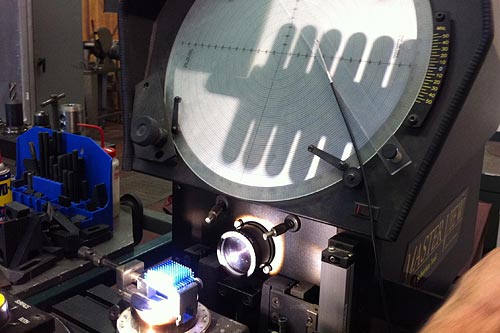
The Free Universal Construction Kit introduces a comprehensive set of adapters designed to create complete interoperability between ten popular children's building toys. This innovative project allows kids to seamlessly mix and match different brands of construction sets, unlocking endless new possibilities for creative play.
CommentsUsing coding assistance tools to revive projects you never were going to finish

A developer successfully used the AI coding assistant Claude Code with Opus 4.6 to revive and complete an abandoned project connecting YouTube Music and OpenSubsonic. The tool significantly accelerated the development process, transforming an unfinished idea into a fully working application in a remarkably short amount of time.
Comments1-Bit Hokusai's "The Great Wave" (2023)
A striking 1-bit digital recreation of Katsushika Hokusai's The Great Wave has prompted online readers to discuss the crisp aesthetics of monochrome pixel art and its nostalgic ties to early Macintosh displays. Alongside technical appreciation for retro computing and limited-resolution artwork, the community expressed profound admiration for the original Japanese master's timeless brushwork and emotional depth.
CommentsUSB Cheat Sheet (2022)
The 2022 USB Cheat Sheet provides a highly praised, comprehensive overview of USB specifications that was recently updated to correctly define SBU pins as Sideband Use. Readers commend the author for his technical accuracy and quick responsiveness to feedback, comparing the guide favorably to his other in-depth hardware articles.
CommentsPlain text has been around for decades and it’s here to stay
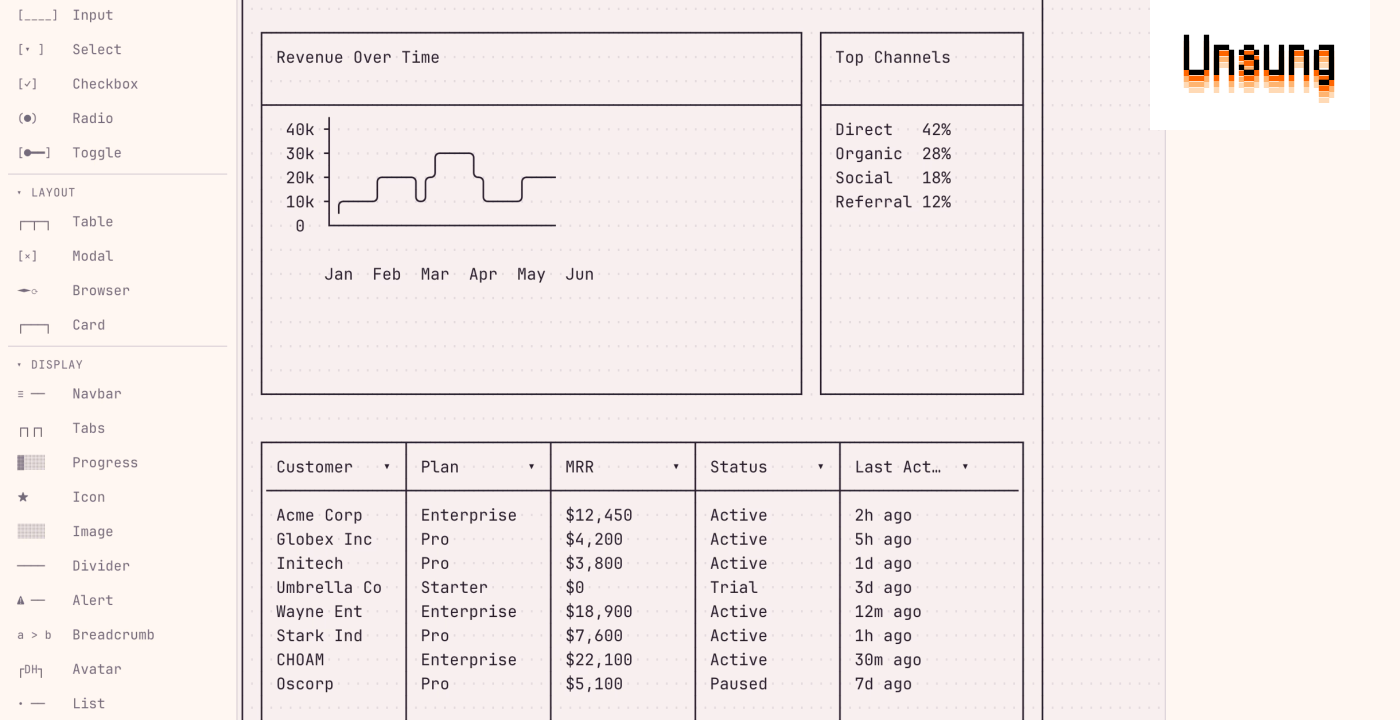
A recent blog post on software craft highlights the enduring value and relevance of plain text in modern development. Despite the proliferation of complex data formats, plain text remains an essential foundation for building high-quality and easily maintainable software systems.
CommentsReplace IBM Quantum back end with /dev/urandom
A developer launched a satirical GitHub repository named quantumslop that replaces the IBM Quantum backend with the Linux /dev/urandom random number generator. Although the project failed to win a QDay programming challenge, it offers a humorous take on the noise and hype surrounding current quantum computing advancements.
CommentsMartin Galway's music source files from 1980's Commodore 64 games
A newly launched GitHub repository now hosts Martin Galway's original music source files from classic 1980s Commodore 64 games. This open-source initiative allows developers and retro gaming enthusiasts to access, preserve, and contribute to the historical audio code.
CommentsThere Will Be a Scientific Theory of Deep Learning

A newly published arXiv paper posits that a rigorous scientific theory of deep learning will inevitably emerge to fully explain neural network behavior. The authors argue that transitioning from purely empirical observations to a unified mathematical framework is essential for the field's continued advancement. This foundational theory aims to demystify exactly why deep learning models generalize so effectively despite their immense architectural complexity.
CommentsThe Joy of Folding Bikes
A commuter reflects on their eleven-year experience using a folding bike to seamlessly navigate London's public transit network, highlighting its convenience and theft-prevention benefits. The author emphasizes that the compact device eliminates expensive station parking and offers long-term financial savings, making it a highly practical and cost-effective alternative to traditional urban transit.
CommentsWork with the garage door up (2024)
Discussions surrounding a recent article about working with the garage door up explore the benefits and psychological hurdles of building tech projects in public versus behind closed doors. While transparent development can demystify the creation process and engage communities, some developers find that sharing unfinished work prematurely drains their motivation due to the goal disclosure effect. Ultimately, the conversation highlights how individual psychology dictates whether creators thrive with their metaphorical garage door open or closed.
CommentsHumpback whales are forming super-groups

Photographers recently captured images of 304 individual humpback whales during a misty morning in December. This marks the highest number of large whales ever identified in a single day. The record-breaking gathering highlights a growing trend of these marine mammals forming massive super-groups.
CommentsParaloid B-72

A reader discussion highlights the versatile applications of the acrylic resin Paraloid B-72, specifically its use in an acetone solution to preserve and strengthen porous materials such as human bones and fossils. The conversation also explores the complex science of structural adhesives, noting the proprietary trade secrets of major chemical companies and recommending specific consumer-grade products for various bonding needs.
CommentsFirefox Has Integrated Brave's Adblock Engine

Mozilla has integrated Brave's ad-blocking engine directly into Firefox 149. The company shipped the update quietly to improve the browser's native content-blocking capabilities. Notably, the new feature was not mentioned in the official release notes.
CommentsEducation must go beyond the mere production of words

As artificial intelligence becomes increasingly capable of generating written content, the traditional focus on mere word production is no longer sufficient for modern education. Authentic learning must now evolve to prioritize deeper critical thinking and uniquely human skills that technology cannot easily replicate.
CommentsSimulacrum of Knowledge Work

This article explores the growing challenge of verifying the quality of AI-generated knowledge work, such as market analyses and professional reports. It questions how professionals can confidently evaluate these outputs without having to manually redo the underlying work to check for accuracy.
CommentsA 3D Body from Eight Questions – No Photo, No GPU
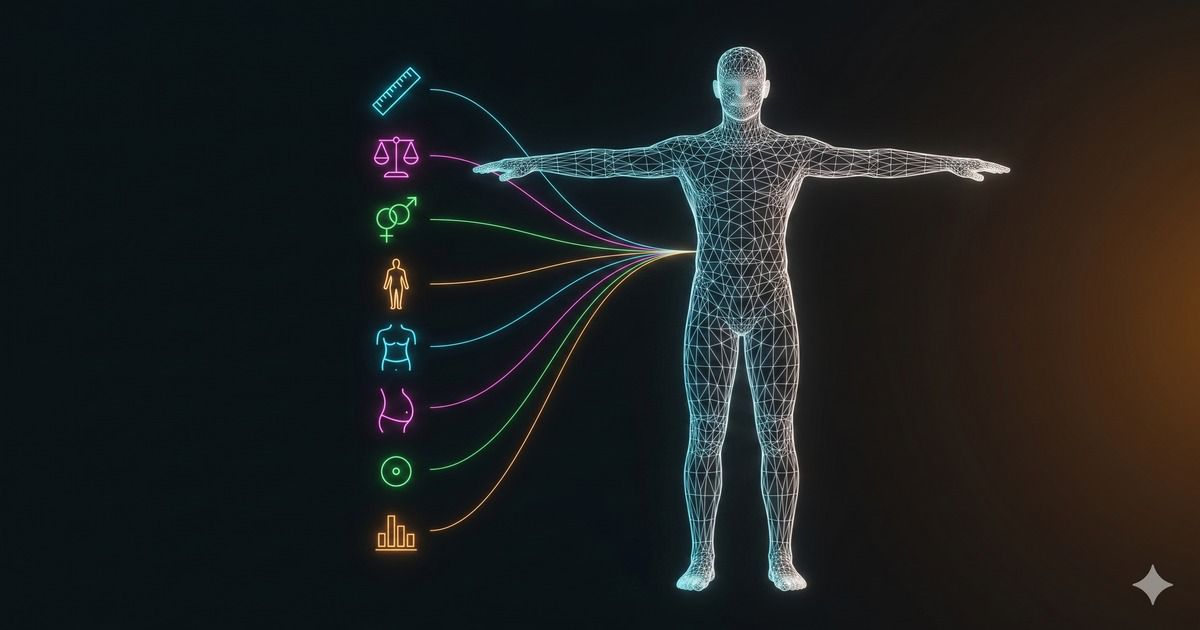
Researchers have developed a machine learning model that generates accurate 3D body shapes from just eight questionnaire inputs without requiring photos or GPU inference. By training with a differentiable physics loss, the system significantly outperforms traditional baselines and achieves a mass prediction mean error of only 0.3 kilograms.
CommentsA web-based RDP client built with Go WebAssembly and grdp
A new open-source project called grdpwasm introduces a web-based RDP client built with Go WebAssembly and the grdp library. This tool allows users to access remote desktops directly through their web browser without requiring additional local software. The code is currently available on GitHub for the community to test and contribute to its ongoing development.
CommentsHokusai and Tesselations
A recently digitized 1884 pattern book by Katsushika Hokusai, originally created for kimono textiles, highlights his lasting influence on the mathematical tessellation work of M.C. Escher. Readers are exploring high-resolution digital archives of the collection to study the intricate designs found within the historical album. The discussion also features an ongoing debate regarding whether Hokusai successfully incorporated all seventeen mathematical plane symmetry groups into his patterns.
CommentsWhat async promised and what it delivered
The async/await evolution solved previous programming challenges by introducing sequential syntax that greatly improved code readability. However, this approach has introduced new structural costs and obscured crucial execution details. Specifically, the sequential appearance hides which operations actually depend on one another, demanding greater structural awareness from developers.
CommentsGPT‑5.5 Bio Bug Bounty

OpenAI has published details regarding its Bio Bug Bounty program to address potential biological security risks associated with advanced models like GPT-5.5. The initiative incentivizes security researchers to identify and report vulnerabilities, highlighting the company's ongoing commitment to AI safety and the mitigation of cyberbio threats.
CommentsDiscret 11, the French TV encryption of the 80s (2020)
The article explores the history and technical mechanisms of Discret 11, the analog television encryption system used for French pay-TV in the 1980s and 1990s. Readers in the discussion share nostalgic memories of their youth spent attempting to pirate these scrambled signals using makeshift antennas, brute-force software, and hardware modifications. These early hacking efforts to circumvent encryption and watch restricted programming served as a formative technical learning experience for many future engineers.
CommentsThe mail sent to a video game publisher
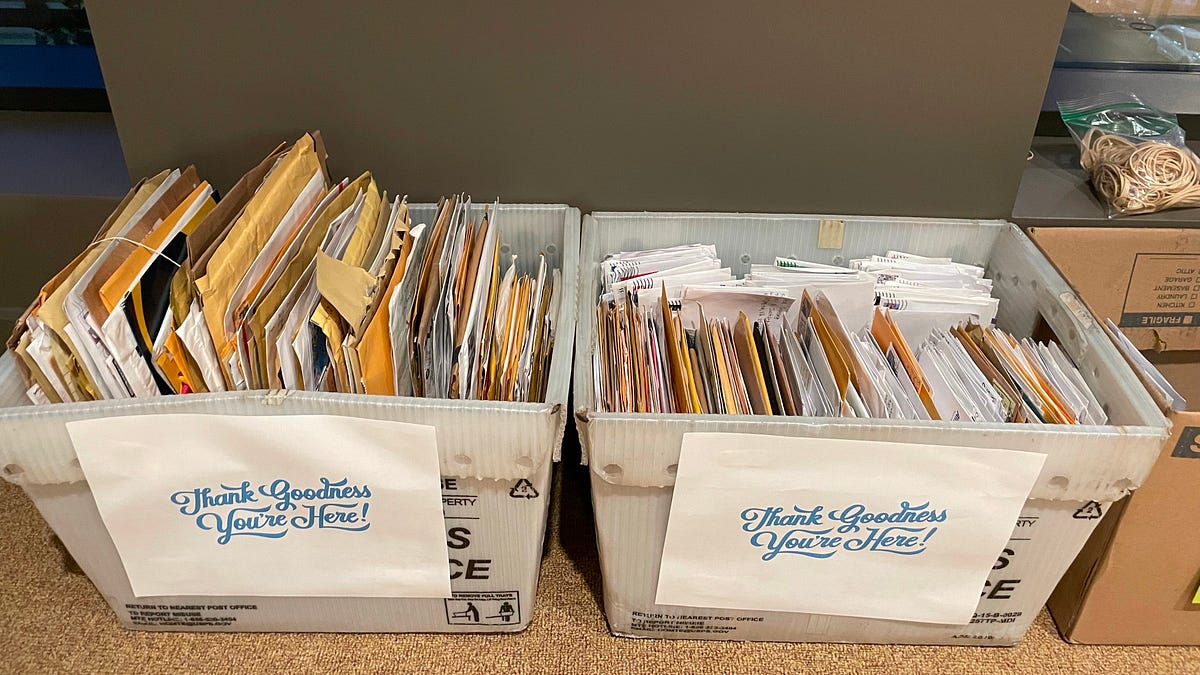
Inspired by a 1980s Activision idea, video game publisher Panic recently sent out physical mail to its community and received a wildly diverse range of responses. This nostalgic initiative has generated incredible and unexpected outcomes for the studio behind modern titles like Despelote and Arco. The campaign highlights the enduring appeal of retro community engagement in the modern gaming industry.
CommentsOpen source memory layer so any AI agent can do what Claude.ai and ChatGPT do
Stash is a new open-source, self-hosted memory layer that provides AI agents with persistent memory, knowledge graphs, and self-modeling capabilities. It is compatible with major models like Claude and ChatGPT, as well as Ollama and any MCP-compatible agent. This enables developers to easily add advanced contextual recall and goal tracking to their custom AI applications.
CommentsShow HN: A Karpathy-style LLM wiki your agents maintain (Markdown and Git)
YC S26 startup Nex.ai has launched WUPHF, a platform enabling users to deploy collaborative teams of AI agents. These agents work together over a shared context to maintain a dynamic, Markdown and Git-based wiki inspired by Andrej Karpathy. The system is compatible with multiple popular coding tools and local large language models to streamline multi-agent workflows.
CommentsCosmology with Geometry Nodes

Researchers are increasingly applying Geometry Nodes, a procedural 3D modeling tool, to real-world cosmology research. By leveraging these visual programming techniques, scientists can efficiently model complex cosmic structures and visualize massive astronomical datasets. This unexpected crossover highlights the growing utility of creative software in solving advanced scientific problems.
CommentsLambda Calculus Benchmark for AI
A new Lambda Calculus benchmark highlights that top-tier AI models like Anthropic's Opus still significantly outperform cheaper and open-source alternatives on complex, unbenched tasks. Despite recent marketing hype labeling smaller models as Opus killers, the tech community notes these cheaper options are merely sufficient for routine work and struggle with advanced problems. Consequently, developers suggest that future productivity gains will rely more on improved AI tooling and workflows rather than just chasing the next state-of-the-art model.
CommentsTurbo Vision 2.0 – a modern port
A modern port of the classic Turbo Vision 2.0 text-based user interface framework is now available. This updated release modernizes the retro development tool by introducing full cross-platform compatibility and comprehensive Unicode support.
CommentsOnly one side will be the true successor to MS-DOS – Windows 2.x

Windows 2.0 is evolving past its origins as the vaporware Windows 1.0 to claim the title of MS-DOS's true successor. However, the upgraded software faces intense competition from its rival, OS/2, in the race for market dominance.
CommentsInsights into firewood use by early Middle Pleistocene hominins
Researchers analyzing 790,000-year-old sediment from the Gesher Bnot Ya'akov archaeological site in Israel have uncovered direct evidence of firewood use by early Middle Pleistocene hominins. Rather than finding intact charcoal, the team spent decades meticulously sorting and microscopically identifying tiny wood and charcoal fragments. This painstaking analysis reveals the specific types of fuel early human ancestors utilized nearly a million years ago.
Comments